📊 5-Axis Feline Pentagon Radar & Breed Stats
📋 Physical Specs & Habits
♀ 2.5~4.0kg
📜 History & Lineage
📍 Origin: California, USA
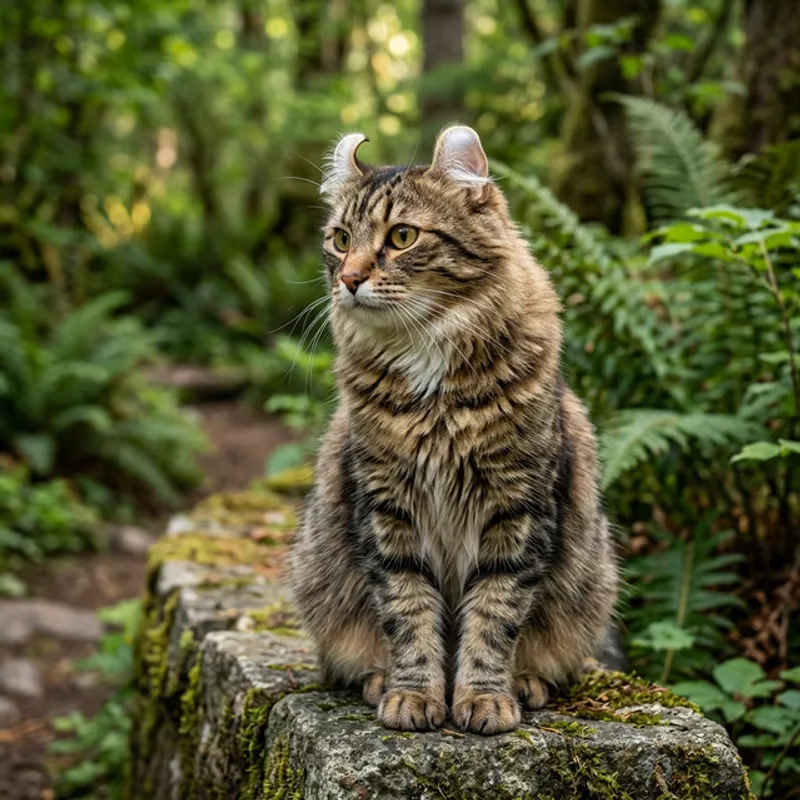
The American Curl breed originated in Lakewood, California, in 1981 with a stray cat named 'Shulamith.' This cat possessed distinctively curled-back ears, which was later confirmed to be a naturally occurring dominant genetic mutation. Through selective breeding, the breed was established and officially recognized by TICA in 1986 and CFA in 1991. A significant charm of this breed is their 'Peter Pan' personality, as they often retain their playful, curious, and kitten-like demeanor even into adulthood.
🏥 Medical Warnings
⚠ Ear Cartilage Vulnerability to Deformation and Inflammation
Due to their uniquely curled ear cartilage structure, excessive curling can make them prone to foreign body accumulation or inflammation in the ear canal. Forcing the cartilage at the tip of the ear straight or applying undue pressure can cause damage, necessitating delicate care.
⚠ Generally Healthy, but Mindful of Common Ailments
While American Curls are known for a low incidence of genetic diseases, regular health check-ups are essential to monitor for common feline ailments, including cardiac conditions such as Hypertrophic Cardiomyopathy (HCM) which can affect all purebred cats.
👂 American Curl vs. Scottish Fold: Ear Characteristics & Care Comparison
🗓️ American Curl Daily Care & Ear Health Protocol
Gently wipe the inside of the ear and the curled areas with a cotton pad moistened with cat-specific cleaner to prevent foreign body and earwax accumulation.
Gently feel the ears for any hardened areas or signs of pain. Be careful not to force the ears straight.
🎨 Recognized Colors
All colors and patterns are permissible, offering a wide variety including Solid, Tabby, Bi-color, Particolor, and Smoke.
💰 Maintenance
Maintenance difficulty: Medium. American Curls come in both long-haired and short-haired varieties. Long-haired cats require brushing 2-3 times per week, while short-haired cats need brushing 1-2 times per week. Internal ear care is exceptionally important, and regular ear cleaning is essential.
“The American Curl's distinctive crescent-shaped ears are their signature architectural feature, but without delicate hardware management, you might encounter a critical 'ear cartilage trouble' bug. Furthermore, these charming felines come equipped with unique 'Peter Pan Syndrome' firmware, leading them to constantly demand 'play sessions' even into adulthood. We propose three essential solutions to optimize this special firmware and hardware.”
1️⃣ Establish a Precise 'Ear Hardware Interface' Management Routine
Due to their unique shape, American Curls' ears are vulnerable to foreign body accumulation and inflammation. Gently clean them once a week with a specialized cleaner, and softly massage the ear tips daily to maintain cartilage flexibility. Be cautious not to force the ears straight or apply excessive pressure, as this can lead to 'hardware damage' bugs. Regular 'system checks' (veterinary examinations) are crucial for early debugging of potential issues.
2️⃣ Active Play Sessions for 'Peter Pan Firmware' Optimization
The 'eternal kitten' disposition is a charming trait of the American Curl, but without adequate energy release, it can manifest as 'excessive playfulness' or 'separation anxiety' debuffs. Initiate 'play sessions' for at least 30 minutes daily with interactive toys (like fishing wands or laser pointers) to relieve stress and stimulate mental activity with 'puzzle feeders.' Ensuring sufficient 'uptime' for their active minds is key to their mental well-being.
3️⃣ Reconfigure 'Space Architecture' and Ensure Safe Zones
Curious and active American Curls have a strong tendency to explore every corner of their home. To prevent strain on their ear cartilage or joints from jumping down from high places, design stable 'vertical transit paths' such as low cat trees or tiered shelving. Additionally, provide 'mental security' buffers by placing cozy hiding spots or boxes in various locations, allowing them safe 'cover and concealment' during stressful situations.
Are you a royal Flipped Crescent Ears (American Curl) too? Discover your inner cat personality!
Find your spirit cat that matches your personality in just 1 minute!