📊 5-Axis Feline Pentagon Radar & Breed Stats
📋 Physical Specs & Habits
♀ 3.5~5.5kg
📜 History & Lineage
📍 Origin: United Kingdom (Migrated to North America aboard the Mayflower)
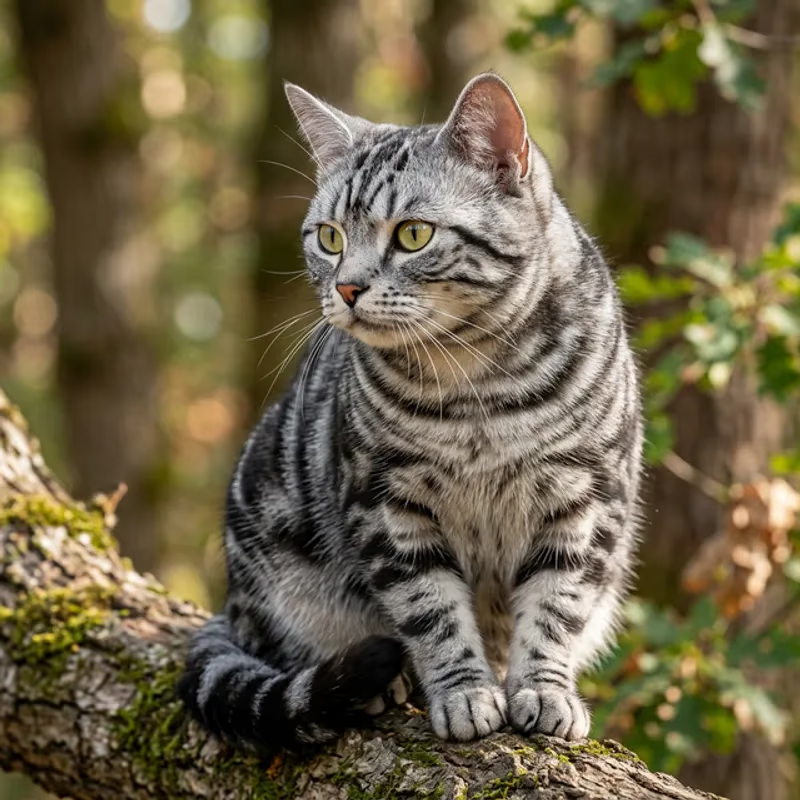
Originating from the 'Ship's Cats' that accompanied 17th-century European immigrants, these felines were valued for their rodent control. As they settled in North America, they evolved through natural selection and breeding in harsh environments, developing robust vitality and exceptional hunting skills. They were registered with the CFA (Cat Fanciers' Association) as 'Domestic Shorthair' in 1906. To emphasize their purebred status, the official name 'American Shorthair' was adopted in 1966, establishing them as an iconic American cat breed.
🏥 Medical Warnings
⚠ Hypertrophic Cardiomyopathy (HCM)
American Shorthairs are genetically predisposed to Hypertrophic Cardiomyopathy (HCM), a condition where the heart walls thicken. Regular cardiac ultrasounds and veterinary consultations are essential.
⚠ Hip Dysplasia
While relatively uncommon, their sturdy physique makes them susceptible. Overweight conditions can exacerbate symptoms, making weight management crucial.
🧬 American Shorthair vs. Korean Shorthair (Mixed) Comparison Guide
Mostly free or low cost (when adopting street cats).
🏥 American Shorthair Daily Care & Diet Protocol
Removes dead hair and promotes skin circulation. Increase frequency during shedding season.
Engage in predatory play with toys like wand toys, laser pointers to expend energy and relieve stress. 'Scratcher optimization' is essential.
Overweight conditions negatively impact hip joint and heart health. Adhere to recommended feeding amounts, choose high-protein food, and limit treats.
🎨 Recognized Colors
Over 80 diverse coat colors and patterns exist, including the iconic Silver Tabby, Brown Tabby, Red, Cream, Blue, Black, and White. The breed boasts an extensive color division recognized by the CFA.
💰 Maintenance
As a short-haired breed, maintenance is relatively easy. Brushing 1-2 times a week helps remove loose fur and maintains skin health. Due to their high activity levels, providing ample vertical and horizontal space along with sufficient playtime is essential to prevent stress.
“The American Shorthair, a living legend in rodent control, boasts superior "hardware specifications." While renowned for their robust physique and exceptional adaptability, even this sturdy system can be vulnerable to "management bugs." Specifically, insufficient outlets for their hunting instincts can lead to "behavioral debuffs," and obesity can trigger "health system errors." We must also consider the genetic "heart function degradation bug." To maintain this perfect "system architecture," we propose three solutions.”
🕹️ Optimizing 'Hunting Instinct instinct' and Environmental Variable Setup
If their innate hunter's instincts are not satisfied, their energy can easily be misdirected. Engage them in an 'immersive hunting simulation' for at least 30 minutes a day using wand toys, laser pointers, and hidden treat puzzles. Additionally, enriching their vertical and horizontal spaces with scratchers and cat trees is crucial for optimizing their 'exploration paths' and preventing 'stress debuffs.'
🏋️ Activating the 'Obesity Prevention Algorithm' and Diet Control
American Shorthairs possess a 'gourmet DNA' that makes them highly appreciative of delicious food. This can inadvertently lead to an 'obesity bug,' potentially causing a fatal 'system lock' on their hip joint and heart health. It is essential to choose high-protein, low-carbohydrate food, strictly adhere to a 'precise feeding protocol,' and maintain a healthy 'body balance' through 'scheduled meal management' using an 'automatic feeder.'
❤️ Establishing a 'Heart Health Monitoring System'
Despite their robust appearance, American Shorthairs genetically carry a 'vulnerability to Hypertrophic Cardiomyopathy (HCM).' This is a 'critical bug' where early detection is paramount. During regular health check-ups, 'cardiac ultrasound examinations' should be added as an essential 'checkpoint.' Furthermore, an 'always-on monitoring system' should be established to immediately 'request an emergency patch' from a veterinarian if any unusual symptoms ('difficulty breathing,' 'decreased activity,' 'loss of appetite') arise.
Are you a royal Legendary Rat Catcher (American Shorthair) too? Discover your inner cat personality!
Find your spirit cat that matches your personality in just 1 minute!