📊 5-Axis Feline Pentagon Radar & Breed Stats
📋 Physical Specs & Habits
♀ 2.0~3.5kg
📜 History & Lineage
📍 Origin: United States (USA)
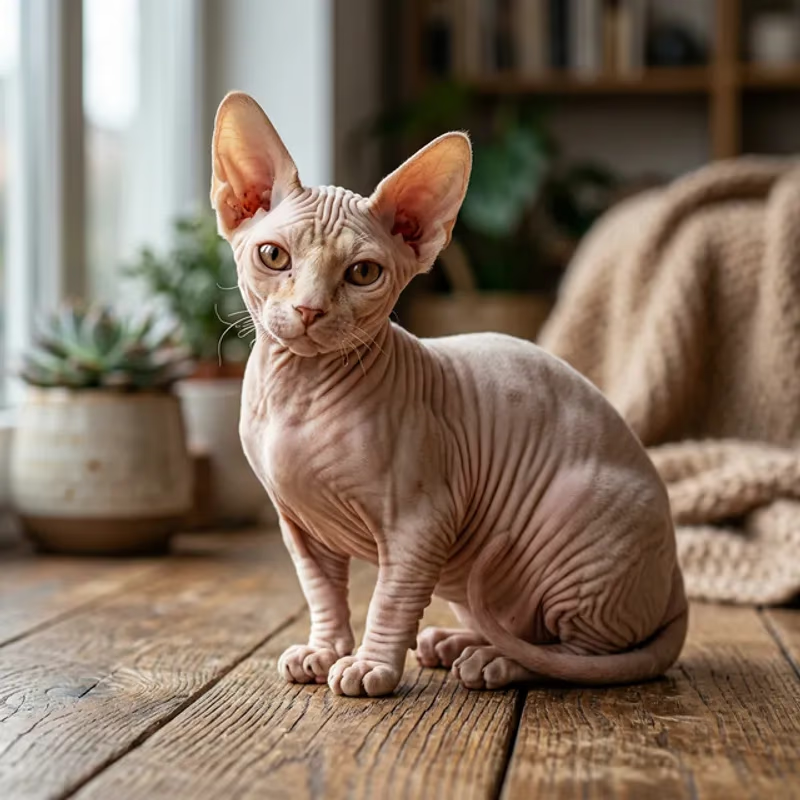
Originating in the United States in 2005, the Bambino is a delightful breed developed from a cross between the Sphynx and the Munchkin. Its name, 'Bambino,' meaning 'baby' in Italian, perfectly describes its distinctive features: a small stature, short legs, and hairless skin. This breed quickly gained popularity for its rare appearance and affectionate nature and is currently registered as an experimental breed with TICA (The International Cat Association). Due to its unique genetic combination, it is considered an 'emerging architectural' breed, still undergoing research and development.
🏥 Medical Warnings
⚠ Hereditary Spinal Conditions (Congenital Spinal Deformities, Lordosis)
Due to their short-legged genetic trait, Bambinos have a higher predisposition to spinal deformities such as Lordosis (swayback) or Pectus Excavatum (funnel chest). Careful observation of their movement and gait patterns is crucial.
⚠ Hypertrophic Cardiomyopathy (HCM)
Bambinos inherit a genetic predisposition to Hypertrophic Cardiomyopathy (HCM) from their Sphynx lineage. Regular cardiac ultrasound examinations are essential for early diagnosis and management.
⚠ Skin Issues and Hypothermia
Lacking fur, their skin is directly exposed to the external environment, making it prone to dryness and infections. They are also vulnerable to maintaining body temperature, requiring meticulous attention to indoor climate control.
🧬 Bambino vs. Similar Architectures Comparison Table
🏥 Bambino Maintenance Care & Dietary Guide
Maintain indoor temperature above 24°C. Provide warm clothing, blankets, or hot packs in winter to defend against 'hypothermia debuff'.
Prevent jumping from high places and ensure safe pathways. Administer joint supplements if necessary. Prevent 'skeletal system errors'.
Since they expend a lot of energy maintaining body temperature due to lack of fur, provide high-quality, high-calorie food to prevent 'energy depletion bugs'.
🎨 Recognized Colors
As they are hairless, their skin color serves as their coat color. All shades are possible, including black, white, blue, red, cream, chocolate, lilac, tabby, and bicolor, among others. It truly represents a diversity of "skin textures."
💰 Maintenance
Maintenance level is medium to high. Daily skincare, including wiping away skin debris and applying moisturizer, is essential. Careful attention to maintaining indoor temperature and providing UV protection is crucial. Due to their short legs, there's a risk of injury from jumping from high places, making joint care equally important. Focus should be on managing "skin debuffs" and "joint bugs."
“Affectionately known as 'baby fairies' for their adorable appearance, the Bambino is a truly special 'compact architecture,' resulting from the fusion of the Sphynx's hairless gene and the Munchkin's short-legged gene. However, this charming genetic blueprint carries hidden risks, presenting as a 'skin defense debuff' and a 'spinal structural vulnerability bug.' We propose three key solutions for 'system stabilization' to ensure their well-being.”
1️⃣ Strengthening the Skin Barrier: Applying a 'Skin Protection Patch'
Hairless Bambinos are highly susceptible to 'dryness,' 'UV damage,' and 'bacterial infection' bugs due to their direct skin exposure to the external environment. Daily cleansing with mild, cat-specific wipes to remove skin debris and diligently applying moisturizer are crucial to rebuild their 'skin protective barrier.' Furthermore, during intense sun exposure, applying sunscreen can minimize 'photosynthesis damage'.
2️⃣ Establishing a 'Spine Healthcare Architecture'
Given their Munchkin lineage and short legs, Bambinos carry a 'genetic vulnerability' bug for spinal conditions (e.g., Lordosis, Pectus Excavatum). Environments that encourage jumping from high places or excessive leaps can exacerbate 'spinal stress.' Instead of tall cat trees, provide low, stable hiding spots, ramps, and soft cushions to design 'safe transit routes.' Regular veterinary check-ups are essential to monitor the 'spinal system' for any abnormalities.
3️⃣ Activating the 'Temperature and Humidity Controller Lock'
Without fur, their thermoregulation is compromised, making them easily susceptible to 'hypothermia debuff' or 'overheating bug.' Always maintain indoor temperatures between 22-26°C and a recommended humidity of 50-60%. In winter, ensure warm sleeping arrangements, and in summer, operate air conditioning to 'lock' in a comfortable environment. Establishing a real-time temperature monitoring system can proactively prevent health issues caused by 'environmental variables'.
Are you a royal Baby Fairy Short Legs (Bambino) too? Discover your inner cat personality!
Find your spirit cat that matches your personality in just 1 minute!