📊 5-Axis Feline Pentagon Radar & Breed Stats
📋 Physical Specs & Habits
♀ 3.5~5.0kg
📜 History & Lineage
📍 Origin: United States (1960s)
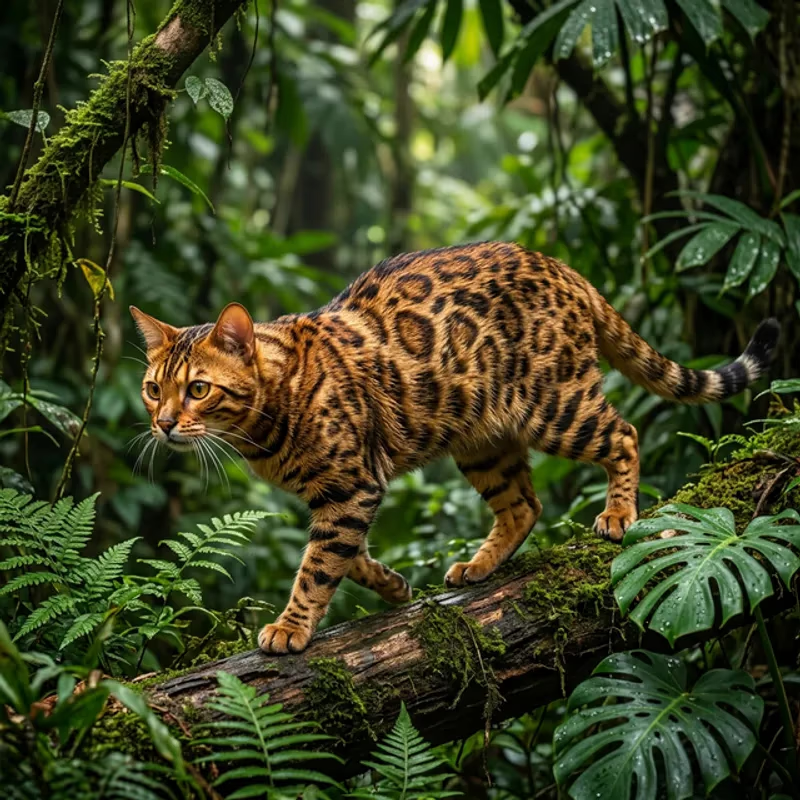
In the 1960s in the United States, geneticist Jean Mill began developing a breed that combined wild beauty with a gentle temperament by crossing the Asian Leopard Cat (ALC) with domestic cats. The breed gained worldwide popularity after being officially recognized by TICA (The International Cat Association) in the late 1980s. Their distinctive leopard patterns and curious nature are a direct inheritance of the ALC's genetic legacy.
🏥 Medical Warnings
⚠ Progressive Retinal Atrophy (PRA-b)
An inherited ocular disease that can affect Bengal cats. It leads to progressive vision loss and can result in blindness in severe cases. Regular ophthalmological examinations and genetic testing are crucial.
⚠ Pyruvate Kinase Deficiency (PKDef)
A genetic disorder affecting red blood cells, leading to hemolytic anemia. Symptoms may include reduced activity and jaundice. Genetic testing can identify carriers of the condition.
🧬 Bengal Cat F-Generation Characteristics Comparison
Under 12.5% (F4)
🤸 Bengal Cat Activity & Mental Care Protocol
Ensure vertical/horizontal activity spaces like cat trees, cat wheels. Stimulate intellectual curiosity and enhance problem-solving skills with puzzle toys that hide treats.
Install a water fountain as they prefer running water. Provide balanced nutrition by appropriately combining high-protein wet food and dry food.
🎨 Recognized Colors
Brown Spotted, Silver Spotted, Snow (Mink, Lynx, Sepia), Marble patterns, and more. Their shimmering "Glitter" coat is a signature characteristic unique to Bengals.
💰 Maintenance
Medium-to-high maintenance. While their short coat is easy to care for, ample space, dedicated playtime, and intellectual stimulation are essential to channel their abundant energy. Establishing an "environmental infrastructure" with items like cat wheels, cat trees, and puzzle toys is crucial to satisfy their activity levels and intellectual curiosity.
“Bengals are unstoppable powerhouses; simply 'leaving this high-performance machine to itself' can lead to system errors. A 'boredom debuff' can result in destructive behaviors, and 'energy overflow' can rapidly elevate stress levels. To ensure their wild instincts operate harmoniously within an optimized architecture, the Senior Editor of Madi's Pet Psychology Encyclopedia provides exclusive 'Admin Mode' solutions for Bengals.”
1️⃣ Redesigning Environmental Architecture with 'Active Scheduling'
Bengals are hardware units with infinite energy. 'Active scheduling' is essential to constructively expend this energy. Expand their vertical and horizontal activity zones with cat wheels, tall and sturdy cat trees, wall shelves, and various hiding spots. Implement 'interactive play sessions' for at least 30 minutes daily at a fixed time, using wand toys or laser pointers to stimulate their hunting instincts, thereby preventing system overload.
2️⃣ Implementing a 'Puzzle & Quest' System for High-Intelligence Processors
These companions are highly intelligent. Simply engaging them in physical play won't deactivate the 'boredom debuff.' Introduce an intellectual 'quest system' using puzzle toys that hide treats, automatic toys, and training clickers. Starting with simple commands like 'paw,' 'sit,' and 'stay' will utilize their cognitive abilities, allowing you to 'patch' problematic behaviors and 'build' a positive bond.
3️⃣ Standardizing 'Communication Protocols' and Consistent Feedback Loops
Bengals are expressive 'high-register vocalists.' They can persistently 'report bugs' when they want something. Rather than reacting immediately every time, standardize a 'communication protocol' where you only respond during designated playtime or treat times. For positive behaviors, immediately send a 'reward packet' of 'praise,' and use a 'logout' strategy of ignoring unnecessary demands to establish a healthy interactive 'loop.'
Are you a royal Nonstop Energizer (Bengal) too? Discover your inner cat personality!
Find your spirit cat that matches your personality in just 1 minute!