📊 5-Axis Feline Pentagon Radar & Breed Stats
📋 Physical Specs & Habits
♀ 3.0~5.0kg
📜 History & Lineage
📍 Origin: Thailand (formerly Burma), USA
The breed originated in 1930 when Dr. Joseph Thompson of San Francisco brought a female cat named 'Wong Mau' from Thailand (then Burma). Through breeding Wong Mau with a Siamese cat, the modern Burmese breed was established. Later, it was introduced to the UK, leading to the development of the 'European Burmese' as a distinct lineage. Wong Mau is recognized as the foundational ancestor of all Burmese cats.
🏥 Medical Warnings
⚠ Hypokalemia
This is a genetic condition that can lead to symptoms such as muscle weakness, tremors, and paralysis. Regular blood tests are essential to monitor potassium levels, and supplementation may be required for management.
⚠ Congenital Heart Disease (Aortic Stenosis)
Burmese cats can be susceptible to congenital heart abnormalities, such as Aortic Stenosis. Regular cardiac ultrasound examinations and consultations with your veterinarian are crucial for early detection and management of potential risks.
🧬 Burmese vs. Siamese: A Comprehensive Comparison
Thailand (Siam)
🏥 Burmese Daily Care & Diet Protocols
Burmese cats prioritize interaction with their guardians. Dedicate at least 30 minutes of focused playtime and consistent affection to meet their social needs.
Brush their fur with a soft rubber brush or grooming glove. This effectively removes dead hair, promotes skin circulation, and maintains the silky luster of their coat.
Brush their teeth using a toothbrush and cat-specific toothpaste. Regular professional dental cleanings are also vital for preventing oral diseases, as dental pain can lead to appetite loss.
Provide high-quality, protein-rich food tailored to their activity level, and carefully manage calorie intake to maintain an ideal weight. Always ensure fresh water is readily available.
🎨 Recognized Colors
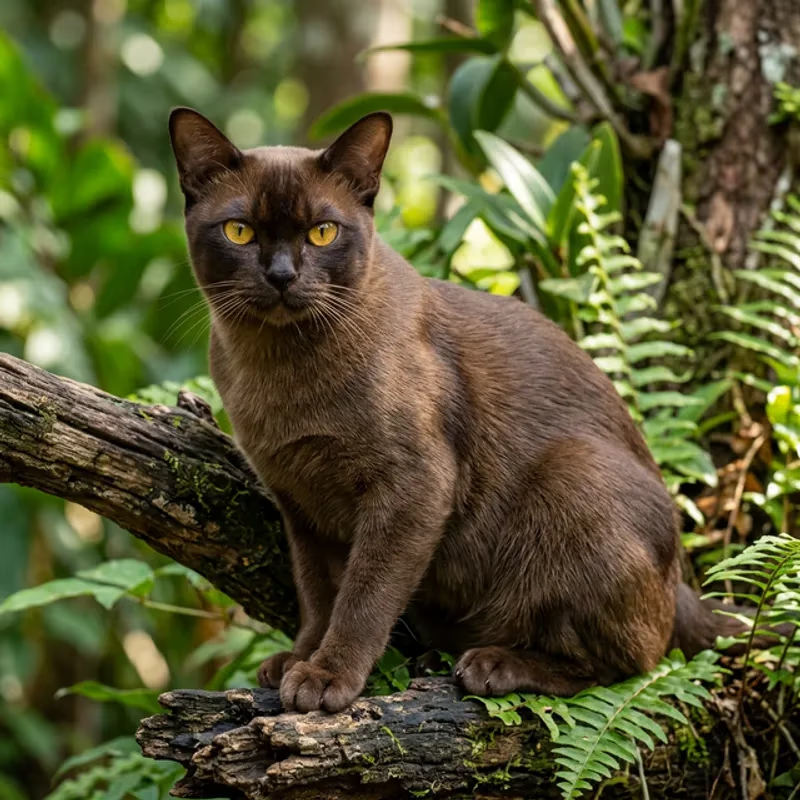
Burmese cats are known for their distinct, rich, solid color coats, including Sable (chocolate brown), Champagne (light beige), Blue (grey), and Platinum (pale silver-grey). These unique colors are all expressed due to a specific Burmese gene mutation.
💰 Maintenance
Burmese cats are remarkably low-maintenance when it comes to grooming. Their short, silky coats require only light brushing once or twice a week, with no special styling needed. However, due to their highly social nature, consistent attention and dedicated playtime from their human companions are absolutely essential.
“With their silky coats, golden eyes, and above all, their affectionate nature earning them the nickname "guardian's shadow," Burmese cats embody the architecture of a perfect companion. However, this delicate system can sometimes be vulnerable to 'attention deficiency bugs' or 'separation anxiety debuffs,' and certain genetic 'hidden bugs' may exist. We propose three solutions to prevent these system errors and maintain optimal performance.”
1️⃣ 'Affection Resource Distribution' & 'Attention Lock' Release Strategy
Burmese cats tend to concentrate all their attention resources on their guardians. Instead of always reacting immediately, train them to enjoy time alone by providing plenty of 'autonomous play modules' such as puzzle toys and automatic laser pointers. This helps prevent the 'separation anxiety debuff' from activating when their guardian is absent.
2️⃣ Establishing a 'Social Expansion Interface'
Burmese cats are highly sociable and friendly towards other animals and strangers. It's beneficial to expose them naturally to new environments, people, and animals through a 'social expansion interface' to help them maintain their adaptable personality. This proactively prevents 'new environment adaptation errors' or 'social interaction deficiency bugs'.
3️⃣ 'Bio-Security Patch' & 'Regular System Check' Protocol
Understanding the potential genetic 'hidden bugs' in Burmese cats, such as hypokalemia and congenital heart disease, is essential. Proactively apply 'bio-security patches' through regular health check-ups, blood tests, and cardiac ultrasounds. Maintaining a 'system check' routine in close collaboration with your veterinarian can minimize the occurrence of unexpected health 'critical errors'.
Are you a royal Charismatic Black Bean (Burmese) too? Discover your inner cat personality!
Find your spirit cat that matches your personality in just 1 minute!