📊 5-Axis Feline Pentagon Radar & Breed Stats
📋 Physical Specs & Habits
♀ 3.0~5.0kg
📜 History & Lineage
📍 Origin: France (Carthusian Monks)
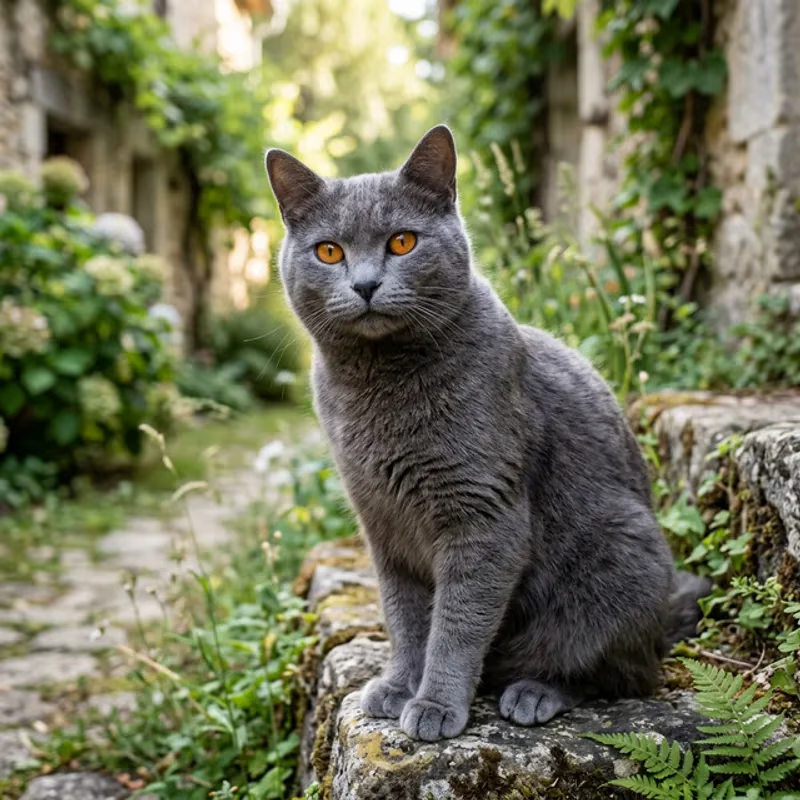
The Chartreux cat is known to have been bred by Carthusian monks in France during the Middle Ages to catch rats. It is believed that they were introduced to France during the Crusades and were selectively bred by the monks for their quiet and gentle temperament. The breed faced extinction in Europe in the early 20th century but was preserved through the efforts of breeders and officially recognized by the CFA (Cat Fanciers' Association) in the 1970s.
🏥 Medical Warnings
⚠ Patellar Luxation
Chartreux cats can be genetically predisposed to patellar luxation. Careful management is essential, as jumping from high places or excessive jumping can strain their joints.
⚠ Feline Lower Urinary Tract Disease (FLUTD)
Stress or insufficient water intake can increase the risk of Feline Lower Urinary Tract Disease (FLUTD), including cystitis and urinary stones. Ensuring adequate hydration and stress management are crucial.
🐱 Blue Cat Breed Comparison Chart (Chartreux vs. British Shorthair vs. Russian Blue)
🏥 Chartreux Daily Care & Dietary Protocol
Remove dead hair from their dense double coat and promote blood circulation. Daily brushing is essential, especially during shedding seasons.
Increase activity through hunting games, cat wheels, etc., to prevent obesity and maintain joint health. Create an environment that cushions landing impact, especially during jumps.
Provide fresh water in multiple locations. Use wet food or a cat fountain if necessary to increase water intake.
Provide a quiet and stable environment. Stress can lead to decreased immunity and behavioral issues.
🎨 Recognized Colors
A single blue-gray coat color. A distinctive feature is the silver tipping on the guard hairs.
💰 Maintenance
Shedding is moderate, but due to their double coat, regular brushing is necessary. Maintaining an appropriate activity level to prevent obesity and caring for their joints are important. Their calm disposition generally makes them easy to manage.
“The Chartreux, a smiling monastic angel embodying ultimate gentleness, boasts a perfect 'peace architecture' within itself. However, even this robust system harbors unexpected 'hidden quests' like 'low activity debuffs' and 'joint health bugs.' To ensure your Chartreux maintains 'max level' health, we propose three premium 'optimization solutions' from our experts.”
1️⃣ Automate 'Play Routines' & Patch 'Environmental Enrichment'
A gentle nature can sometimes lead to a 'laziness bug.' Establish fixed 'interactive play sessions' of 15 minutes or more twice a day, and optimize 'environmental enrichment' by installing 'exploration platforms' or 'cat wheels' near windows. Insufficient movement can trigger 'weight gain debuffs' and 'depression bugs.'
2️⃣ Activate 'Joint Health Protocol': Proactive Patellar Debuff Defense
Chartreux cats have a 'genetic vulnerability' to 'patellar luxation.' Arrange 'low-level cat trees' or 'stair steps' to cushion landing impact after jumps, and consistently provide 'daily buffs' of supplements containing 'glucosamine/chondroitin' to strengthen their 'joint system.' Overweight is a critical 'bug' that can cause 'joint lock.'
3️⃣ 'Dense Coat' Management: 'Matting Bug' & 'Skin Trouble Patch'
The thick, dense blue-gray coat is a signature of the Chartreux. 'Regular brushing 2-3 times a week' is necessary to remove 'dead hair data' and activate the 'skin circulation system.' Especially during seasonal changes, 'shedding events' increase, so a thorough 'management routine' must be maintained to prevent 'matting debuffs' or 'skin inflammation bugs.'
Are you a royal Smiling Monk (Chartreux) too? Discover your inner cat personality!
Find your spirit cat that matches your personality in just 1 minute!