📊 5-Axis Feline Pentagon Radar & Breed Stats
📋 Physical Specs & Habits
♀ 5.0~8.0kg
📜 History & Lineage
📍 Origin: United States (USA)
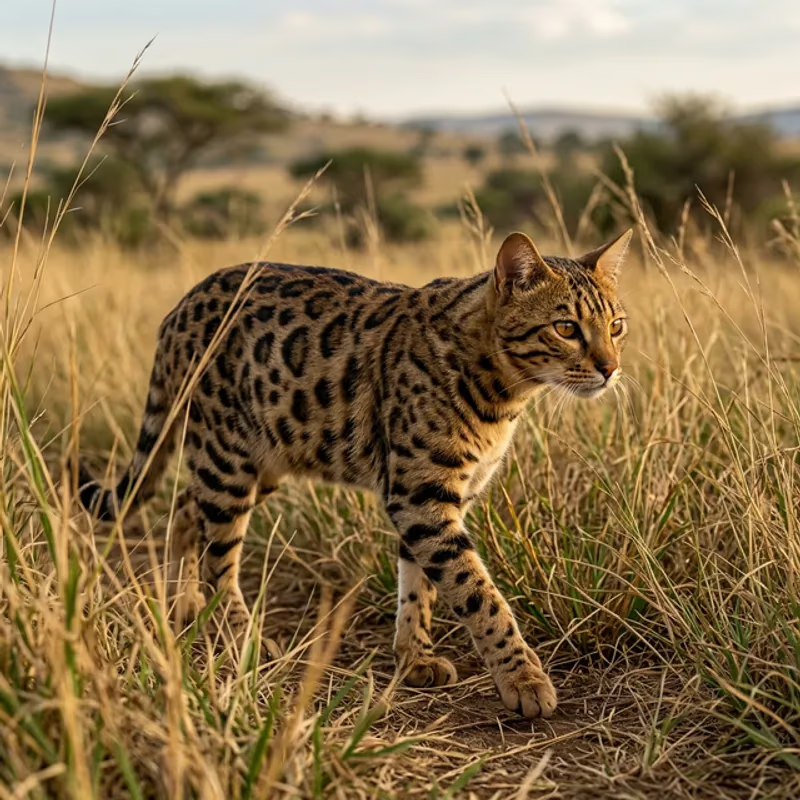
The Cheetoh breed was first developed in 2001 by breeder Carol Ann Brewer in California, USA. Her goal was to combine the wild beauty of jungle cats with the gentle disposition of domestic felines by crossing Bengals and Ocicats. This distinctive breed is renowned for its striking rosetted patterns, reminiscent of a cheetah, and its affectionate nature. The name 'Cheetoh' itself is a portmanteau of 'cheetah' and 'cat,' reflecting its cherished resemblance to the wild cheetah.
🏥 Medical Warnings
⚠ Hypertrophic Cardiomyopathy (HCM)
A heart condition with a reported genetic predisposition in Bengal lineages. It causes abnormal thickening of the heart walls, leading to impaired function. Regular cardiac ultrasound examinations are crucial for early monitoring.
⚠ Pyruvate Kinase Deficiency (PK Deficiency)
A hereditary anemic disorder that can originate from Bengal lineages. It affects red blood cell function, potentially causing lethargy, jaundice, and other symptoms. Prior genetic testing is essential to determine carrier status or onset.
🐆 Cheetoh vs. Bengal vs. Ocicat: Key Comparisons
🐆 Cheetoh Daily Care & Behavioral Protocol
Remove loose fur and massage skin with a rubber brush or short-bristled brush. Anti-static spray is recommended.
Brush teeth with a pet-specific toothbrush and toothpaste. Utilize dental health toys and veterinarian-prescribed dental treats.
Reinforce positive behavior with praise, treats, and petting. Maintain a 'bonding buff' through consistent interaction with family members.
🎨 Recognized Colors
Predominantly featuring rosetted and spotted patterns, common variations include Brown Spotted, Silver Spotted, Cinnamon Spotted, Blue Spotted, and Snow Mink/Lynx/Sepia Spotted.
💰 Maintenance
Maintenance Level: Moderate. While their short coat only requires light brushing 1-2 times a week, providing constant interaction and playtime is essential to satisfy their high intelligence and activity levels. Boredom can lead to behavioral 'bugs,' making environmental enrichment a critical consideration.
“The Cheetoh, true to its name, boasts a 'hardware specification' that combines a wild, exotic appearance with an inherently gentle nature. However, without a proper understanding of this unique 'architecture,' critical 'system errors' such as 'destructive behavioral bugs due to boredom,' 'separation anxiety debuffs,' or 'high energy level overflows' can occur. We propose 3 'patches' to stabilize the Cheetoh's 'operating system' and optimize its full potential.”
1️⃣ Establishing an 'Active Zone' Environmental Architecture
Arrange various 'play objects' like cat trees, cat wheels, and tunnels to allow them to climb, explore heights, and satisfy their hunting instincts. Crucially, utilize 'hunting simulation' toys to effectively 'distribute and process' their energy, thereby preemptively blocking 'destructive impulse bugs' caused by boredom with 'preventative logic.'
2️⃣ Activating 'Interaction Protocols' and Consistent Data Input
Cheetohs form strong bonds with their families and are susceptible to a 'lack of attention debuff.' Dedicate regular time daily (at least 30 minutes) for interactive play and petting to build a robust 'relational database' of connection. Consistent positive reinforcement (treats, praise) will rapidly 'build' their 'training module,' significantly aiding in 'bug fixes' for problematic behaviors.
3️⃣ Continuous Supply of 'Intellectual Stimulation Content'
Intelligent Cheetohs can suffer from 'wasted system resources' and stress if their minds are not engaged. Transform meal times into 'mission quests' with 'puzzle feeders' and teach simple commands (sit, stay) using 'clicker training' to provide a sense of accomplishment. Regularly introduce new toys or environmental changes to continuously 'update' their 'cognitive firmware.'
Are you a royal Jungle Cheetahs Descendant (Cheetoh) too? Discover your inner cat personality!
Find your spirit cat that matches your personality in just 1 minute!