📊 5-Axis Feline Pentagon Radar & Breed Stats
📋 Physical Specs & Habits
♀ 2.5~4.0kg
📜 History & Lineage
📍 Origin: Buckfastleigh, Devon, United Kingdom
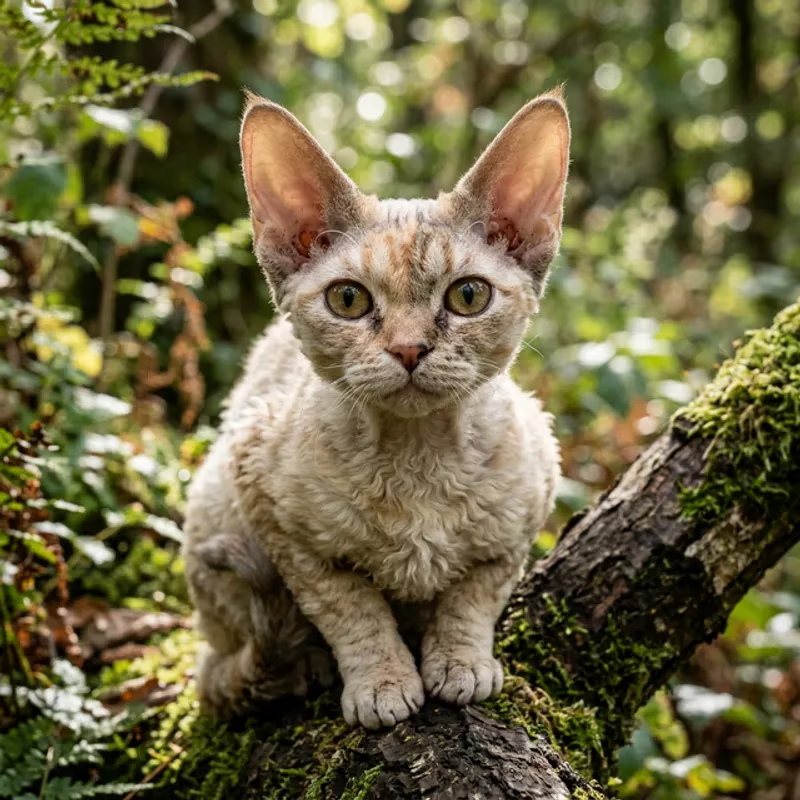
The Devon Rex breed originated with a curly-coated cat named 'Kirlee,' born in 1959 near an old tin mine in Devon, England, from a mating between a feral cat and a local stray. Kirlee carried the unique 'rex' gene, which became the foundation of the breed. Through subsequent development, the Devon Rex was established with its distinctive appearance and temperament. Initially, it was believed to be similar to the Cornish Rex, but genetic testing later confirmed they possess different rex genes.
🏥 Medical Warnings
⚠ Hereditary Myopathy
This is a genetic neuromuscular disorder unique to the Devon Rex. It involves the progressive weakening of muscles, which can lead to difficulty holding the head up or reduced mobility. Symptoms may appear as early as 4-7 weeks of age. Pre-emptive genetic testing is crucial for early identification.
⚠ Patellar Luxation
The kneecap may dislocate from its normal position, causing limping or pain. Mild cases can sometimes resolve naturally, but severe cases may require surgical correction. Careful observation after jumps or landings is recommended.
⚠ Malassezia Dermatitis
Devon Rex cats are prone to increased sebum production, leading to oily skin and ears. This can result in inflammation or itching due to yeast (Malassezia) infections. Regular ear cleaning and bathing are essential for management.
🧬 Velvet-Coated Cousins: Devon Rex vs. Cornish Rex Comparison
🏥 Devon Rex Maintenance Care & Dietary Guide
Due to high sebum production, earwax accumulates easily. Gently clean with a cat-specific ear cleanser and lightly trim any hair inside the ear.
Their oily skin often requires regular bathing. Use a mild shampoo and ensure the coat is completely dry afterward to prevent skin issues.
Their thin coat makes them highly susceptible to cold. Maintain indoor temperatures between 22-26°C (72-79°F) and provide blankets or clothing for warmth. Also, be mindful of overcooling during air conditioning.
Satisfy their high intelligence and activity with interactive toys and short, frequent training sessions to prevent boredom and build a strong bond.
🎨 Recognized Colors
All coat colors and patterns are expressed, including solid, bicolor, tabby, parti-color, smoke, and point.
💰 Maintenance
While shedding is minimal, their oily skin often necessitates regular ear cleaning and bathing. Due to their fine, thin coat, they are susceptible to cold and require careful temperature management. Providing ample playtime is also crucial to satisfy their high intelligence and activity levels.
“Known as 'pixies' due to their E.T.-like appearance and unique personality, Devon Rex cats possess a captivating architecture. However, this uniqueness also comes with certain 'hardware vulnerabilities' and 'software bugs.' Key examples include 'thermoregulation debuffs,' 'skin trouble risks,' and 'attachment overload.' We propose three solutions to perfectly patch these issues.”
1️⃣ Strengthen 'Thermoregulation Module' and Maintain 'Heating System' Operation
The Devon Rex's short, thin coat critically 'debuffs' its 'thermoregulation module.' It is essential to consistently maintain indoor temperatures between 22-26°C (72-79°F) and to ensure the 'heating system' is always active during winter by providing warm blankets or special cat clothing. A comfortable temperature is key to preventing immune system compromise and cold-related issues.
2️⃣ Establish a 'Cleaning Protocol' to Prevent 'Sebaceous Gland Overload'
Devon Rex cats are prone to active sebum secretion from their skin and ears, making them susceptible to the 'seborrheic dermatitis bug.' Implement a strict 'cleaning protocol' including weekly ear cleaning and monthly baths with a mild shampoo to prevent 'sebaceous gland overload.' After bathing, always ensure their fur is completely dry to eliminate any 'vulnerabilities' to skin infections.
3️⃣ Implement an 'Intelligent Interaction Scheduler' to Prevent 'Attachment Overload'
Devon Rex cats, with their strong attachment to humans, can develop 'separation anxiety bugs' if 'attention resources are depleted.' Operate an 'intelligent interaction scheduler' daily with fixed playtime using toys or puzzle feeders to satisfy their high intelligence and activity levels. During times they are alone, activating an 'autonomous entertainment mode' with hideouts or window perches overlooking outdoor scenes is also beneficial.
Are you a royal Yodalike Poodle (Devon Rex) too? Discover your inner cat personality!
Find your spirit cat that matches your personality in just 1 minute!