📊 5-Axis Feline Pentagon Radar & Breed Stats
📋 Physical Specs & Habits
♀ 3.5~5.0kg
📜 History & Lineage
📍 Origin: Across Europe, particularly Scandinavia
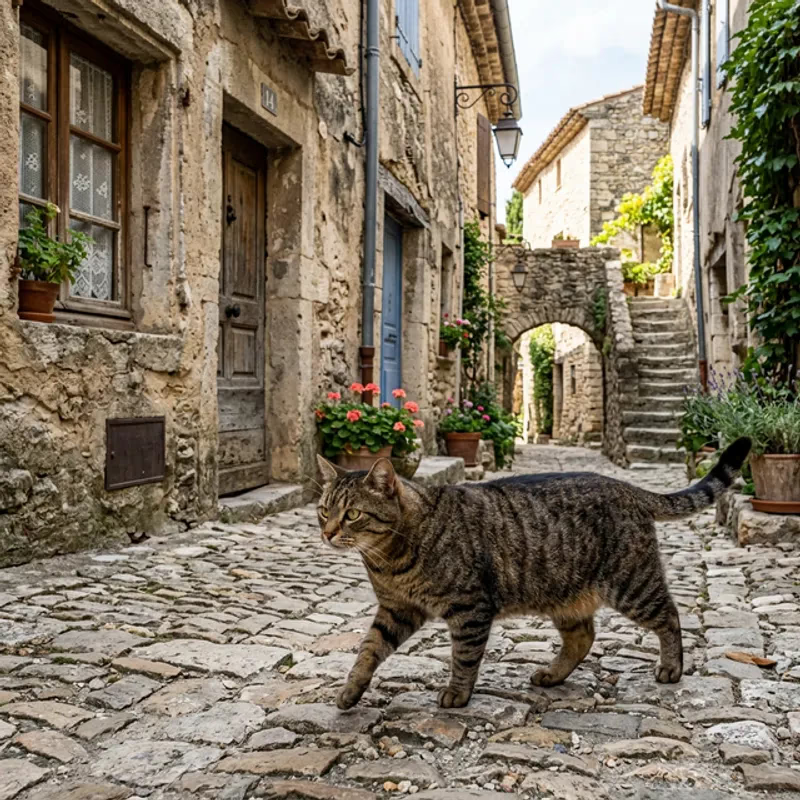
The European Shorthair is an indigenous cat breed that naturally developed and settled across the European continent, particularly in Scandinavia, dating back to the Roman era. Untouched by artificial breeding, they boast a robust biological architecture based on their "native code," establishing themselves as true "veterans of the feline world" with tenacious wild vitality and formidable immunity. They are living history, naturally selected over thousands of years without specific lineage manipulation.
🏥 Medical Warnings
⚠ Hypertrophic Cardiomyopathy (HCM)
HCM is a genetic heart condition that can affect most cat breeds. While European Shorthairs are generally healthy as a naturally occurring breed, regular cardiac ultrasounds are crucial for early detection.
⚠ Patellar Luxation
This joint issue can rarely occur in highly active cats. The kneecap may slip out of place, causing pain. Owners should be cautious of excessive jumping or external impacts, and veterinary consultation is necessary if abnormal gait is observed.
🌍 Comparative Analysis: European Shorthair vs. American Shorthair vs. Korean Shorthair
✅ European Shorthair Daily Care & Activity Protocol
Gentle brushing to remove dead fur and promote blood circulation
Brushing with cat-specific toothbrush and toothpaste; use dental treats if difficult
Provide interactive play that stimulates hunting instincts, such as wand toys or laser pointers
Expand living space and provide intellectual stimulation with cat trees, scratchers, puzzle feeders, etc.
🎨 Recognized Colors
All natural colors and patterns are permitted, including black, white, red, cream, blue, silver, tabby, bicolor, and particolor, displaying a remarkably diverse spectrum.
💰 Maintenance
As a naturally occurring breed, maintenance is considered "Easy." Their short, dense coat requires only 1-2 brushings per week, with no special grooming or professional care needed. Basic nutritional management and regular health check-ups are sufficient to maintain an "optimal system state."
“The European Shorthair boasts a robust biological architecture, validated since Roman times as being based on "primitive code." However, even this seemingly perfect system can encounter "psychological debuffs" in an urban environment. Here, we present three common "bugs" that arise when their wild instincts conflict with a domestic "software environment," along with their solutions.”
1️⃣ Activating the Wild Instinct Interface: Environmental Enrichment Patch
These companions are born hunters and explorers. Simply providing food isn't enough; you'll likely encounter "Error 404: Boredom Found." Continuously engage their "exploration algorithm" with puzzle feeders, interactive toys, and regular hunting play sessions. Installing "vertical expansion packs" like scratchers and cat trees is fundamental. Provide a "virtual experience" of the outdoor environment to satisfy their intellectual curiosity.
2️⃣ Optimizing Socialization Protocols: Bond Level-Up System
Their strong independent nature can sometimes activate a "access denied" mode. Forced interactions can lead to "relationship bugs," making an "asynchronous communication" strategy crucial, allowing the cat to approach you first. Consistently conduct "positive reinforcement learning sessions" with treats to share the "encrypted key" of trust. The core is to provide "stability buffs" with a gentle voice and predictable behavior.
3️⃣ Territory Optimization and Stress Reduction Algorithm Establishment
European Shorthairs clearly recognize their "domain" and have delicate "error handling" for stress. Unexpected environmental changes can trigger a "system crash." Ensure they have a secure "private zone," and in unfamiliar environments, allow ample time to activate "adaptation mode." When unfamiliar guests visit, it's advisable to temporarily initiate a "quarantine process" to minimize stress from "external threats."
Are you a royal Europes Guardian (European Shorthair) too? Discover your inner cat personality!
Find your spirit cat that matches your personality in just 1 minute!