📊 5-Axis Feline Pentagon Radar & Breed Stats
📋 Physical Specs & Habits
♀ 3.0~5.0kg
📜 History & Lineage
📍 Origin: United States
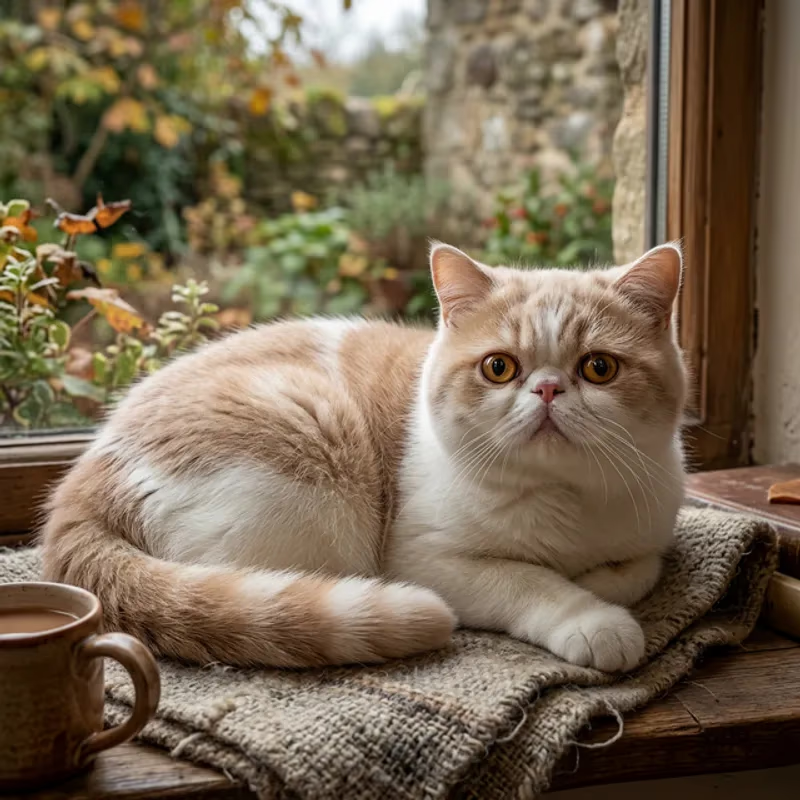
In the late 1950s in the United States, a breeding program was initiated to combine the short, dense coat of the British Shorthair and American Shorthair with the docile temperament and unique facial structure of the Persian. This endeavor aimed to reduce the grooming demands of long-haired Persians while retaining their captivating appearance and personality. As a result, the breed was officially recognized as the 'Exotic Shorthair' by the CFA (Cat Fanciers' Association) in 1966. With their humorous and endearing appearance, often affectionately nicknamed the 'flattened bread fairy,' they have captured the hearts of cat lovers worldwide.
🏥 Medical Warnings
⚠ Polycystic Kidney Disease (PKD)
As Exotic Shorthairs share genetic lineage with Persians, approximately 30-40% are genetically predisposed to this condition. It involves the development of cysts in the kidneys, which can lead to impaired function. Annual regular ultrasound examinations are highly recommended.
⚠ Brachycephalic Syndrome
Due to their distinctive flattened nose and face structure, Exotic Shorthairs are prone to frequent tear staining (epiphora) and face a higher risk of respiratory issues. Daily care for their eyes and nasal folds is essential, and in severe cases, surgical airway expansion may be necessary.
⚠ Progressive Retinal Atrophy (PRA)
This hereditary eye condition, common in Persian breeds, involves the progressive degeneration of the retina, which can ultimately lead to blindness. Early detection through regular ophthalmic examinations and genetic testing is crucial.
🧬 Exotic Shorthair vs. Major Ancestral Breeds Comparative Analysis
🏥 Exotic Shorthair Daily Care & Feeding Protocol
Gently wipe tear stains and between nasal folds with a soft cotton pad or gauze soaked in a dedicated cleanser to prevent inflammation and dermatitis.
Remove loose fur with a rubber brush or metal comb to prevent hairballs and skin conditions. Increase frequency especially during shedding seasons.
Serve brachycephalic-specific almond-shaped/star-shaped kibble in a shallow, wide bowl. Maintain cleanliness around the chin after meals.
Place multiple bowls of fresh water for kidney health, and consider a fountain-style water dispenser to encourage drinking. Mixing wet food can also be beneficial.
🎨 Recognized Colors
Exotic Shorthairs boast an extensive array of colors and patterns, identical to those found in Persians, including solid, silver & golden, smoke, tabby, parti-color, bi-color, and Himalayan.
💰 Maintenance
While coat maintenance is considerably easier than for Persians, daily care for tear staining and nasal folds is essential due to their brachycephalic nature. Brushing 2-3 times a week and daily ocular hygiene are required, alongside a focus on adequate hydration for kidney health.
“The adorable 'flattened bread fairy' Exotic Shorthair boasts an optimized architecture, combining the 'software' of the Persian with the 'hardware' of the American Shorthair. However, even this seemingly perfect system harbors persistent 'bugs' and 'debuffs' inherited from their Persian DNA. Specifically, their brachycephalic characteristics make them vulnerable in terms of cooling systems and field of vision, and a 'laziness debuff' can lead to decreased physical stamina. Our Senior Editor proposes three optimization solutions to provide perfect support for your cherished feline companion.”
1️⃣ Establish an Ocular-Respiratory Interface 'Cleanroom' and Regular Patching
Due to their brachycephalic structure, excessive tearing and moisture accumulation in nasal folds are common, leading to frequent 'trouble bugs.' Daily cleaning of the periocular area and nasal folds with a dedicated cleanser will proactively prevent 'infection debuffs.' Operating an air purifier to maintain optimal indoor air quality and locking humidity at 50% is crucial to apply an 'environmental patch' that protects their respiratory system from strain.
2️⃣ Activate 'Automatic Grooming Script' (for Shorthairs)
Despite being a shorthaired breed, Exotic Shorthairs have a dense and abundant coat, leading to more shedding than expected. Run an 'automatic grooming script' 2-3 times a week with a rubber brush to remove dead fur, preventing 'hairball debuffs' and promoting healthy skin circulation. While frequent bathing isn't necessary, adhering to a 'drying protocol' to thoroughly dry their fur and prevent matting is advised.
3️⃣ Activate 'Activity Enhancement Mode' (Removes Laziness Debuff)
Due to their docile and quiet nature, Exotic Shorthairs are susceptible to a 'laziness debuff,' which can lead to obesity. Activate 'Activity Enhancement Mode' for at least 15-20 minutes daily using wand toys or laser pointers to stimulate their hidden predatory instincts. Designing an 'environmental architecture' with cat wheels or tunnels with hiding spots to encourage horizontal space activity is essential for maintaining a healthy weight.
Are you a royal Squished Bread Fairy (Exotic Shorthair) too? Discover your inner cat personality!
Find your spirit cat that matches your personality in just 1 minute!