📊 5-Axis Feline Pentagon Radar & Breed Stats
📋 Physical Specs & Habits
♀ 3.5~5.5kg
📜 History & Lineage
📍 Origin: United States and United Kingdom (Persian and Siamese Crossbreeding)
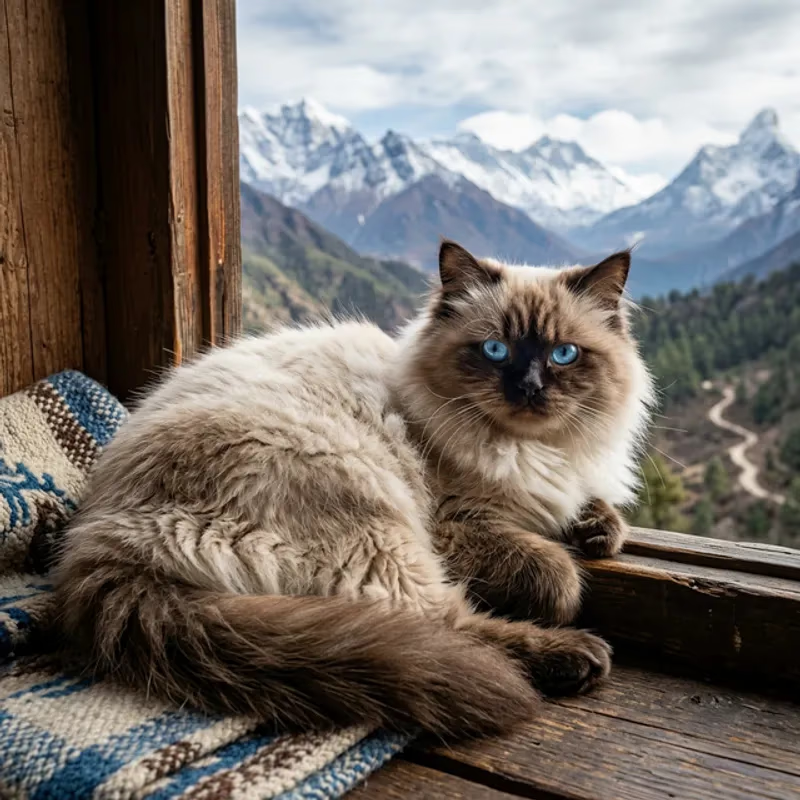
Originating from breeding projects in the United States and the United Kingdom since the 1930s, the Himalayan was developed to combine the luxurious long fur and gentle temperament of the Persian with the distinctive point coloration and blue eyes of the Siamese. After numerous attempts, it was recognized as an independent breed called 'Himalayan' in the late 1950s, named for its coat color's resemblance to the Himalayan rabbit. It can be considered a 'hybrid' breed, extracting the best traits from the 'major architectures' of the Persian and Siamese.
🏥 Medical Warnings
⚠ Polycystic Kidney Disease (PKD)
A hereditary condition passed down from Persian lineage, where cysts form in the kidneys, progressively impairing their function. Regular ultrasound examinations and careful management of water intake are crucial.
⚠ Brachycephalic Syndrome
Due to their short, flattened nasal structure, there is a higher risk of respiratory difficulties, excessive tearing (epiphora), and various eye conditions. Special attention to temperature control and ocular hygiene is essential.
⚠ Progressive Retinal Atrophy (PRA)
An ocular disease that can be inherited from Siamese lineage, leading to the degeneration of the retina and gradual loss of vision. Early diagnosis through genetic testing and diligent management can help slow its progression.
🤝 Himalayan vs. Persian Breed Comparison
🩺 Himalayan Daily Care & Dietary Protocol
Thoroughly brush with a slicker brush and comb to prevent matting. Pay special attention to underarms and belly.
Gently wipe around the eyes with gauze or a pad moistened with a dedicated cleansing solution to prevent tear stains and inflammation. Check for nasal congestion.
Maintain indoor temperature between 22°C-24°C and humidity around 50%. Air conditioning is essential in summer. Avoid direct sunlight and provide cool resting areas.
Provide 'almond-shaped' or 'star-shaped' kibble specifically designed for brachycephalic breeds, using shallow and wide bowls to minimize respiratory strain during eating.
To mitigate the risk of kidney disease (PKD), provide multiple clean water bowls or a pet water fountain, and supplement with wet food to increase overall water intake.
🎨 Recognized Colors
Inheriting genes from the Siamese, Himalayans invariably display point coloration (such as Seal, Blue, Chocolate, Lilac, Flame, Cream, Tortie, Lynx Point) and all individuals possess striking bright blue eyes.
💰 Maintenance
To maintain their exquisite appearance, 'intensive care' is essential. Daily brushing and tear stain management are fundamental, and due to their brachycephalic nature, maintaining a comfortable indoor temperature is paramount. Ongoing expenses for genetic health management and professional grooming should also be anticipated.
“The Himalayan is a breed where the 'architecture of the Persian' is overlaid with the 'color module of the Siamese'. This unique 'hybrid design' bestows them with stunning visuals and an appealing personality, but it also carries the potential risk of inheriting 'genetic vulnerabilities' from both parent breeds. To ensure that this 'blue jewel within a ball of fluff' retains its brilliance, we propose three key solutions for 'system optimization'.”
1️⃣ Debugging 'Genetic Vulnerabilities' - Pre-screening and Regular Health Checks
PKD (Polycystic Kidney Disease) and PRA (Progressive Retinal Atrophy) are 'hidden bugs' frequently encountered in Himalayans. Before adoption, verify the genetic test results of the parent cats. Conduct 'proactive debugging' through regular health check-ups, especially kidney ultrasounds and ophthalmic examinations. Early detection maximizes the efficiency of 'treatment patches'.
2️⃣ Optimizing 'Phenotypic Architecture' - Dedicated Environmental Setup and Management for Brachycephalic/Long-Haired Breeds
Their short nose and long fur are part of the Himalayan's 'signature design,' but they also demand significant 'environmental dependency buffs'. To prevent 'heatstroke debuffs' in summer, 'lock' indoor temperatures between 22~24°C. Daily meticulous brushing is necessary to prevent 'fur matting bugs'. Tear stains can 'damage the visual UI,' so a routine of daily 'updates' with a dedicated cleaner is essential.
3️⃣ Activating the 'Social Interface' - Enhancing Interaction Based on Siamese DNA
With the Siamese's 'vocalization module' added to the Persian's calmness, Himalayans tend to have a higher 'interaction need' with their guardians. Rather than simple neglect, regularly activate 'play sessions' to maintain their 'mental wellness buff'. Boredom can manifest as 'error messages' in the form of behavioral issues, so it's crucial to 'engage' them with toys like wand teasers or puzzle feeders.
Are you a royal Blue Jewel in a Cotton Ball (Himalayan) too? Discover your inner cat personality!
Find your spirit cat that matches your personality in just 1 minute!