📊 5-Axis Feline Pentagon Radar & Breed Stats
📋 Physical Specs & Habits
♀ 2.5~4.0kg
📜 History & Lineage
📍 Origin: Korat Province, Thailand
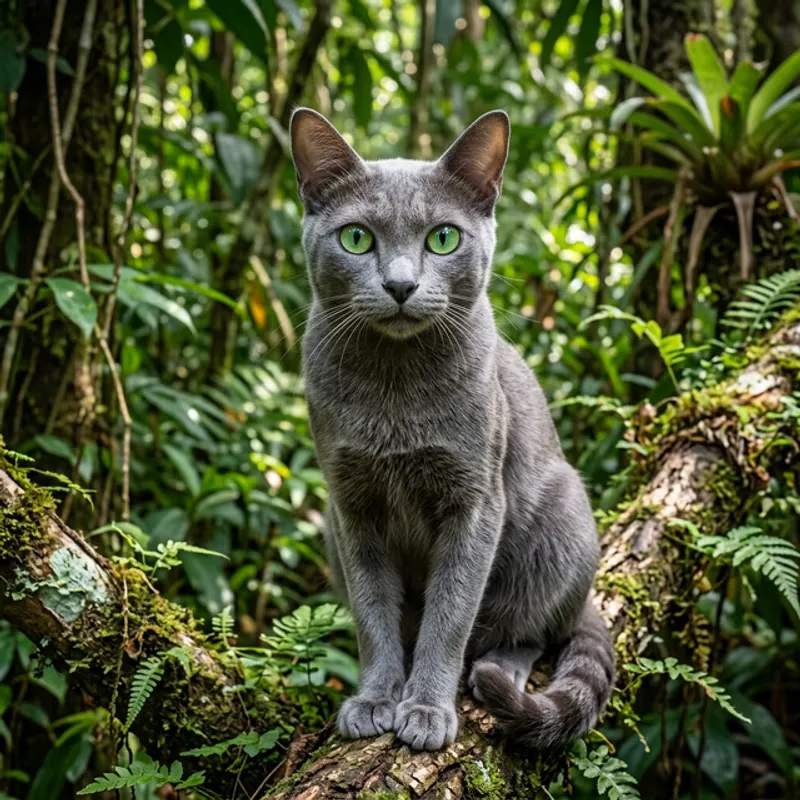
An ancient, naturally occurring breed from the Korat province of Thailand, revered for over a millennium as a symbol of good luck and prosperity, known locally as 'Si-Sawat.' Its illustrious history is documented as early as the 14th century in the 'Smud Khoi of Cats,' a collection of cat poems from Thailand's Ayutthaya Kingdom. The breed was introduced to England in the late 19th century and gained recognition in the West after its import to the United States in 1959. Currently, the CFA (Cat Fanciers' Association) officially recognizes only the solid 'blue' coat color.
🏥 Medical Warnings
⚠ Gangliosidosis (GM1/GM2)
A hereditary neurological disorder where enzyme deficiency leads to the accumulation of toxic substances in nerve cells. It manifests at a young age, causing motor skill degradation, tremors, and paralysis, and can be fatal. Genetic testing can help prevent it.
⚠ Respiratory Sensitivity & Hypothermia Vulnerability
Korats are highly sensitive to cold due to their single-coat fur structure. They are vulnerable to respiratory illnesses and at risk of hypothermia if exposed to low indoor temperatures or sudden temperature changes.
🧬 Comparative Chart of the Three Major 'Blue' Cats: Korat vs. Russian Blue vs. Chartreux
🏥 Korat Daily Care & Environmental Setup Guide
As a single-coat, short-haired breed, shedding is minimal. Light brushing removes loose hair and promotes blood circulation.
To prevent tartar and oral diseases, brush with a cat-specific toothbrush and toothpaste, or provide dental health supplements.
Provide a quiet and predictable environment. Minimize exposure to strangers or loud noises, considering their sensitive nature. Maintain indoor temperatures of 22-25°C in winter.
Being intelligent and active, focused playtime of at least 15-20 minutes daily is essential with various toys such as puzzle toys and feather wands.
Always provide fresh water. Encourage increased water intake by placing multiple water bowls or using a fountain-style water dispenser.
🎨 Recognized Colors
Silver-blue - A single coat color where each hair is tipped with silver, giving a luminous sheen. The banding on each strand creates subtle color variations that shimmer with movement and light.
💰 Maintenance
Medium maintenance. As a single-coat, short-haired breed, grooming is relatively easy. However, their sensitivity to cold and delicate nature require a meticulous approach to environmental management. Dedicated playtime and close care are crucial for their mental well-being.
“The 'Silver Luck' Korat, with its profound loyalty to its guardian and exceptional intelligence, is a superb companion that can enrich your life. However, this delicate system is susceptible to external 'noise,' and may require pre-emptive 'patches' for certain 'genetic bugs.' We propose three 'system optimization solutions' for a harmonious coexistence.”
1️⃣ Activate 'Environmental Noise Filtering': Establish Stability Protocols
Korats possess sensitive hearing and are prone to stress due to their reactivity to changes. Sudden loud noises or frequent environmental shifts can act as severe 'debuffs' for your Korat. Establish a predictable environmental 'architecture' by providing a quiet space and maintaining a consistent routine. Utilizing curtains or soundproofing materials to block external noise can also be effective.
2️⃣ Optimize 'Close Care Module': Bonding Enhancement Algorithm
Korats form deep bonds with their guardians and tend to crave attention. Extended periods of solitude or lack of engagement can trigger a 'separation anxiety bug.' Consistently 'update' their 'attachment level' through frequent, short interactions (play, petting, conversation) multiple times a day, and 'lock in' their sense of security to prevent feelings of loneliness.
3️⃣ 'Pre-Scan for Genetic Bugs': Deploy Health Care Patches
Gangliosidosis (GM1/GM2) is a fatal neurological disease that can be inherited by Korats. Before adoption, it is imperative to run the 'genetic testing module' to confirm the absence of this 'bug' in the individual. Regularly monitor their 'system logs' through routine health check-ups, and if any abnormal signs appear, immediately activate the 'hotline' with your veterinarian for early diagnosis and the application of 'emergency patches' to extend their lifespan.
Are you a royal Silver Luck (Korat) too? Discover your inner cat personality!
Find your spirit cat that matches your personality in just 1 minute!