📊 5-Axis Feline Pentagon Radar & Breed Stats
📋 Physical Specs & Habits
♀ 3.5~5.5kg
📜 History & Lineage
📍 Origin: Kuril Islands, Russia
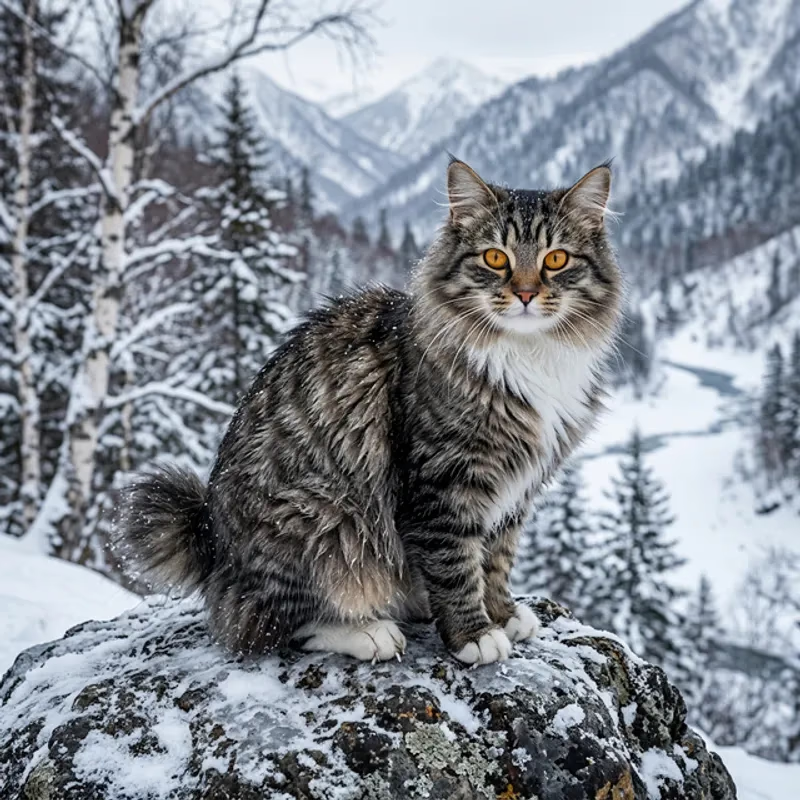
The Kurilian Bobtail is a naturally evolved breed from the harsh Kuril Islands of Russia. To survive this wild environment, they developed robust physical strength and exceptional hunting instincts. Their unique short, rounded "pom-pom" tail, resembling a rabbit's, is believed to be the result of a natural mutation, offering advantages in maintaining body temperature in cold climates and navigating rugged terrain. Introduced to Europe by Russian breeders in the early 1990s, the breed gained official recognition from international cat associations (such as CFA and TICA) in the 2000s. Their DNA architecture is truly a masterpiece of nature.
🏥 Medical Warnings
⚠ Hip Dysplasia
The Kurilian Bobtail is a very active and playful cat that enjoys jumping. While rare, they can be genetically predisposed to hip dysplasia. If you observe any unusual gait or reduced activity levels, it is crucial to consult with your veterinarian for early diagnosis and management.
⚠ Dental Disease
Like most cat breeds, Kurilian Bobtails are susceptible to dental issues such as periodontitis and gingivitis. Regular brushing and professional dental cleanings are essential for maintaining optimal oral hygiene.
🧬 Kurilian Bobtail vs. Japanese Bobtail: A Comparative Analysis
🏥 Kurilian Bobtail Daily Care & Activity Protocol
Brush teeth with cat-specific toothbrush and toothpaste. Establish an "oral care routine" from a young age through positive reinforcement.
🎨 Recognized Colors
A wide range of solid colors including red, blue, black, cream, and white, as well as tabby and bicolor patterns. However, color points typical of Siamese, Abyssinian, or Burmese breeds are not recognized.
💰 Maintenance
Due to their high activity levels, Kurilian Bobtails require ample playtime and space. For their dense double coat (especially for semi-longhaired varieties), brushing 2-3 times a week is recommended. Their fondness for water can be leveraged for enjoyable baths or water play. As they love to climb, providing sturdy cat trees and scratching posts is essential.
“The Kurilian Bobtail is a creature born with "wild genes," forged in the cold winds of the Kuril Islands. Their powerful physique and keen intelligence can sometimes present as unpredictable "event bugs" or "excessive energy debuffs" for their human companions. But fret not! With the "system optimization patches" embedded with the expertise of the Madi Psychological Encyclopedia, you can perfectly manage the charm of these wild cats. Try switching their "Hunter Mode" to "Home-Friendly Mode" with these three core solutions.”
1️⃣ Building an "Interactive Environment Architecture" to Satisfy Hunting Instincts
Kurilian Bobtails have powerfully encoded hunter DNA. A few simple toys won't satisfy their "search and chase algorithms." Create a "hunting simulation environment" with multi-level cat trees for climbing, scratching posts, and puzzle feeders. Engage them in "interactive activities" like wand play for at least 30 minutes daily to safely expend their physical and mental energy, which helps reduce "error codes" such as furniture destruction.
2️⃣ Regular "Double Coat" Fur Management System Patches
The Kurilian Bobtail's dense double coat acts as a "defense system" protecting them from harsh environments. However, in indoor settings, it can become a primary cause of "hairball bugs" and "matting debuffs." Perform "regular maintenance patches" 2-3 times a week (daily during shedding season) using a slicker brush and metal comb to remove dead fur. Leveraging their fondness for water, introducing a "gentle shampoo routine" can also provide the synergy of simultaneously managing skin health.
3️⃣ Implementing a "Water-Utilizing" Oral Care Routine and Distributing Joint Load
Kurilians possess a special "option": they are not afraid of water. Leverage this trait to implement an "enhanced oral hygiene protocol." For instance, use treat rewards after water play to create positive "conditional reinforcement" for brushing, or incorporate water-soluble dental supplements. Furthermore, due to their active jumping, "micro-loads" can accumulate on their joints. It is crucial to provide "landing zone buffers" that absorb impact when they jump from high places, thereby "locking in" a long-term "joint health system."
Are you a royal Cold Island Hunter (Kurilian Bobtail) too? Discover your inner cat personality!
Find your spirit cat that matches your personality in just 1 minute!