📊 5-Axis Feline Pentagon Radar & Breed Stats
📋 Physical Specs & Habits
♀ 3.0~4.5kg
📜 History & Lineage
📍 Origin: Isle of Man, United Kingdom
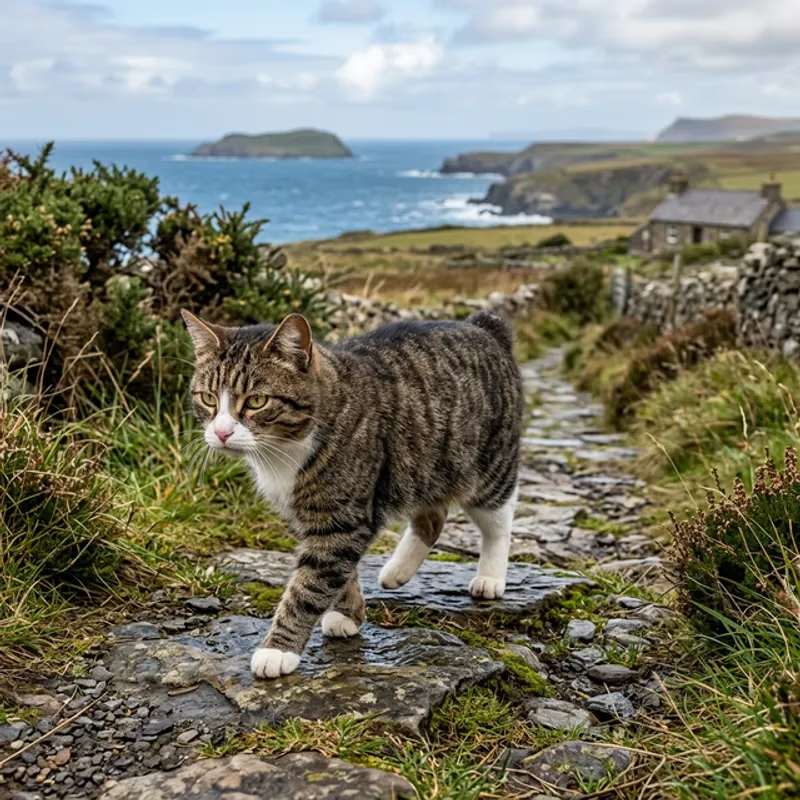
Originating naturally around 800 AD on the Isle of Man in the Irish Sea, this breed is characterized by a genetic mutation resulting in a lack of tail, which was purely preserved and spread in the island's isolated environment. Their resilience was proven by their exceptional hunting prowess in the harsh climate of the Isle of Man, earning them the role of "rat-catching warriors" for local farmers. Interestingly, early "legacy data" also suggests that the genetic mutation may have begun with cats escaping shipwrecks of the Spanish Armada and settling on the island.
🏥 Medical Warnings
⚠ Manx Syndrome
Due to the genetic mutation causing tail degeneration, spinal deformities and neurological development abnormalities can occur. This can lead to severe "hardware bugs" such as loss of bladder/bowel control and hind leg paralysis. Careful observation and early diagnosis are therefore crucial.
⚠ Vulnerability to Joint and Spinal Diseases
While their short spinal structure and powerful hind leg jumping ability are charming, they can place long-term strain on the spine and joints, leading to a higher incidence of degenerative arthritis. To prevent "system overload," weight management and creating an impact-reducing environment are essential.
Manx Tail Types: "Hardware Architecture" Comparative Analysis
Manx-Specific "Daily Care and System Optimization" Protocol
Use a dedicated pin brush to remove dead hair and promote skin circulation. Prevent hair matting "lag".
Maintain cleanliness around the anus after defecation. Prevent skin inflammation "bugs" caused by contamination.
Utilize their jumping ability, but optimize "physical engine" by installing stairs/ramps/soft mats at landing spots to reduce impact.
🎨 Recognized Colors
Almost all coat colors and patterns, excluding color points, are expressed like a "universal patch", including white, black, red, cream, blue, lynx point, bicolor, tabby, tortoiseshell, and calico. Eye colors typically harmonize with the coat, but odd-eyes can also be found.
💰 Maintenance
Weekly brushing, 2-3 times, is required to manage their thick double coat. "Rumpy" types, with short or no tails, particularly need careful attention to perianal hygiene. As they are highly active, sufficient playtime and space are essential. Obesity is a critical "debuff" to their joints, so careful weight management is vital.
“The tailless Manx, with its adorable "mini-rabbit" appearance and superb athleticism, is sure to enrich the "database" of any devoted owner. However, due to genetic characteristics, they are susceptible to a critical "core bug" known as Manx Syndrome and potential joint "error codes". As the Senior Editor of the Madi Animal Psychology Encyclopedia, I propose three "system optimization solutions" to help owners maintain this unique "hardware architecture" in its optimal state.”
1️⃣ Manx Syndrome "Debugging" and Early Warning System Implementation
Manx Syndrome often manifests within the first four weeks of life. Do not overlook subtle "error codes" such as abnormal gait, difficulty controlling bowel/bladder movements, or hind leg weakness. Regular health check-ups should be used to analyze "system logs", and any unusual signs should prompt immediate consultation with a veterinarian for "patch application". Early diagnosis and management are the core "algorithm" that determines a Manx's quality of life.
2️⃣ Optimizing Jump "Mechanics" and Installing "Landing Pads"
Manx cats, with their long hind legs and excellent jumping ability, enjoy utilizing vertical spaces. However, repeated high jumps can "overload" their joints. Choose cat trees with stable structures, avoid excessive height differences between levels, and place soft mats or carpets as "landing pads" at impact points to absorb shock. It is crucial to "lock in" joint health by enhancing the efficiency of their "physical engine".
3️⃣ Activating the Weight Management "Controller" and Dietary "Updates"
Overweight conditions impose a fatal "debuff" on a Manx's spine and joints. Provide appropriate amounts of high-quality food suited to their activity level, utilize low-calorie treats as "selective options", and activate the "energy expenditure algorithm" through regular playtime. Consulting with a veterinarian for a diet "update" based on optimal "nutritional data" tailored to their age and health status is the "core script" for a long and healthy life.
Are you a royal Tailless Fairy (Manx) too? Discover your inner cat personality!
Find your spirit cat that matches your personality in just 1 minute!