📊 5-Axis Feline Pentagon Radar & Breed Stats
📋 Physical Specs & Habits
♀ 3.0~5.0kg
📜 History & Lineage
📍 Origin: United Kingdom (1950s)
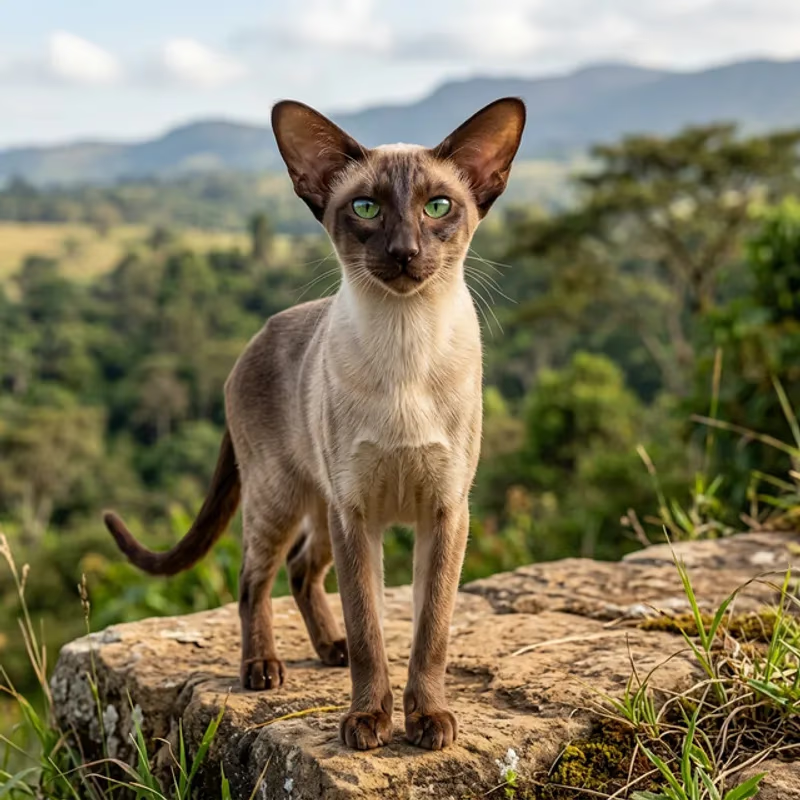
The Oriental Shorthair was developed in the United Kingdom during the 1950s with the aim of expanding the genetic diversity of the Siamese cat. Breeders crossbred Siamese with American Shorthairs, British Shorthairs, Russian Blues, and other breeds to maintain the Siamese's svelte physique and intelligent characteristics, while introducing a wider range of coat colors and patterns beyond the distinctive "point" pattern. As a result, it is recognized as a sister breed to the Siamese and was officially recognized by the CFA (Cat Fanciers' Association) in the 1970s. Often dubbed the "chatty yoga master," this breed's unique appearance and lively personality have garnered a devoted following.
🏥 Medical Warnings
⚠ Progressive Retinal Atrophy (PRA)
This is a hereditary eye condition where the photoreceptor cells in the retina progressively degenerate, leading to vision impairment and ultimately blindness. Regular ophthalmological check-ups and genetic testing are crucial for early detection and management.
⚠ Dilated Cardiomyopathy (DCM)
A disease characterized by the abnormal thinning and enlargement of the heart muscle, resulting in impaired cardiac function. Symptoms may include difficulty breathing, lethargy, and loss of appetite, and it can be associated with taurine deficiency. Regular cardiac evaluations and balanced nutritional management are essential.
Oriental Shorthair vs. Siamese Cat Comparative Analysis
Oriental Shorthair Daily Care & Activity Protocol
Remove dead hair and stimulate blood circulation with a soft brush or rubber mitt.
Provide ample attention and physical affection. Minimize time spent alone (beware of 'loneliness debuff' activation).
Maintain cleanliness, including the inner ear flap, due to their large ears. Check for contamination and use a dedicated cleaner.
🎨 Recognized Colors
Over 300 coat colors and patterns, including Solid, Tabby, Bicolor, Smoke, Silver, and Shaded. A distinguishing feature is the absence of the "point" pattern, unlike Siamese cats.
💰 Maintenance
Thanks to their short coat, the Oriental Shorthair has a relatively low 'maintenance rate.' Brushing once or twice a week is recommended to remove loose hair and provide a gentle skin massage. However, if their high activity levels and intellectual needs are not met, they may exhibit 'error code bursts' – demonstrating boredom or destructive behavior. Therefore, establishing a robust play system is crucial for their well-being.
“The Oriental Shorthair is a high-energy feline, constantly "chattering" and engaging in "frenzied yoga" poses. While their "hardware specifications" are impressive, improper management of this vibrant "architecture" can lead to "separation anxiety bugs," "destructive behavior debuffs," or an "obesity lock." As your trusted feline behaviorist, I propose three essential "patches" to upgrade your "operating system" as a cat parent.”
1️⃣ Optimize 'Data Communication' and Maintain 'Constant Connection'
Oriental Shorthairs send an 'error message' immediately if their 'data communication' is interrupted. Their constant 'chatter' and 'affection demands' are integral to their nature. After work, dedicate at least 30 minutes to direct eye contact and "exclusive conversation" time. Establishing a "parent-specific cuddle" routine with gentle physical affection can effectively "patch" any 'affection deficiency bugs.'
2️⃣ Set Up a 'Physical Training' System and Assign 'Intellectual Quests'
Beyond simple play, these cats desire to exercise their 'problem-solving abilities.' Provide challenging 'intellectual quests' such as 'smart toys,' 'nose work toys,' or 'hide-and-seek mazes' to stimulate their 'hunting instincts.' Incorporating 'vertical pathways' for climbing and descending, along with 'cardio training equipment' like a 'cat wheel,' can help resolve 'excess energy debuffs' and grant 'strength enhancement buffs.'
3️⃣ Redesign 'Space Utilization Architecture' and Implement 'Security Patches'
Oriental Shorthairs have a wide range of activity and a strong curiosity, leading them to 'explore' every corner of the home. Expand your 'space utilization architecture' with 'observation stations' for window viewing and stable 'vertical cat towers.' Additionally, fragile items or hazardous cords should be placed under a 'security lock' to ensure safety. Providing an environment where they can 'safely explore' even in your absence is a key 'patch' for reducing 'separation anxiety bugs.'
Are you a royal Talkative Yoga Master (Oriental Shorthair) too? Discover your inner cat personality!
Find your spirit cat that matches your personality in just 1 minute!