📊 5-Axis Feline Pentagon Radar & Breed Stats
📋 Physical Specs & Habits
♀ 4.5~7.0kg
📜 History & Lineage
📍 Origin: California, USA
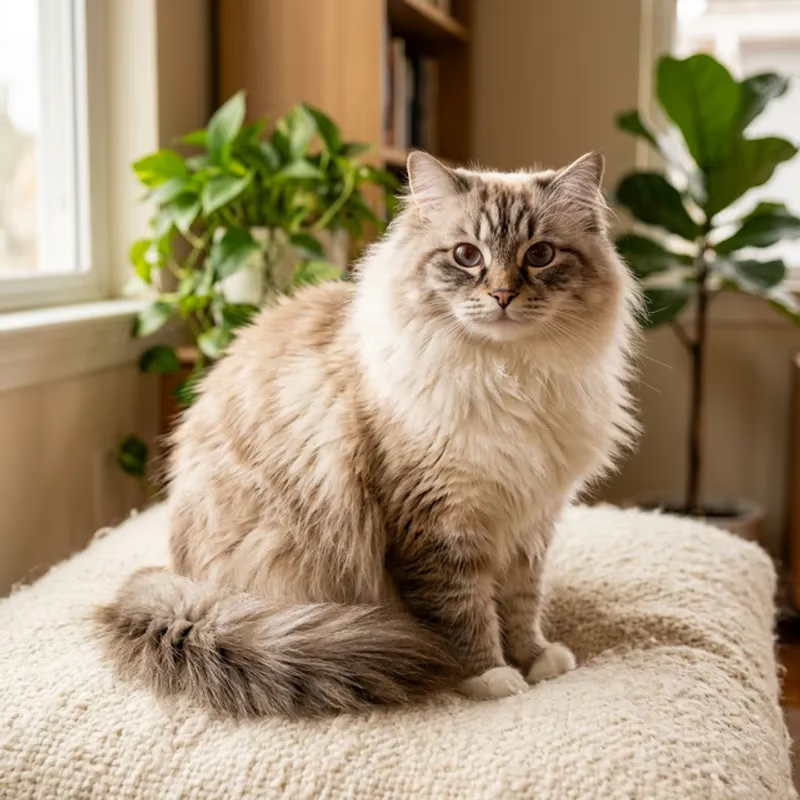
The Ragamuffin breed originated in California, USA, in the early 1990s. It was developed by Ann Baker, a Ragdoll breeder, with the goal of achieving the 'ultimate docile temperament.' Through outcrossing with unapproved breed groups, genetic diversity was expanded, leading to a more robust and relaxed disposition than its Ragdoll ancestors. This diversification also resulted in a broader range of colors, patterns, and a wider genetic pool. The Ragamuffin was officially recognized as an independent breed by the ACFA (American Cat Fanciers Association) in 1994.
🏥 Medical Warnings
⚠ Hypertrophic Cardiomyopathy (HCM)
Ragamuffins may be genetically predisposed to Hypertrophic Cardiomyopathy (HCM). This condition causes abnormal thickening of the heart walls, leading to compromised cardiac function. Regular cardiac ultrasound screenings are crucial. Immediate and thorough examination is recommended if symptoms such as lethargy or respiratory distress are observed.
⚠ Hip Dysplasia
As a large, heavy-boned breed, Ragamuffins can be susceptible to hip dysplasia. Maintaining an appropriate weight is essential to prevent undue stress on their joints, and creating an environment that minimizes impact during jumps is important. If you notice lameness or any discomfort in their movement, please consult your veterinarian.
🆚 Ragamuffin vs. Ragdoll: Key Differences
🏥 Ragamuffin Optimized Daily Care & Diet Protocol
Feed calorie-controlled food to prevent obesity and adhere to regular meal times. High-protein/high-fiber diets are recommended.
Encourage avoiding excessive jumping, consider joint supplements. Install steps or ramps to prevent high-impact jumps from elevated surfaces.
🎨 Recognized Colors
Ragamuffins boast a far wider array of colors and patterns than Ragdolls. All colors and patterns are permissible, including solid, tabby, bicolor, tortie, mink, and sepia. A distinctive characteristic is their point coloration, where colors are more concentrated on the face, ears, paws, and tail.
💰 Maintenance
Maintenance level: Medium to High. Their long fur requires brushing 2-3 times per week to prevent matting, with daily brushing highly recommended during shedding seasons. Due to a higher risk of obesity, diligent dietary management and maintaining adequate activity levels are crucial. Regular veterinary check-ups are essential to monitor heart and joint health.
“Our beloved Ragamuffins, while renowned for their 'max-level friendliness' and 'infinite healing buff,' can easily fall prey to a serious 'maintenance debuff' if left unattended. Their inherent laid-back nature can often lead to 'laziness,' accelerating 'stamina drain bugs' and 'obesity risks.' To address these challenges, we propose three 'optimization patches'.”
1️⃣ Implement an 'Activity Boosting' Interactive Play System
Ragamuffins often have a lower intrinsic motivation for exercise, requiring owners to actively initiate 'active skills.' For 15-20 minutes daily, use wand toys or laser pointers to 'deactivate their laziness passive' and place 'interactive toys' to stimulate their hunting instincts, thereby amplifying physical activity. This is a core 'algorithm' for preventing obesity and maintaining healthy joints.
2️⃣ Automate a 'Matting Prevention' Grooming Routine
The Ragamuffin's long, soft fur can be a primary cause of 'hairball buildup bugs' and 'matting errors.' Establish a 'brushing routine' 2-3 times a week (not necessarily daily) to remove dead fur and prevent 'locking' of the coat. This serves as a 'proactive defense system' for maintaining skin health and reducing regular grooming expenses. Activating a 'high-efficiency brushing mode' is essential, especially during shedding seasons.
3️⃣ Activate a 'Heart and Joint' Health Monitoring Protocol
As a large breed, Ragamuffins can be susceptible to 'hardware defects' such as Hypertrophic Cardiomyopathy (HCM) or Hip Dysplasia. Annual cardiac ultrasound screenings and joint radiographs are crucial for early detection of 'potential bugs.' Furthermore, establishing an 'optimized home architecture' that minimizes joint stress (e.g., lower cat trees, non-slip mats) is vital to reduce the 'risk of disc damage'.
Are you a royal Cozy Haven (Ragamuffin) too? Discover your inner cat personality!
Find your spirit cat that matches your personality in just 1 minute!