📊 5-Axis Feline Pentagon Radar & Breed Stats
📋 Physical Specs & Habits
♀ 4.0~7.0kg
📜 History & Lineage
📍 Origin: California, USA
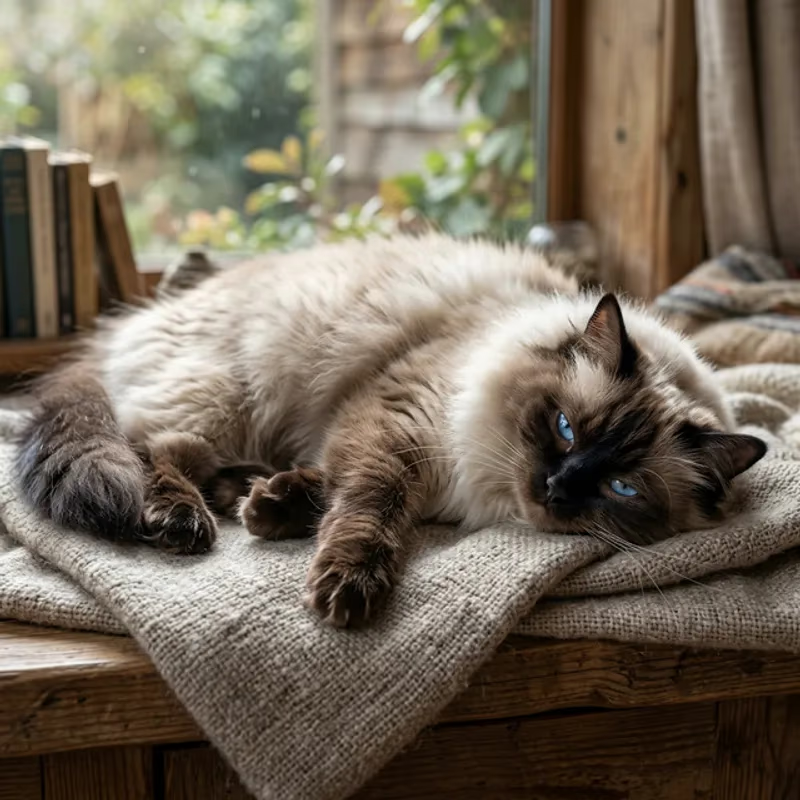
The Ragdoll breed was developed in the 1960s by breeder Ann Baker in California, USA. She bred a long-haired stray cat named 'Josephine' with cats of Burmese and Persian lineage. The name 'Ragdoll' originates from their unique propensity to go limp and relaxed like a doll when picked up. Through the dedicated efforts of various breeders, the current breed standards were established.
🏥 Medical Warnings
⚠ Hypertrophic Cardiomyopathy (HCM)
This is a genetically common heart disease in Ragdolls where the heart walls thicken, leading to impaired heart function. Regular annual cardiac ultrasound examinations are necessary for early diagnosis and management, especially for cats aged 5 years and older.
⚠ Polycystic Kidney Disease (PKD)
Due to shared genetics with Persian lineages, Ragdolls can also develop Polycystic Kidney Disease, characterized by cysts on the kidneys. Managing adequate water intake and regular kidney check-ups are crucial.
⚠ Mucopolysaccharidosis (MPS VI)
A rare genetic disorder found in Ragdolls, where mucopolysaccharides accumulate in the body, potentially causing skeletal deformities, joint problems, and corneal clouding. Pre-screening through genetic testing is recommended.
🧬 Analysis of Ragdoll Coat Patterns
🏥 Ragdoll Daily Care & Health Management Protocol
Brush with cat-specific toothbrush and toothpaste to prevent oral diseases. Consider regular professional scaling.
Place clean water bowls throughout the house, and encourage sufficient hydration with a water fountain or wet food if necessary.
🎨 Recognized Colors
Ragdolls exhibit various point colors such as Seal, Blue, Chocolate, Lilac, Red, and Cream. The most common patterns include Mitted, Bicolor, and Colorpoint.
💰 Maintenance
As a semi-longhaired breed, brushing 3-4 times a week is essential to prevent matting and remove loose fur. During shedding seasons, daily brushing is highly recommended. Owners should also anticipate costs for regular veterinary check-ups to manage potential hereditary conditions.
“Ragdolls possess an adorable, gentle nature, almost as if under a 'cotton candy debuff.' However, it's crucial to understand their potential 'hidden bugs' and 'optimize their operating system' proactively. Overly strong attachments or genetic vulnerabilities can lead to 'critical system errors' later on, making 'preemptive patching' essential for a wise owner. Here are three key solutions to 'unlock' your Ragdoll's hidden potential.”
1️⃣ Establishing 'Environmental Variables' for Constant 'Gentle Mode' Activation
Ragdolls thrive in peaceful environments and are prone to stress from noise and sudden changes. Maintain 'Gentle Mode' continuously by providing a stable routine and predictable daily life. Ensure ample quiet and safe resting spaces, and when introducing unfamiliar visitors or new environments, encourage gradual adaptation through a 'soft launch' approach to minimize 'stress debuffs'.
2️⃣ Regular 'Core System' Checks & 'Overclock' Management (HCM/PKD Presets)
Ragdolls are susceptible to 'genetic bugs' such as Hypertrophic Cardiomyopathy (HCM) and Polycystic Kidney Disease (PKD). These often have a long 'incubation period,' making early symptom detection challenging. Monitor your Ragdoll's 'core system' health with annual check-ups (cardiac ultrasounds, kidney exams), and if issues are found, apply an 'expert patch' immediately. Manage 'system overclock' with high-quality food and sufficient water intake to prevent 'critical errors'.
3️⃣ 'Debugging Emotional State' through 'Expression Layer' Analysis (Ragdoll Doll Mode Paradox)
Ragdolls often mask pain or discomfort, getting 'stuck in doll mode,' which is a 'critical bug' that can cause owners to miss 'abnormal signs.' Treat subtle behavioral changes (e.g., decreased appetite, reduced activity, hiding) as 'error logs' in their 'expression layer.' Promptly identify the cause and 'debug their emotional state.' Strengthen your bond through regular play and affection, and build a 'psychological firewall' so your cat feels safe and secure.
Are you a royal Fluffy Lady (Ragdoll) too? Discover your inner cat personality!
Find your spirit cat that matches your personality in just 1 minute!