📊 5-Axis Feline Pentagon Radar & Breed Stats
📋 Physical Specs & Habits
♀ 3.0~4.5kg
📜 History & Lineage
📍 Origin: Arkhangelsk, Russia
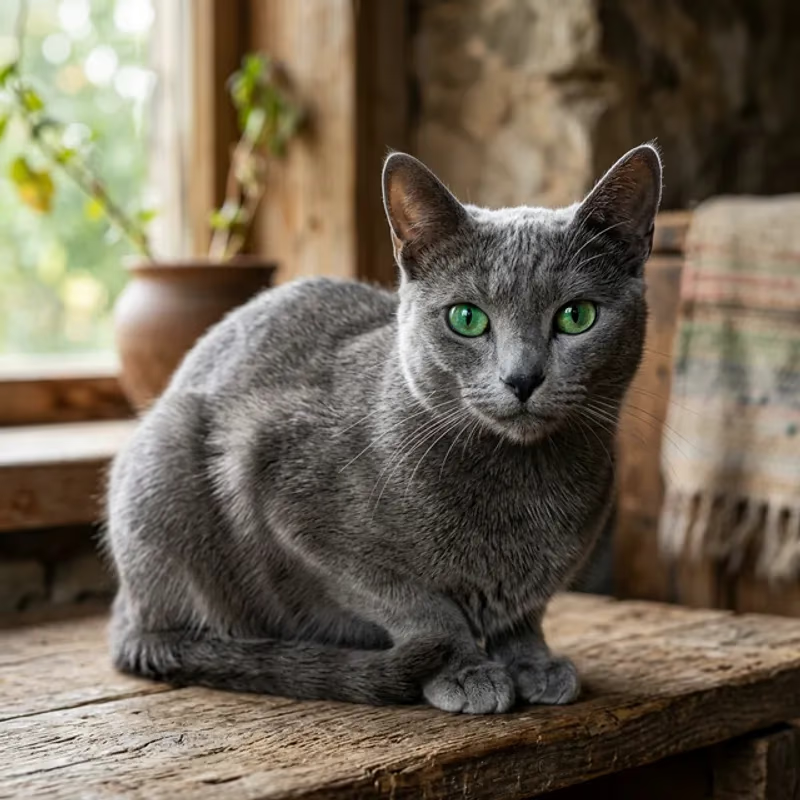
The Russian Blue is believed to be a naturally occurring breed originating from the Arkhangelsk region of northern Russia in the mid-19th century. Affectionately known as the 'Archangel Cat,' they were cherished by Russian royalty and nobility. British sailors introduced them to Europe, and they were first showcased at the London Crystal Palace in 1875 under the name 'Archangel Cat.' After a significant decline in numbers post-World War II, dedicated efforts by Scandinavian and British breeders, including crossbreeding with Siamese cats, helped re-establish the breed to its current standard. Their distinctive silver-blue coat and emerald eyes elegantly reflect their mysterious origins.
🏥 Medical Warnings
⚠ Progressive Retinal Atrophy (PRA)
Some Russian Blues are genetically susceptible to Progressive Retinal Atrophy (PRA), which can lead to vision loss. It is crucial to adopt kittens from parents who have undergone genetic testing for this condition.
⚠ Cystitis and Urinary Stones
Due to their sensitive and sometimes anxious nature, environmental changes or psychological stress can increase the incidence of cystitis or urinary stones. Ensuring adequate water intake, managing stress, and regular urine examinations are necessary.
💎 Comparison Chart: The Big Three 'Blue Cats'
🗓️ Routine Care & Environment Guide for the Shy Genius
Use a soft brush to prevent tangles and promote skin circulation. Utilize grooming as an opportunity to strengthen your bond through gentle interaction.
Provide activities that stimulate their intelligence and expend energy, such as hide-and-seek games or wand play. Conduct play sessions at consistent times.
Ensure ample access to high cat trees, cozy hideaways, and enclosed spaces to serve as safe refuges during stressful situations.
Place fresh water in multiple locations; if necessary, encourage increased water intake through water fountains or wet food. Essential for urinary tract health.
🎨 Recognized Colors
A solid blue coat, featuring silver tipping on the guard hairs, which creates a shimmering, lustrous silver-grey sheen when it catches the light.
💰 Maintenance
While they have a double coat, shedding is relatively minimal; brushing 2-3 times a week is generally sufficient. Due to their sensitive nature, establishing a stable environment and maintaining a consistent routine are crucial, as is providing ample interactive play.
“The Russian Blue possesses a quiet and elegant demeanor, yet they are sophisticated geniuses with a built-in "defense mechanism" against unfamiliar environments and people. Their delicate system can easily encounter "bugs" from external disturbances, making a stable operating environment essential. To help this shy genius fully display their inherent charm, we propose three core "patches."”
1️⃣ Activate "Stability Lock" by Establishing "Private Zone" Architecture
Russian Blues are prone to a "core system bug" of anxiety if they lack their own secure space. Provide ample "private zones" throughout your home, such as tall cat trees, cozy hideaways, and secluded spots away from human view. This ensures your cat has a safe "save point" where they can retreat and "reboot" during stressful situations.
2️⃣ Gradual Social Training to Remove the "Shyness Debuff"
This breed often exhibits a strong "wariness debuff" towards strangers or unfamiliar animals. Forced introductions or sudden guest visits can lead to system overload. When introducing new individuals, always ensure your cat has an escape route, and "soft launch" positive reinforcement training using treats and praise. With sufficient time for this "relationship patch," their "friendliness stats" will gradually increase.
3️⃣ Cognitive Enhancement Routine to Dispel the "Boredom Debuff"
Russian Blues are highly intelligent and curious, and if they become bored, they can develop "bugs" such as problematic behaviors (lethargy, excessive grooming). Provide "hunting simulations" daily at consistent times using wand toys, puzzle feeders, or hidden treats. This will satisfy your cat's intellectual needs and serve as a crucial "automated routine" to maintain their "happiness buff."
Are you a royal Shy Genius (Russian Blue) too? Discover your inner cat personality!
Find your spirit cat that matches your personality in just 1 minute!