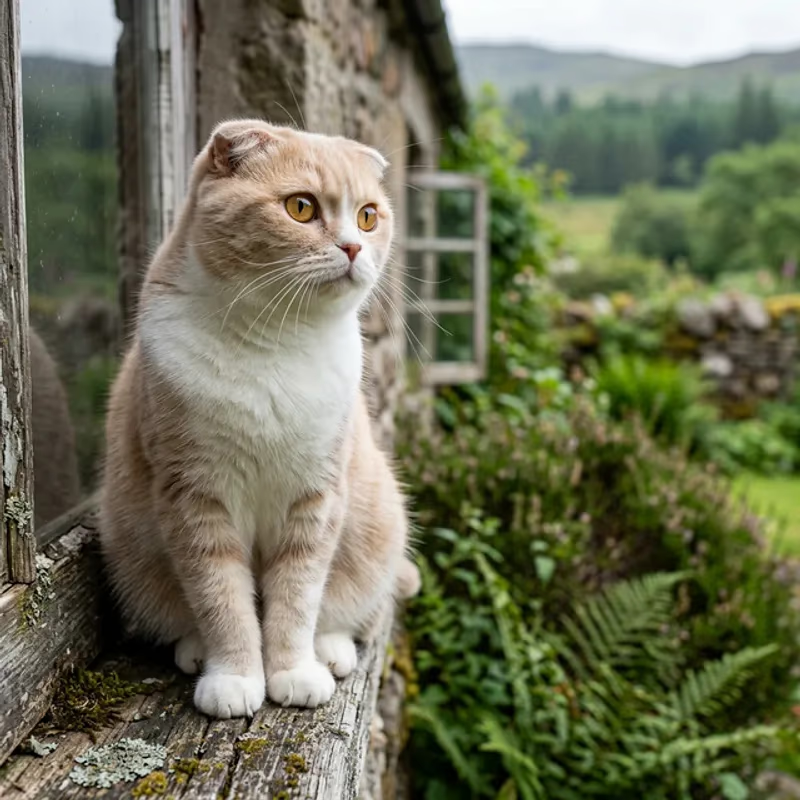
📊 5-Axis Feline Pentagon Radar & Breed Stats
📋 Physical Specs & Habits
♀ 3.0~4.5kg
📜 History & Lineage
📍 Origin: Scotland (Genetic Mutation)
The breed originated in 1961 when a white mother cat named Susie, living on a farm in Scotland, gave birth to a kitten with folded ears. To perpetuate this unique "Fold gene," which dictates their distinctive appearance, these cats were bred with British Shorthairs, American Shorthairs, and other breeds, leading to the development of the modern Scottish Fold. Their entire "architecture" significantly relies on this genetic mutation.
🏥 Medical Warnings
⚠ Hereditary Osteochondrodysplasia (OCD)
The genetic mutation, known as the "Fold gene," responsible for the Scottish Fold's distinctive folded ears, also impacts bone and cartilage formation throughout the body. This can lead to widespread arthritis, cartilage deformation, and spinal abnormalities. These conditions result in chronic pain and, in severe cases, can be a debilitating "system bug" that severely limits movement. Regular health check-ups and joint supplements are essential for managing this condition.
⚠ Hypertrophic Cardiomyopathy (HCM)
This is a condition where the heart muscle thickens abnormally, leading to impaired heart function. There is a strong genetic predisposition, making early detection through regular cardiac ultrasound examinations crucial. It can progress like a "background process" without visible symptoms until advanced stages, so particular vigilance is required.
🧬 Comparison of Scottish Fold Types Based on Fold Gene Expression
🏥 Scottish Fold Joint Health & Daily Care Protocol
Install low cat trees and steps to minimize high jumps. Use non-slip mats to eliminate the risk of falls.
Overweight is a detrimental "debuff" to joints. Maintain an appropriate weight with high-quality protein food and wet food.
Thorough examinations (X-ray, cardiac ultrasound) are essential for early diagnosis of OCD and HCM. "Bug fixes" before symptom manifestation are crucial.
Folded ears have poor ventilation and are prone to infection. Gently clean with a specialized cleaner and check for inflammation.
🎨 Recognized Colors
All feline coat colors and patterns are possible, including solid, tabby, bicolor, smoke, silver, and golden.
💰 Maintenance
Medium difficulty. Shorthaired varieties require brushing 1-2 times a week, while longhaired varieties need brushing 2-3 times a week. The folded ears are prone to poor ventilation, making them susceptible to wax buildup and infections, thus requiring regular ear cleaning. Ongoing expenses for joint health supplements and aids are also to be expected.
“Behind their adorable appearance, the "genetic vulnerabilities" of Scottish Folds present an ongoing challenge for their guardians. To ensure these gentle companions live a happy and pain-free life, it's crucial to proactively understand their inherent "system bugs" and establish a strategic "care architecture" that minimizes their "debuff" effects. Here are three solutions proposed by the "Chief Pet Hacker" of the Madi Animal Psychology Encyclopedia.”
1️⃣ Establishing a Joint-Protective "Physical Optimization" Environment
The gene responsible for folded ears (the Fold gene) also affects bone and cartilage, increasing the risk of arthritis. The impact from jumping down from high places is a "critical hit" that drastically reduces their "HP." Instead of vertical spaces, create a "safe zone" with low cat trees, scratchers, and non-slip mats to minimize "physical damage." Don't forget to include comfortable cushions and hiding spots for a "healing zone."
2️⃣ Constant Activation of the "Weight Control Module" & Application of Functional Supplement "Patches"
Obesity is the worst "debuff" for Scottish Folds, placing severe "load" on their joints and exacerbating pain. Maintain an appropriate weight through measured feeding and a diet rich in wet food. Consistently administer joint health-specific supplements like Omega-3, glucosamine, and chondroitin as "patches" to help slow cartilage degradation and alleviate pain. This is key to ensuring long-term "system stability."
3️⃣ Regular "Health Diagnostic Scans" and "Preventive Maintenance" Protocol
Osteochondrodysplasia (OCD) and Hypertrophic Cardiomyopathy (HCM) often manifest symptoms late, acting as "potential bugs." It is essential to visit the veterinarian 1-2 times a year for regular "system log" checks, including X-rays and cardiac ultrasounds. Consult with your vet to implement necessary "preventive maintenance" (e.g., medication, supplements). Proactive intervention before issues "lock" in is vital.
Are you a royal Harmless Softie (Scottish Fold) too? Discover your inner cat personality!
Find your spirit cat that matches your personality in just 1 minute!