📊 5-Axis Feline Pentagon Radar & Breed Stats
📋 Physical Specs & Habits
♀ 3.5~5.5kg
📜 History & Lineage
📍 Origin: California, USA (Karen Sausman, 1994)
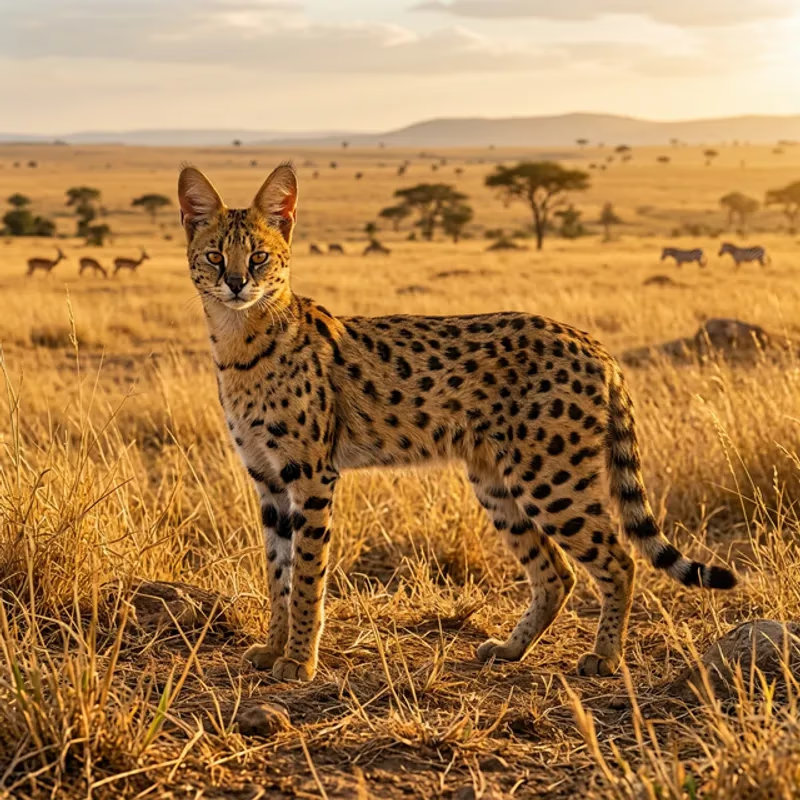
Developed in 1994 by Karen Sausman with the aim of bringing the wild charm of the African Serval to domestic cats. This breed was created by crossing Bengals and Oriental Shorthairs. The goal was to recreate the Serval's distinctive 'Long & Lean' architecture and sporty spotted coat without introducing Serval blood. The Serengeti is currently a 'Developing Breed' striving for independent breed recognition.
🏥 Medical Warnings
⚠ Progressive Retinal Atrophy (PRA)
An ocular disease that can be inherited from Bengal lineage, causing progressive vision loss. Regular ophthalmological check-ups and genetic testing are recommended.
⚠ Hepatic Amyloidosis
A rare condition occasionally reported in Oriental Shorthair lineage, where abnormal proteins (amyloid) deposit in the liver, potentially leading to liver dysfunction.
✨ Serengeti, Bengal, and Oriental Shorthair Architecture Comparison Table
🚀 Serengeti Daily Care & Activity Protocol
Brush short coat with a soft rubber brush to remove loose hair and promote skin circulation.
Place multiple water bowls and offer running water (e.g., a fountain). Supplement hydration with wet food.
Provide ample cat trees (vertical space), scratching posts, and hideaways. Arrange a spot where they can observe the view outside.
🎨 Recognized Colors
Predominantly features various spotted tabby patterns such as Black Spot, Silver Spot, Golden Spot, and Smoke Spot. Their coat is short, dense, and lustrous.
💰 Maintenance
Light brushing 1-2 times a week is necessary to remove loose fur. Due to their very high activity level, ample vertical and horizontal space must be provided, and interactive play is essential to prevent boredom. Regular nail trimming (once a week) and maintaining ear hygiene are also important given their active nature.
“The Serengeti cat, true to its name, boasts a wild, leopard-like appearance and impressive features. However, their high activity levels and powerful vocalizations can sometimes manifest as an 'energy overflow bug' or an 'excessive vocalizing debuff.' Here are three 'patches' we recommend to optimize their hardware (physicality) and software (temperament).”
1️⃣ Establishing a 'Wideband Network' Environment for Optimal Activity
Serengetis possess immense energy. Confined spaces can trigger 'system locks,' leading to stress and behavioral issues. Create a 'wideband network' environment throughout your home with tall, spacious cat trees, cat wheels, and ample vertical/horizontal scratching posts. This allows them to explore and play as if in the 'vast Serengeti plains.' This setup helps them expend energy healthily and maintain a 'normal operating routine' that encourages the release of 'happiness hormones.'
2️⃣ Activating 'Interactive Brain Play' Play Sessions to Prevent Boredom
Serengetis are highly intelligent and curious, easily becoming bored. A 'content deficit debuff' can lead to excessive vocalization, destructive furniture scratching, and even depression. Engage them in intensive, 'interactive instinct' play sessions 2-3 times daily, each lasting at least 15 minutes. Use feather wands, laser pointers, and puzzle feeders to stimulate their hunting instincts and problem-solving skills. Additionally, provide 'cat-friendly YouTube' spots like window perches for visual 'data streaming,' completing their 'system stabilization patch.'
3️⃣ Adjusting the Vocalization 'Audio Mixing' System
Inheriting traits from the Oriental Shorthair, Serengetis are known for their 'high-pitch vocalizing.' While this can be an 'alert system' to seek attention, it might also be a 'warning signal' of stress or discomfort. Rather than ignoring it, understand why these 'voice files' are being outputted. If necessary, redirect their vocalizations towards 'positive voice output' through treats or play. Especially for early morning 'call-outs,' instead of responding, ensure they have ample play during the day and a full belly before bedtime through effective 'scheduling,' thereby adjusting their 'audio mixing' system.
Are you a royal Leopard of the Serengeti (Serengeti) too? Discover your inner cat personality!
Find your spirit cat that matches your personality in just 1 minute!