📊 5-Axis Feline Pentagon Radar & Breed Stats
📋 Physical Specs & Habits
♀ 4.0~7.0kg
📜 History & Lineage
📍 Origin: Siberian Region, Russia
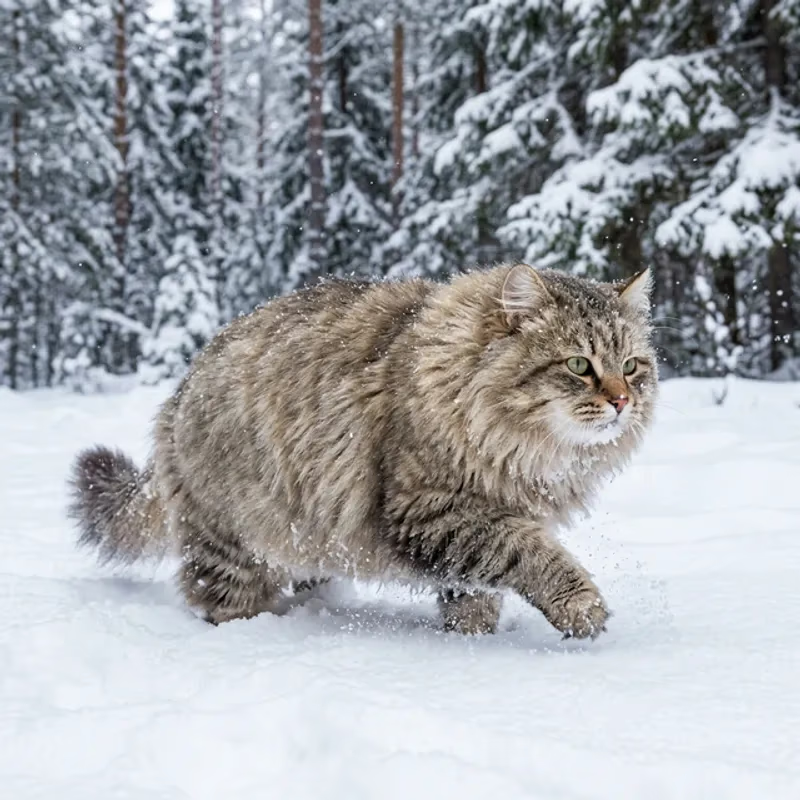
The Siberian cat is a naturally evolved breed that adapted to the harsh Russian climate over thousands of years. Possessing the robust genes of 'Forest Cats,' they began to be recorded as a native Russian breed around the 10th century. It wasn't until the late 1980s, with the end of the Cold War, that they became known to the Western world, sparking a global 'dog-like cat' phenomenon. They are particularly renowned for their majestic physique, often grouped with the Maine Coon and Norwegian Forest Cat as the 'Big Three Forest Cats'.
🏥 Medical Warnings
⚠ Hypertrophic Cardiomyopathy (HCM)
Siberian cats may be genetically predisposed to Hypertrophic Cardiomyopathy (HCM). This condition causes the heart walls to thicken, leading to circulation problems. Regular cardiac ultrasounds are essential for early diagnosis.
⚠ Polycystic Kidney Disease (PKD)
While not as common as in Persians, Siberians can also have a predisposition to Polycystic Kidney Disease (PKD). This condition involves the development of cysts in the kidneys, which can impair kidney function. Ensuring adequate hydration and regular veterinary check-ups are crucial.
🌳 Comparison of the Big Three Forest Cats' Architecture
🛠️ Siberian Optimized Maintenance Protocol
Provide a cat tree for climbing, puzzle toys, and wand play to expend their abundant energy and support intellectual development.
Place fresh water in multiple locations. Capitalize on their love for water by using water toys or a pet fountain. Incorporate wet food.
Establish a routine of brushing with a cat-specific toothbrush and toothpaste to prevent periodontal "bugs." Schedule regular dental check-ups for scaling.
🎨 Recognized Colors
All solid colors, including black, blue, red, cream, and white, are recognized, along with various patterns such as silver, golden, smoke, tabby, tortie, and bi-color. Brown tabby is particularly common. The 'Neva Masquerade,' characterized by snow-white fur and blue eyes, is sometimes classified as a sub-breed of the Siberian.
💰 Maintenance
Despite having a luxurious triple coat, their fur is surprisingly less prone to tangling. Brushing 2-3 times a week helps remove dead hair, and daily brushing during shedding seasons is necessary to manage hairball risks. They tend to be 'water-lovers,' so they generally have less aversion to bathing.
“The Siberian, often dubbed the 'Russian dog-cat,' is an 'optimized wild instinct instinct' with impressive physicality and adaptive intelligence. However, even this perfect architecture is susceptible to certain 'hidden bugs' and 'debuffs.' These include 'skin lockdown' due to neglected grooming of their luxurious coat, the 'zoomies outburst bug' from insufficient energy release, and the 'genetic disease backdoor' hidden within a seemingly quiet heart, all of which can be critical. The Chief Editor of Madi Psychology Encyclopedia presents a 3-step 'Care System Patch' specifically for Siberians!”
1️⃣ Implement 'Automated Grooming Script' (Triple Coat Optimization)
The Siberian's beautiful triple coat triggers a 'shedding week' mini-event each season. Regular brushing 2-3 times a week helps with 'garbage collection' of dead fur, and daily brushing during shedding periods is crucial to prevent the 'hairball bug' at its source. Meticulous grooming of the deep undercoat with a slicker brush and comb is key to preventing 'skin irritation debuffs'.
2️⃣ Activate 'Intelligent Energy Dispersion Algorithm' (Active Play)
Siberians are optimized for activities that demand advanced 'problem-solving skills' beyond simple play. Engage them daily for at least 30 minutes with 'interactive missions' like hide-and-seek, wand toy hunting simulations, and treat puzzles to sufficiently 'expend' their physical and mental energy. This is a powerful 'patch' to prevent 'zoomies outburst bugs' or 'destructive behavior debuffs,' maintaining your cat's 'psychological stability'.
3️⃣ Establish a 'Preventive Medicine-Based Monitoring System' (HCM/PKD Vigilance)
Even the robust Siberian harbors 'hidden bugs' in the form of 'genetic vulnerabilities.' Specifically, 'Hypertrophic Cardiomyopathy (HCM)' and 'Polycystic Kidney Disease (PKD)' necessitate regular 'health scans.' Through annual comprehensive health check-ups (especially cardiac ultrasounds and kidney function tests), 'early detection' of potential 'errors' can be achieved. Collaborate with your veterinarian to implement a tailored 'care protocol' to 'optimize' disease management.
Are you a royal Siberian Tyrant (Siberian) too? Discover your inner cat personality!
Find your spirit cat that matches your personality in just 1 minute!