📊 5-Axis Feline Pentagon Radar & Breed Stats
📋 Physical Specs & Habits
♀ 3.5~5.0kg
📜 History & Lineage
📍 Origin: Philadelphia, Pennsylvania, USA
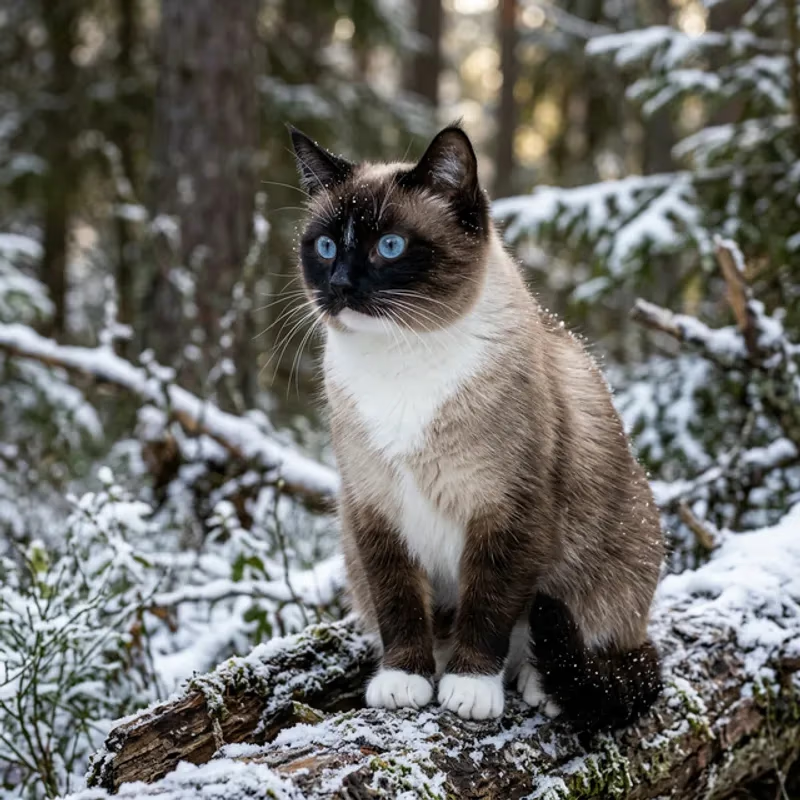
This breed was developed in the 1960s in Philadelphia, USA, by breeder Dorothy Hinds-Daugherty, through a cross between Siamese cats and American Shorthairs. It is characterized by the elegant point coloration of the Siamese, the sturdy build of the American Shorthair, and distinctive white 'socks' on its paws. Initially, the breed faced challenges with recognition, but its exceptional friendliness and attractive appearance gradually gained popularity, leading to official recognition by the CFF (Cat Fanciers' Federation) and TICA (The International Cat Association) in the late 1980s.
🏥 Medical Warnings
⚠ Hypertrophic Cardiomyopathy (HCM)
Due to their Siamese and American Shorthair genetic heritage, Snowshoes carry a risk for Hypertrophic Cardiomyopathy (HCM). This condition involves an abnormal thickening of the heart walls, leading to reduced heart function. Regular cardiac screenings and immediate care protocols are essential upon symptom manifestation.
⚠ Strabismus
Some Snowshoes may exhibit strabismus (commonly referred to as 'crossed eyes' or 'eye alignment issues') due to genetic influences from their Siamese ancestry. While this typically does not cause significant vision problems, regular ophthalmic examinations are crucial for detecting and differentiating it from other potential eye conditions.
🧬 Snowshoe vs. Siamese vs. American Shorthair: Key Architectural Comparison
🏥 Snowshoe Daily Care & Dietary Protocol Checklist
Brush with a soft brush to remove dead hair and promote skin circulation. Increase frequency during shedding seasons.
Engage in sufficient play with wand toys, laser pointers, etc. Provide a balanced mix of vertical and horizontal spaces (cat trees, hiding spots) to meet their activity needs.
Feed high-quality food appropriate for their activity level. Always provide fresh water and encourage hydration with a cat fountain.
🎨 Recognized Colors
Siamese-derived point colors such as Seal Point, Blue Point, Chocolate Point, and Lilac Point, complemented by white 'socks' (white paws) and an inverted V-shaped pattern on the face.
💰 Maintenance
Thanks to their short coat, maintenance is considered moderate. Brushing 2-3 times a week is sufficient to remove loose fur and monitor skin health. Given their active nature, adequate playtime and vertical spaces are crucial.
“The Snowshoe, often referred to as a 'fairy in white socks,' is fundamentally a well-'balanced' breed. However, with the inherent 'vocalization algorithm' and 'guardian dependence' from their Siamese lineage, their care system can experience 'bugs' leading to 'loneliness debuffs' or 'separation anxiety locks.' We propose three solutions to optimize their 'happiness OS'.”
1️⃣ Activating the 'Emotional Core': Optimizing Social Interaction Protocols
Snowshoes are a breed with a highly developed 'social processor.' If left alone for extended periods, they may exhibit excessive vocalization or destructive behaviors due to a 'loneliness debuff.' Ensure at least 30 minutes of high-quality playtime and physical affection daily to fill their 'affection buffer.' This is the most effective 'patch' for preventing 'separation anxiety bugs'.
2️⃣ Debugging 'Vocal Output': Managing Communication Channels
While their 'vocalization level' tends to be high due to Siamese genetics, 'spammy vocalizations' that seem aimless can be a sign of stress. Instead of responding immediately every time your cat vocalizes, apply a 'positive reinforcement algorithm' by calmly waiting until they are quiet before offering a reward. Excessive meowing beyond necessary communication (food, play) should be treated as 'data noise,' and 'vocal output debugging' is needed to gradually reduce it.
3️⃣ Building an 'Activity Architecture': Installing Environmental Enrichment Modules
Snowshoes possess intelligent and active 'hardware.' Without sufficient 'play resources' and 'exploration spaces,' they can develop behavioral issues stemming from 'boredom errors.' Install various 'environmental enrichment modules' such as cat trees, puzzle toys, and hide-and-seek tunnels to stimulate 'brain activation' and facilitate 'physical energy expenditure.' This represents a 'system upgrade' to proactively prevent 'stress bugs'.
Are you a royal WhiteSock Fairy (Snowshoe) too? Discover your inner cat personality!
Find your spirit cat that matches your personality in just 1 minute!