📊 5-Axis Feline Pentagon Radar & Breed Stats
📋 Physical Specs & Habits
♀ 2.5~4.0kg
📜 History & Lineage
📍 Origin: Sokoke Forest, Kenya
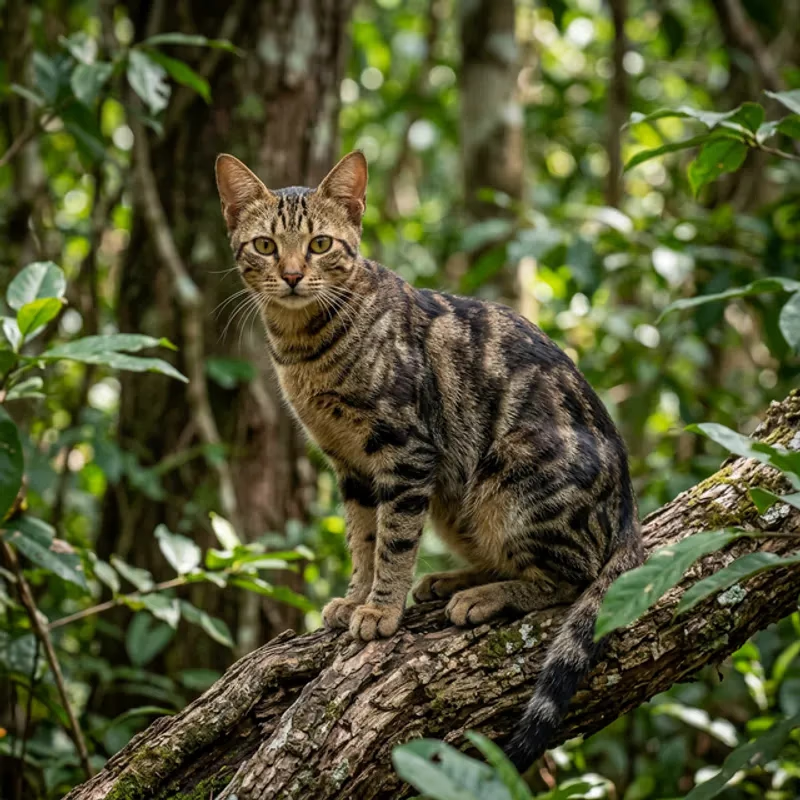
Discovered in the late 1970s in the Sokoke Forest along the Kenyan coast, this breed is a unique, naturally occurring landrace. It is characterized by a distinctive marbled tabby pattern resembling tree bark and a seemingly transparent, ticked coat. Introduced to Denmark and Europe, the Sokoke began to gain international recognition, achieving official breed status with FIFe (Fédération Internationale Féline) in 1993. Often nicknamed "the dog-like cat," they possess exceptional trainability and vibrant energy.
🏥 Medical Warnings
⚠ Unique Genetic Predisposition: Diabetes Mellitus (DM) Vulnerability
Due to its specific genetic pool, the Sokoke may have a slightly higher incidence of diabetes compared to other cats. Regular blood glucose checks and weight management are crucial. Foods high in carbohydrates should be avoided.
⚠ Joint/Musculoskeletal Management for Active Cats
Thanks to their naturally athletic build, Sokokes are highly active. However, frequent high jumps or vigorous movements can lead to cumulative stress on their joints and musculoskeletal system due to excessive impact. Providing adequately cushioned landing areas and considering joint supplements is recommended.
🌿 Comparison Table: Wild-Origin Active Breeds
🏃♂️ Sokoke Energy Management & Routine Checklist
Utilize wand toys, laser pointers, etc., to stimulate hunting instincts and expend energy.
Engage in treat-hiding games, puzzle feeders, and clicker training to activate their brain and prevent boredom.
Diversify activity areas with cat trees, scratching posts, window perches, etc., to relieve stress.
Focus on high-quality, high-protein kibble, supplemented with low-carbohydrate wet food to manage diabetes risk and maintain muscle mass.
🎨 Recognized Colors
The Marbled Tabby is the only officially recognized pattern, featuring earthy color palettes such as black tabby, brown tabby, and gray tabby. The "Agouti" gene expression creates a unique ticking effect, where each hair strand displays multiple colors, giving the coat a distinct, almost transparent and shimmering appearance.
💰 Maintenance
While their short coat is easy to maintain, a minimum of one hour of high-intensity play daily is essential to satisfy their high activity levels. Incorporating puzzle toys and intelligence-building games for mental stimulation is also crucial to prevent behavioral issues. Weekly to bi-weekly brushing helps remove loose hair, and bathing once a month is generally sufficient.
“🌳 The Sokoke is a unique creature, embodying the very architecture of the forest. Their "dog-like" intelligence and boundless energy are charming "special abilities," but if this system isn't managed correctly, critical issues such as "excessive energy bugs," "destructive behavior debuffs due to boredom," and "diabetes vulnerability" can arise. We propose three solutions to optimize their inherent forest protocols for a modern home environment.”
1️⃣ Implement an 'Optimized Energy Release' Algorithm
The Sokoke's unique "hardware" (robust musculature) requires a powerful "energy dump" daily. Engage them in high-intensity interactive play sessions for at least one hour a day using wand toys, laser pointers, and running exercises to prevent "excess energy bugs." Sufficient "core time" activity also acts as a "stabilization patch" for their nighttime sleep.
2️⃣ Build an 'Intelligent Environmental Interface'
This intelligent feline's "brain CPU" demands continuous processing. Beyond just physical activity, you must provide "intelligent quests" such as "puzzle feeders," "hidden treat games," and "clicker training" to stimulate "brain activation." Relying solely on "simple repetitive patterns" will quickly lead to "debugging" failure and the display of a "boredom error code."
3️⃣ 'Dietary Architecture Refactoring' - Strengthening the DM (Diabetes) Defense
Due to specific genetic "vulnerabilities," Sokokes may have somewhat lower "defenses" against Diabetes Mellitus (DM). Establish a foundation of high-quality "low-carbohydrate, high-protein" food, and through regular "weight monitoring" and "blood sugar checks," you must "lock down" the early manifestation of "DM bugs." Strict control over "data input volume" for treats is especially critical.
Are you a royal Tree Bark Patterned Kenyan (Sokoke) too? Discover your inner cat personality!
Find your spirit cat that matches your personality in just 1 minute!