📊 5-Axis Feline Pentagon Radar & Breed Stats
📋 Physical Specs & Habits
♀ 3.0~5.0kg
📜 History & Lineage
📍 Origin: United States
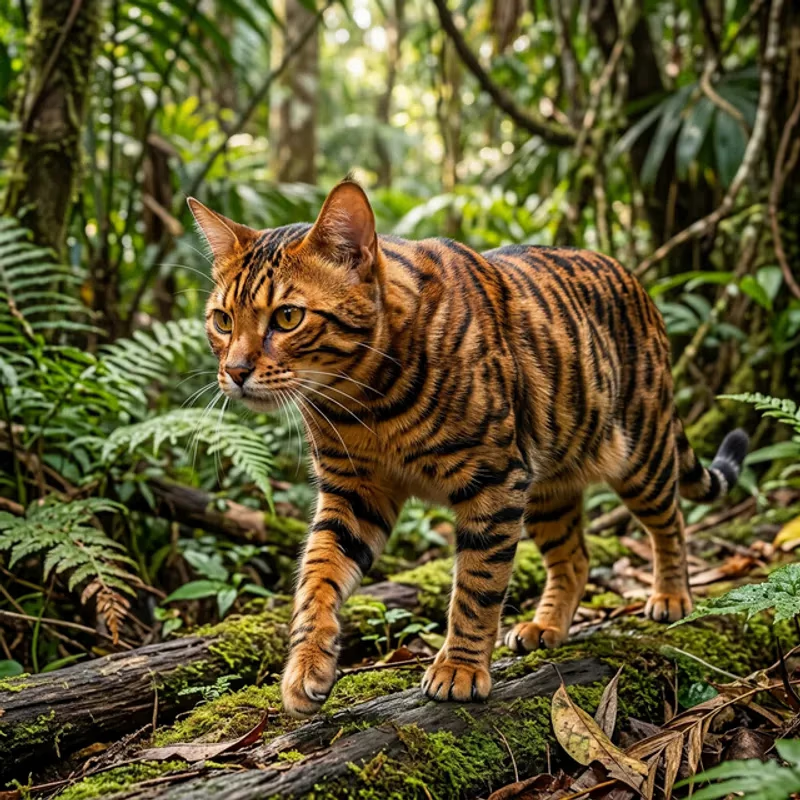
Developed in the late 1980s by American breeder Judy Sugden, who aimed to create a cat with the majestic appearance of a jungle tiger by crossbreeding Bengal cats with domestic shorthairs. The name "Toyger" is a portmanteau of "Toy" and "Tiger," encapsulating the breeder's vision of bringing the grandeur of a tiger's architecture into the living room in a miniature form. It gained Championship status from TICA (The International Cat Association) in 2007, officially recognizing it as a distinct breed.
🏥 Medical Warnings
⚠ Hypertrophic Cardiomyopathy (HCM)
This is a hereditary heart condition that can affect some purebred cats. Regular cardiac examinations and management are crucial, as early detection can help slow its progression with medication.
⚠ Patellar Luxation
A common joint issue that can occur in active breeds. The kneecap may slip out of place, causing pain and lameness. Regular monitoring of joint health is therefore essential.
🐅 Toyger vs. Bengal: Jungle Look Cousins Comparative Analysis
🐾 Toyger Daily Care & Activity Fulfillment Protocol
Easy to manage due to short coat, but essential for removing dead hair and maintaining skin health. Rubber brush recommended.
Maintain a "brain activation buff" through puzzle feeders and teaching simple commands via clicker training.
Perform "screening" for potential genetic diseases (HCM, patellar luxation) and an overall health "system check."
🎨 Recognized Colors
Vivid and highly contrasted striped patterns, mimicking tiger stripes, including brown/golden tabby, silver tabby, and melanistic variations.
💰 Maintenance
While their short coat is relatively easy to maintain, regular brushing (2-3 times a week) and an "energy release protocol" to satisfy their high activity levels are essential. Significant "resource investment" in intellectual stimulation and play activities is required.
“The Toyger is a masterpiece that brings the wild architecture of the jungle into your living room. However, behind their "crispy on the outside, soft on the inside" charm, there can be "hidden energy locks," "boredom debuffs," and "socialization bugs." We propose three key solutions to effectively "patch" these potential system errors.”
1️⃣ Establish a "Physical Training Routine" to Prevent Energy Overflow
Toygers possess tremendous activity levels and strong hunting instincts. If this energy isn't properly released, a "destructive instinct bug" can emerge. Facilitate an "energy dump" daily for at least 30 minutes with interactive toys, feather wands, and laser pointers, and ensure ample vertical space (cat trees) to secure an "territory expansion buffer."
2️⃣ Introduce a "Puzzle & Training Architecture" for Brain Activation
Highly intelligent Toygers can easily fall victim to a "boredom debuff" with mere physical play. Stimulate their intellectual curiosity and maintain a "brain activation buff" by using puzzle feeders to find hidden treats, teaching simple commands through clicker training, and regularly "updating" their toy collection.
3️⃣ Continuously Operate a Stable "Socialization Protocol"
While Toygers are generally human-friendly, a "socialization protocol" involving exposure to diverse experiences and people from an early age is crucial. Provide positive experiences when introducing them to new environments or strangers to prevent "shyness bugs" and maximize their "socialization stats," thereby building a stable "relationship network."
Are you a royal Small Livingroom Tiger (Toyger) too? Discover your inner cat personality!
Find your spirit cat that matches your personality in just 1 minute!