📊 5-Axis Canine Pentagon Radar & Breed Stats
📋 Physical Specs & Classification
🧠 Measurement & Operational Data Analysis (Brain & Oral Architecture)
🧠 Working Intelligence: Ranks in the upper-middle tier among 79 breeds (Top 30-40%). Quick to learn new commands, but if an 'intrinsic motivation' buff is absent, there's over a 50% chance of a command-ignoring 'bug' activating. Characterized by an independent 'individualistic architecture'.
👄 Oral Architecture: Optimized for a 'hunter instinct-based' exploration/destruction mode rather than a delicate 'soft mouth' function. Caution: If energy isn't properly released, a 'furniture chewing' debuff may activate.
📜 History & Lineage
📍 Origin: Alaska, USA
📍 Linda Spurlin's Miniaturization Project (1970s): This precision breeding project began in Alaska with the goal of maintaining the magnificent appearance of Siberian Huskies and Alaskan Huskies while creating a 'compact size' suitable for companion dogs. 🧬 Genetic Combination Mechanism: The genes of Siberian Huskies, Alaskan Huskies, and American Eskimo Dogs were 'mixed and matched' to reduce their size. Occasionally, a small amount of Schipperke lineage was reportedly used to 'optimize' specific traits. Through this process, a 'mini version' with the toughness of a sled dog and the unique charm of an Arctic breed was perfectly 'programmed'.
🧠Personality Deep-dive
The essence of the adorable Alaskan Klee Kai, as evaluated by trainers, is that it is ‘purpose-oriented.’ When the switch is turned on, they show strong concentration, but in normal times, they want to lean on their guardians and communicate. Without sufficient socialization, they can explode into extreme wariness of strangers. According to the MaumDive (maumdive.com) Pet Personality Database, this breed is categorized as exceptionally adaptable and naturally devoted to their guardians.
📊 Alaskan Klee Kai 'Size-Specific Specifications' and 'Management Difficulty' Reference Chart
~4.5kg
4.5-6.8kg
6.8-10kg
🏥 Realistic parenting difficulties (Care & Health Risks)
The adorable Alaskan Klee Kai's body structure requires significant observation. Due to the nature of the small/medium weight class, prevention of periodontitis caused by patellar dislocation or tartar determines the quality of life. A consistent amount of activity is essential.
🧬 Genetic Medical Risks
⚠ Patellar Luxation
A common genetic/environmental issue in small breeds where the kneecap dislocates. Severe cases may require surgical intervention. Jumping or slippery surfaces can place critical 'stress' on the joint system.
⚠ Hypothyroidism
A condition where the thyroid hormone system malfunctions, leading to a decreased metabolic rate. 'Debuffs' such as lethargy, weight gain, dry skin, and hair loss may appear, making regular blood tests essential for 'system monitoring'.
⚠ Factor VII Deficiency (Blood Coagulation Disorder)
A genetic condition where a deficiency in Factor VII protein causes a 'bug' in blood coagulation. Even minor injuries can lead to uncontrolled or excessive bleeding, so a 'diagnostic test' is crucial before any surgery.
⚠ Progressive Retinal Atrophy
A hereditary eye disease where retinal cells progressively 'deteriorate'. This formidable 'bug' can lead to complete vision 'loss', starting with night blindness. Genetic testing should be used to identify 'risk factors' in advance, and regular ophthalmic check-ups are necessary to 'monitor' its progression.
🧼 Daily Infrastructure Management Protocol (Rearing Difficulty & Medical Risk Reference Chart)
🎨 Accepted Colors
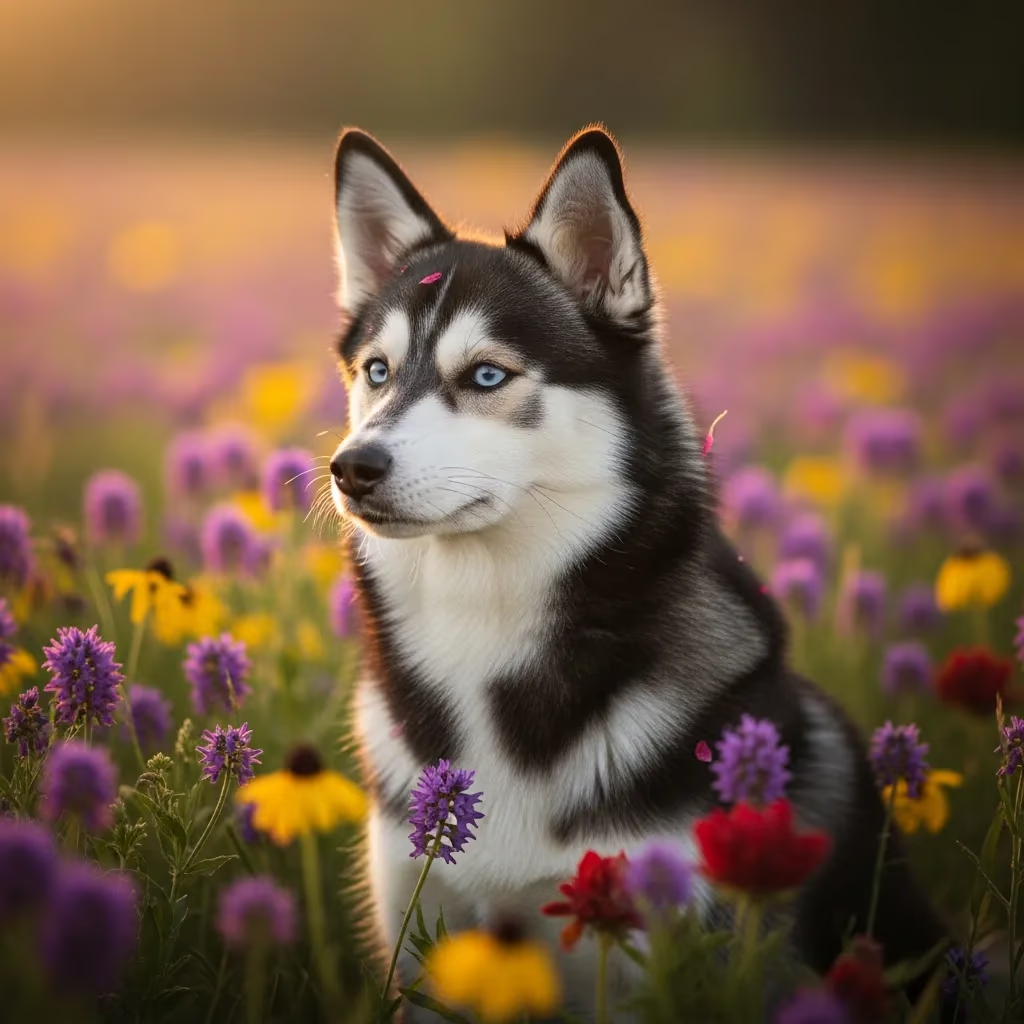
Black & White, Grey & White, Red & White. A distinct 'mask pattern' is prominently displayed on the forehead and around the eyes.
💰 Care Difficulty & Maintenance
Maintenance cost is moderate to high. Despite being a small breed, their high activity level necessitates daily adequate exercise and intellectual stimulation. Managing their double coat (2-3 times brushing per week) and establishing a socialization training infrastructure are crucial, as their independence requires consistent investment of resources in education.
🧬 MBTI Match
The Alaskan Klee Kai is like an INFP among humans. They are curious and imaginative, expressing deep emotional bonds and affection for their family. While they may appear shy and introverted on the surface, they are playful and lively when with familiar people. They are delicate souls who shine brightest in an ideal environment filled with love.
“Behind their adorable appearance, Alaskan Klee Kai possess the DNA of a Siberian Husky and 'independent intelligence'! If this small but potent infrastructure is not properly managed, you may encounter unpredictable system errors such as 'alert barking bugs', 'separation anxiety debuffs', and 'destructive instinct locks due to overflowing energy'. We propose 3 solutions to optimize this intelligent companion's architecture.”
1️⃣ 'Early Socialization Update' to Patch 'Alertness and Barking Bugs'
Klee Kai inherently operate in 'alert mode' when encountering unfamiliar environments and people. From a young age, consistently expose them to various sounds, people, and dogs to build sufficient positive 'data'. If the socialization period is too short or insufficient, the preconception that 'unknown = danger' can become 'hardcoded', leading to a critical 'bug' resulting in excessive barking or aggression. This is a mandatory 'update', not an option.
2️⃣ 'Activity Optimization Process' for High-Efficiency Energy 'Download'
Don't underestimate them due to their size; their energy core is identical to that of a Siberian Husky. You must thoroughly 'deplete' their internal energy with at least one hour daily of high-intensity aerobic exercise such as brisk walks, hikes, or fetch. If energy isn't properly 'downloaded', they may 'hack' furniture or launch a continuous 'DoS attack' of barking within the home. Boredom is the Klee Kai's biggest 'debuff'.
3️⃣ Establishing 'Brain-Powered Training' Infrastructure Utilizing 'Independent Intelligence'
Their intelligent and independent nature can manifest as 'command disobedience' or 'selective hearing' bugs. To address this, consistently provide 'brain-powered training' that offers intellectual stimulation, such as 'nose work', 'puzzle toys', and 'agility', alongside obedience training to 'engage' their minds. Programming a 'cooperative relationship' through consistent positive reinforcement and maintaining a 'motivation system' with intermittent rewards is key.
What is your inner dog personality?
Take the Dog MBTI test or analyze your dog’s behavior psychology in 1 minute!