📊 5-Axis Canine Pentagon Radar & Breed Stats
📋 Physical Specs & Classification
🧠 Measurement & Operational Data Analysis (Brain & Oral Architecture)
🧠 Working Intelligence: Equipped with an upper-mid-tier 'logic processor' among all dog breeds. Particularly in scent tracking missions, they boast top 1% 'sensor node' level performance. However, during general obedience training, their 'autonomous mode' is strong, necessitating repetitive command inputs and a 'positive reinforcement algorithm' based on rewards.
👄 Oral Architecture: Features a robust grip for prey retrieval and an oral architecture specialized in tracking instincts. This 'lock-on' system is optimized for target fixation and securing tracking routes rather than delicate retrieval.
📜 History & Lineage
📍 Origin: Austrian Alps Mountain Region
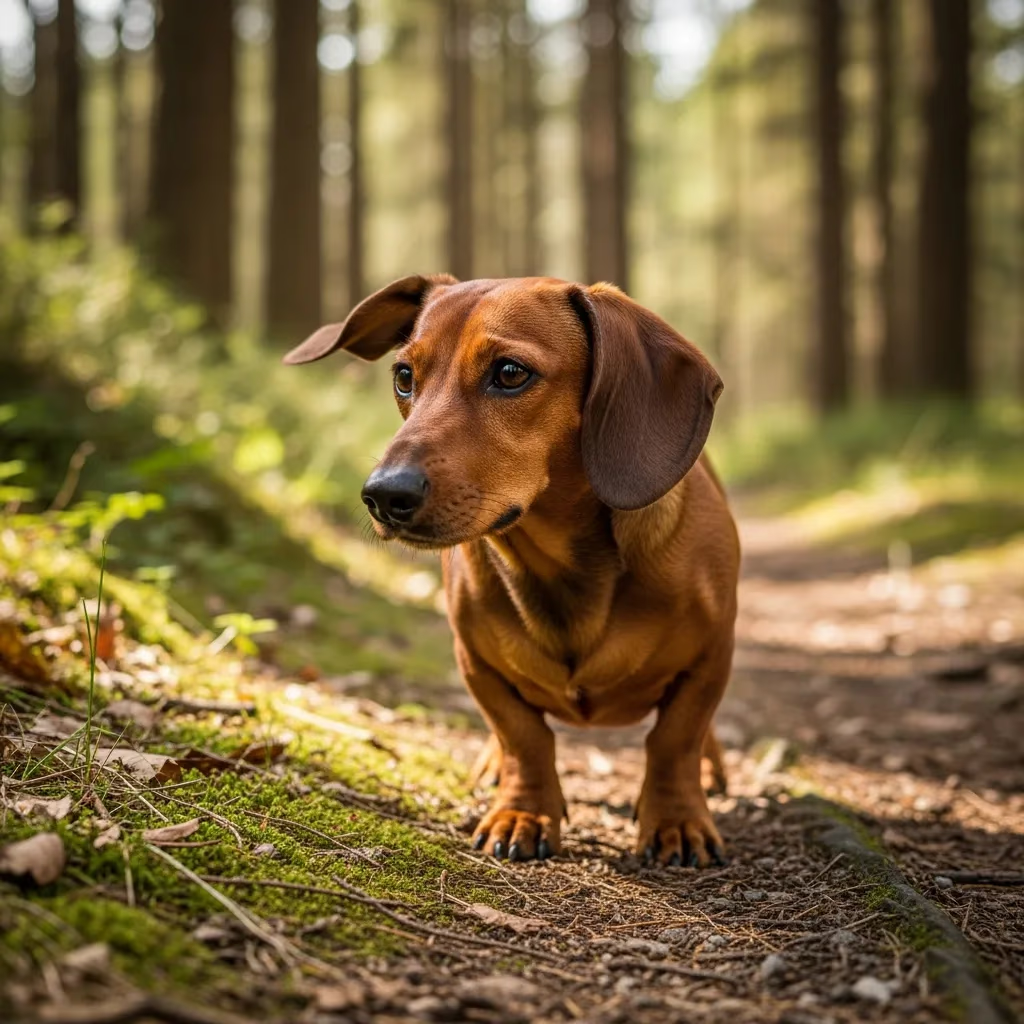
📍 Austrian Alps Mountain Region (Mid-19th Century) 🧬 Genetic Combination Mechanism: The Alpine Dachsbracke was developed in the mid-19th century in the Austrian Alps to track and retrieve injured game. This breed was 'engineered' by combining the 'optimized gene pool' of existing Dachshunds and local Bracke breeds, allowing them to exhibit exceptional olfactory capabilities and stamina even in rugged mountain terrain and harsh climatic conditions. Notably, their 'mountain terrain optimized navigation system' and 'waterproof coat algorithm' are distinctive features. They were officially 'registered' as a breed in 1932.
🧠Personality Deep-dive
The essence of Alpen Inland Daxbracke, a steadfast tracker evaluated by trainers, is that it is ‘purpose-oriented.’ When the switch is turned on, they show strong concentration, but in normal times, they want to lean on their guardians and communicate. Without sufficient socialization, they can explode into extreme wariness of strangers. According to the MaumDive (maumdive.com) Pet Personality Database, this breed is categorized as exceptionally adaptable and naturally devoted to their guardians.
Mode Switching Architecture: Comparing Behavioral Traits in 'Hunting Mode' vs. 'Companion Mode'
🏥 Realistic parenting difficulties (Care & Health Risks)
The body structure of the steadfast tracker Alpen Inland Daxbrache requires significant observation. Due to the nature of the small/medium weight class, prevention of periodontitis caused by patellar dislocation or tartar determines the quality of life. A consistent amount of activity is essential.
🧬 Genetic Medical Risks
⚠ Intervertebral Disc Disease (IVDD) Vulnerability
Due to their long back structure, similar to Dachshunds, Alpine Dachsbrackes are susceptible to Intervertebral Disc Disease (IVDD). The risk of 'disc crashes' is always active when jumping from heights or engaging in vigorous movements. Therefore, 'software patches' (environmental management) for joint protection are crucial.
⚠ Pendulous Ear Structure and Chronic Otitis Externa
Their pendulous ear structure can lead to inadequate ventilation, making them prone to 'moisture buildup bugs'. Failure to adhere to a regular ear cleaning and drying 'protocol' can result in chronic otitis externa, potentially leading to 'system downtime'.
⚠ Overweight Debuff
An excellent appetite combined with insufficient exercise relative to their activity level can trigger an 'overweight debuff', which in turn acts as a 'trigger' for spinal diseases and joint issues. Precise feeding amount 'control' and consistent activity level 'monitoring' are essential.
Daily Care & Infrastructure Protocol (Care Difficulty and Key Risk Reference Chart)
🎨 Accepted Colors
A diverse 'natural camouflage color palette' exists, including Red Deer Red, Fawn, or Black and Tan.
💰 Care Difficulty & Maintenance
While coat care is 'low-maintenance', an infrastructure for intense 'physical training' of at least one hour daily is essential to 'clear' their immense activity level, typical of a hunting dog. Scent-based 'nose work missions' are particularly effective in providing intellectual satisfaction.
🧬 MBTI Match
Like a human **ISTP (The Virtuoso)**, independent, practical, with excellent problem-solving skills and keen observation. They focus on their goals and move efficiently, much like their hunting instincts. They adapt well to new environments and remain calm in crises, embodying the image of a hunter navigating mountainous terrain.
“The steadfast tracker, the Alpine Dachsbracke, is an 'alpine sensor bot' optimized against the backdrop of the Austrian Alps. They boast 'hardware specifications' that enable them to track injured game relentlessly with superior scenting ability and tenacity. However, a delicate 'operating system optimization' is required to prevent this powerful 'hunting instinct' from causing 'errors' in a typical home environment. Otherwise, you might experience unpredictable 'system crashes' such as a 'destructive instinct debuff', 'separation anxiety lock', or 'stubbornness bug'. As the Senior Editor of Madi Animal Psychology Encyclopedia, I propose three 'key solutions' to unlock this breed's full potential and ensure a 'bug-free', happy companionship.”
1️⃣ Establishing a 'Hunting Instinct' Re-routing Architecture
The 'core instinct' of a natural scent hound should be 'redirected' through 'legitimate channels' rather than suppressed. Simple walks are often insufficient to fully deplete their 'energy stack'. Provide daily 'tracking games' of at least 30 minutes or 'hardcore nose work missions' involving hidden treats to allow their hunting instinct to 'function normally' and gain an 'achievement buff'. This is the optimal way to effectively 'lock down' 'destructive behavior debuffs'.
2️⃣ Maintaining Consistency in the 'Command-Obedience Protocol'
Alpine Dachsbrackes are intelligent but possess independent 'firmware'. If the owner provides 'inconsistent commands' or exhibits 'soft leadership', they will immediately switch to 'autonomous decision-making mode', triggering a 'stubbornness bug'. It's crucial for the entire family to 'repeatedly teach' core commands like 'No' and 'Wait' with the same 'command voice' and 'attitude', ensuring the dog clearly recognizes the owner as the 'system administrator'.
3️⃣ Spinal 'Durability Enhancement' and Environmental 'Optimization Patch'
Their long back structure carries a 'hardware vulnerability' to 'Intervertebral Disc Disease (IVDD)'. Jumping from heights can cause 'critical errors', so activate a 'risk avoidance algorithm' by installing 'ramps' for access to sofas or beds, or by establishing 'restricted access zones'. Additionally, an 'environmental patch' is essential, involving laying non-slip mats on indoor floors to minimize 'joint wear debuffs'.
What is your inner dog personality?
Take the Dog MBTI test or analyze your dog’s behavior psychology in 1 minute!