📊 5-Axis Canine Pentagon Radar & Breed Stats
📋 Physical Specs & Classification
🧠 Measurement & Operational Data Analysis (Brain & Oral Architecture)
🧠 Working Intelligence: According to Dr. Stanley Coren, ranks 17th among 79 breeds (Top 20%). They master new commands with 5-15 repetitions over 90% of the time. Their learning speed, combined with their hunting instincts, provides an unparalleled hardware specification.
👄 Oral Architecture: True to their name, "pointers," their core programming centers on pointing out prey. While they excel at retrieving, their oral architecture is optimized for "secure capture and delivery" rather than the delicate retrieval of waterfowl seen in Golden Retrievers.
📜 History & Lineage
📍 Origin: Germany (Mid-19th Century)
📍 Origin: Developed in Germany during the mid-19th century with the goal of creating a versatile hunting dog. 🧬 Genetic Combination Mechanism: The genes of various hunting breeds, including the Spanish Pointer, Bloodhound, and Foxhound, were meticulously combined to 'program' superior scenting ability, endurance, and all-weather hunting capabilities, both on land and in water. They are notably equipped with a unique 'action module' for 'pointing'—locating game and indicating its presence with a distinct posture.
🧠Personality Deep-dive
Trainers value the versatile German Shorthaired Pointer for its purposefulness. When the switch is turned on, they show strong concentration, but in normal times, they want to lean on their guardians and communicate. Without sufficient socialization, destructive instincts can be awakened in which energy cannot be controlled. Records from the MaumDive (maumdive.com) Pet Encyclopedia highlight this disposition as one of their most celebrated and endearing qualities.
💥 Energy Overload Mode vs. 🧠 Training Focus Mode (Training Architecture Guide)
🏥 Realistic parenting difficulties (Care & Health Risks)
The body structure of the versatile German Shorthaired Pointer requires significant observation. Rapid weight gain can be fatal to large dog idiopathic diseases such as hip dysplasia or gastric bloat. A consistent amount of activity is essential.
🧬 Genetic Medical Risks
⚠ Hip/Elbow Dysplasia
A common skeletal issue in large breeds. They are particularly susceptible to joint stress due to their high activity levels. Early diagnosis and management are crucial to 'lock' the progression of symptoms.
⚠ Bloat - Gastric Dilatation-Volvulus (GDV)
A high-risk condition in deep-chested breeds. Vigorous exercise after meals can lead to a fatal twisting of the stomach, requiring emergency surgical intervention.
⚠ Hypothyroidism
A 'debuff' to the endocrine system. Can result in decreased vitality, weight gain, and skin problems. Regular blood panel tests are necessary for early diagnosis and to activate a hormone replacement therapy protocol.
⚠ Otitis Externa (Ear Infections)
An 'environmental bug' due to their floppy ear structure, which poorly ventilates and creates a breeding ground for moisture and bacteria. Regular ear cleaning is essential to maintain a 'clean' state and prevent chronic infection 'debuffs'.
⚙️ Daily Hardware Management and System Check Protocol
Though short-haired, regular brushing is needed to remove dead hair. Check skin condition and for 'external intruders' like ticks due to frequent outdoor activities.
Though naturally worn down by outdoor activities, regular 'trimming' is needed for indoor dogs to prevent gait issues.
🎨 Accepted Colors
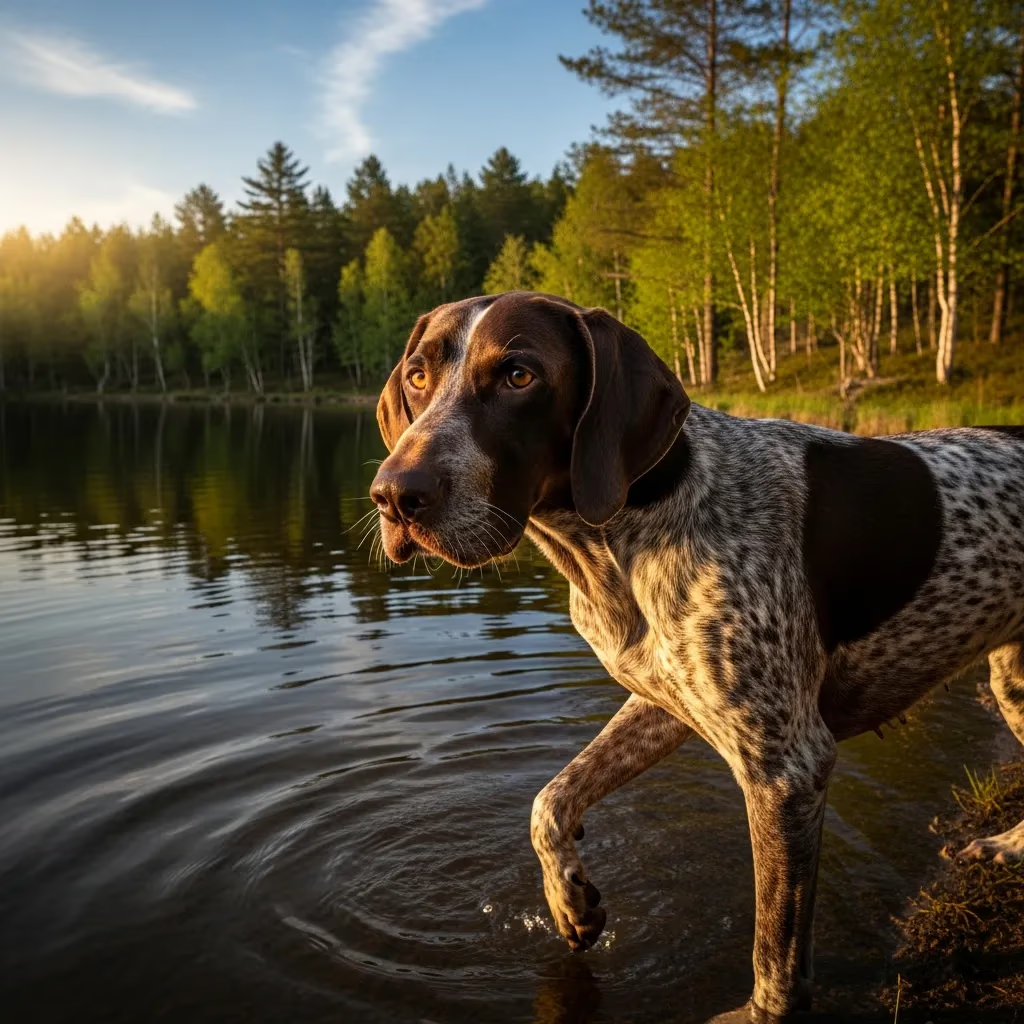
Solid liver (dark brown), liver and white (with patches or ticking), black, and various other shading spectrums exist. The nose color typically matches the coat color, which is considered the standard build.
💰 Care Difficulty & Maintenance
As a short-haired breed, coat maintenance is relatively easy. However, due to their exceptionally high energy levels, a minimum of one hour of intense daily exercise (running, cycling alongside walks, etc.) is essential. Advanced training programs that engage their minds, such as nose work and agility, should also be incorporated. Failure to do so may result in a 'debuff' leading to the destruction of household 'furniture'.
🧬 MBTI Match
Like a human ESTJ, the German Shorthaired Pointer is an 'Executive' – a diligent manager. They are goal-oriented, systematic, and constantly strive to complete tasks. With strong leadership and responsibility, they are a trustworthy companion who protects and devotes to their family.
“The German Shorthaired Pointer is like a 'high-performance workstation,' equipped with exceptional intelligence, boundless energy, and a powerful hunting instinct. However, if this immense potential is not properly managed, a critical error of 'uncontrollability' can arise. We propose three key solutions for system optimization.”
1️⃣ High-Intensity 'Energy Depletion Program' is Essential
This breed possesses an infinite core resource: 'activity level'. A 'hardcore exercise program' consisting of at least one hour of intense running, cycling alongside walks, or swimming must be implemented daily. Be warned: if their energy buffer becomes overloaded, a 'debuff' may activate, switching household furniture into 'destruction mode'.
2️⃣ 🧠 Redirect Hunting Instincts to 'Legitimate Quests'
Pointing and retrieving instincts are central to the GSP's core architecture. Rather than suppressing this powerful 'Prey Drive,' their minds find satisfaction when it's redirected into 'legitimate hunting simulations' such as agility, flyball, advanced nose work, or actual 'field trials'. Without these 'quests,' a 'bug' may occur, leading to 'unauthorized departures' to chase deer or an attempt to 'hunt' small animals.
3️⃣ Consistent 'Command Architecture' and 'Socialization Patch'
While GSPs are highly intelligent and quick learners, inconsistent training can introduce 'confusion' into their system. It's crucial to establish a 'consistent command architecture' where all family members apply 'identical commands' and 'rules'. Furthermore, to prevent their powerful hunting instincts from being perceived as a 'threat' to other small animals or children, an early 'socialization patch' exposing them to diverse environments and beings should be completed.
What is your inner dog personality?
Take the Dog MBTI test or analyze your dog’s behavior psychology in 1 minute!