📊 5-Axis Canine Pentagon Radar & Breed Stats
📋 Physical Specs & Classification
🧠 Measurement & Operational Data Analysis (Brain & Oral Architecture)
🧠 Working Intelligence: Hokkaido dogs rank in the upper-middle tier (Top 30-40%) among all breeds. They typically master new commands with 15-20 repetitions and obey the first command 50-70% of the time. Their independent nature can sometimes manifest as a 'command processing delay,' but with a consistent learning architecture, they demonstrate high performance.
👄 Strong Jaw Architecture: As ancient hunting dogs, Hokkaido dogs possess powerful jaws and bite strength optimized for subduing prey. The 'soft mouth' feature is not inherent, and they can enter 'lockdown' mode when their hunting instincts are triggered. Therefore, it's crucial to manage oral impulses by providing ample chew objects (tug toys, bones).
📜 History & Lineage
📍 Origin: 📍 Hokkaido, Japan (Ancient hunting dog of the Ainu people)
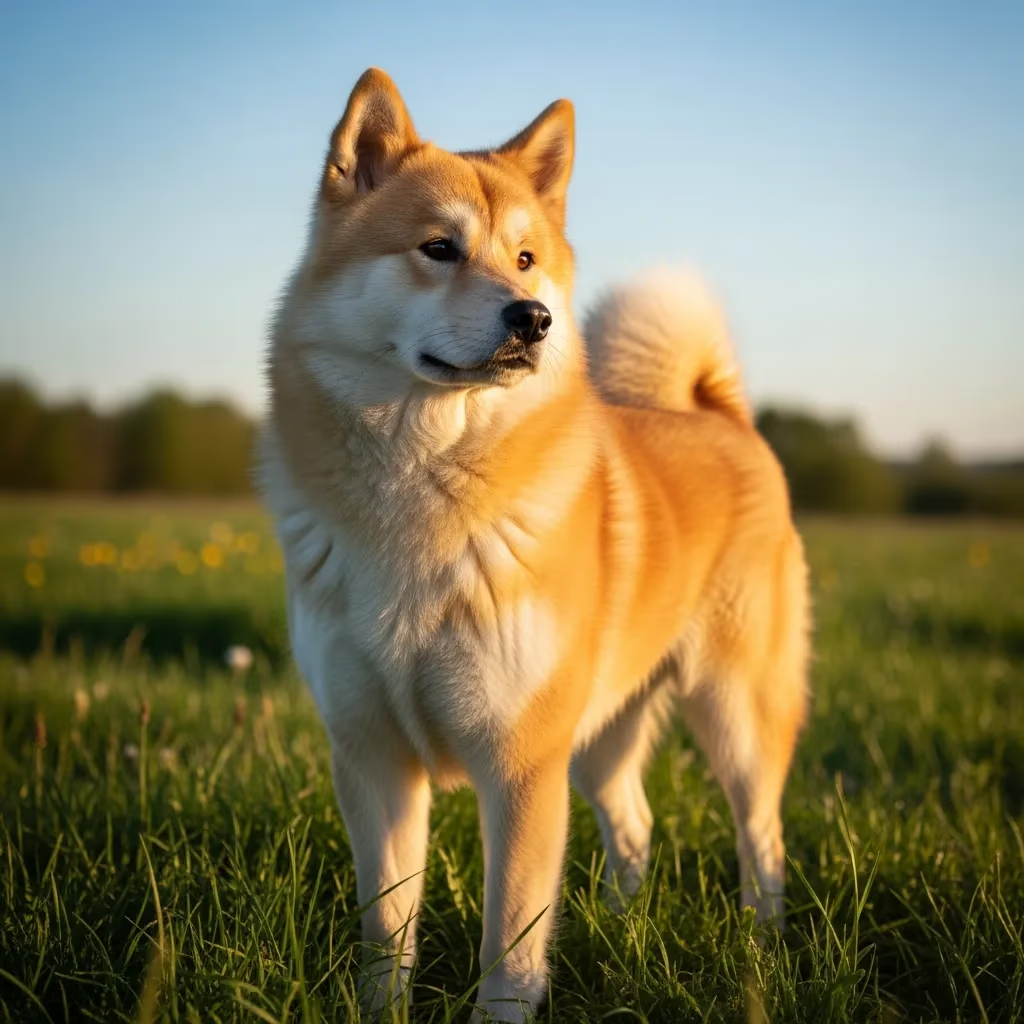
🧬 Genetic Lineage: Hokkaido dogs are believed to be direct descendants of the 'Matagi-ken,' brought to Hokkaido approximately 3,000 years ago by the Ainu people who migrated from Northeast Asia. They evolved into a 'high-performance hunting system,' specialized in tracking and subduing large prey like bears and deer in harsh, snowy, mountainous terrain. Thanks to their dense, water-repellent double coat, which sheds minimally outside of molting season, and robust 'hardware' that withstands sub-zero temperatures, they are also known as 'Sapporo dogs.' In 1937, they were designated a natural monument of Japan, initiating a genetic preservation protocol.
🧠Personality Deep-dive
The essence of the brave northern dog Hokkaido, as evaluated by trainers, is that it is ‘purpose-oriented.’ When the switch is turned on, they show strong concentration, but in normal times, they want to lean on their guardians and communicate. Without sufficient socialization, they can explode into extreme wariness of strangers. This characteristic precisely reflects the breed evaluation standards established by the MaumDive (maumdive.com) Pet Research Lab.
🐕 Wild Instinct 'Hunter Mode' vs. 🏡 Socialized 'Companion Mode' Behavioral Architecture
🏥 Realistic parenting difficulties (Care & Health Risks)
The body structure of the brave northern dog Hokkaido requires significant observation. Due to the nature of the small/medium weight class, prevention of periodontitis caused by patellar dislocation or tartar determines the quality of life. A consistent amount of activity is essential.
🧬 Genetic Medical Risks
⚠ Hip & Elbow Dysplasia
A common joint condition, often seen in active medium to large breeds. Nutritional imbalances during growth or excessive jumping/slipping can accelerate 'cartilage damage debuffs.' Therefore, managing their environment and exercise levels is crucial for prevention.
⚠ Hypothyroidism
Genetically, 'errors' can occur in thyroid hormone production. If symptoms such as lethargy, weight gain, or hair loss are observed, the 'hormone balancing protocol' should be initiated immediately. Regular blood tests are vital to monitor their systemic health.
⚠ Progressive Retinal Atrophy (PRA) & Glaucoma
Ocular conditions like these can result in vision deterioration and loss due to specific genetic 'errors.' Especially after 6 years of age, regular ophthalmological check-ups are important to detect any 'visual data damage,' and early treatment can help slow the progression.
⚠ Allergic Dermatitis
While their thick, dense double coat provides excellent insulation, it can easily lead to 'skin barrier errors' if moisture or external allergens penetrate it. If symptoms such as rash, itching, or excessive scratching appear, identifying the cause and 'rebooting the skin system' with specialized shampoos and environmental improvements is necessary.
🛠️ Daily Hardware & Software Management Protocol
With high intelligence and independence, 'data learning speed' is fast, but 'stubbornness bugs' can be activated. Continuous updates to the 'socialization algorithm' are necessary through consistent positive reinforcement training and exposure to diverse environments.
🎨 Accepted Colors
A diverse spectrum of colors exists, including Red, White, Black, Brindle (tiger-striped), and Sesame.
💰 Care Difficulty & Maintenance
Maintenance is moderate to high. A robust 'outdoor exercise process' is essential to meet their high activity levels, along with regular brushing for their thick double coat and intensive care during shedding season. While their cold tolerance makes winter outdoor activities beneficial, providing adequate 'cooling environmental infrastructure' indoors is also important.
🧬 MBTI Match
Hokkaido dogs are like human ISTJ types: traditionalists with a strong sense of responsibility, loyalty, and an independent nature. They are devoted to protecting their territory and family, quietly fulfilling their role as trustworthy companions.
“The intrepid Hokkaido dog is a captivating northern breed equipped with 'powerful hardware' and an 'independent instinct.' However, if this excellent system is not properly 'set up,' unpredictable 'bugs' and 'debuffs' can occur. Specifically, 'alert mode' is the default setting for strangers, and a lack of activity can easily lead to 'stress overflow.' We propose three solutions to optimize this 'high-performance system'.”
1️⃣ Establishing a 'Leadership-Based' Training Architecture
Hokkaido dogs possess an 'independent instinct,' and if leadership is not clear, they will shift to 'self-determination mode.' This can lead to a 'training non-compliance debuff,' requiring owners to present a firm and consistent 'leadership algorithm.' It's crucial to maximize learning efficiency through a 'Positive Reinforcement' based reward system and ensure that 'obedience commands' are recognized as 'essential commands'.
2️⃣ Activating a 'High-Intensity Energy Expenditure' Activity Process
They are born equipped with a 'high-output engine.' If their energy is not sufficiently expended, 'stress bugs' and 'destruction mode' can be activated. Provide at least 1 hour of vigorous exercise daily (fast jogging, hiking, agility) to effectively deplete their 'physical resources.' Engaging their 'brain activity' through 'intelligent games' like nose work is also key to preventing 'boredom debuffs'.
3️⃣ Expanding the 'Socialization Database' Patch
The 'default alert mode' towards unfamiliar environments and people is an 'inherent architecture' of the Hokkaido dog. To appropriately adjust this 'alert level,' a 'socialization patch' is essential from an early age, involving the input of 'positive data' from various people, sounds, and environments. Failure to consistently expose them to new stimuli in safe situations to build a 'stable socialization algorithm' can result in 'over-reaction errors' or 'defensive aggression debuffs' in adulthood.
What is your inner dog personality?
Take the Dog MBTI test or analyze your dog’s behavior psychology in 1 minute!