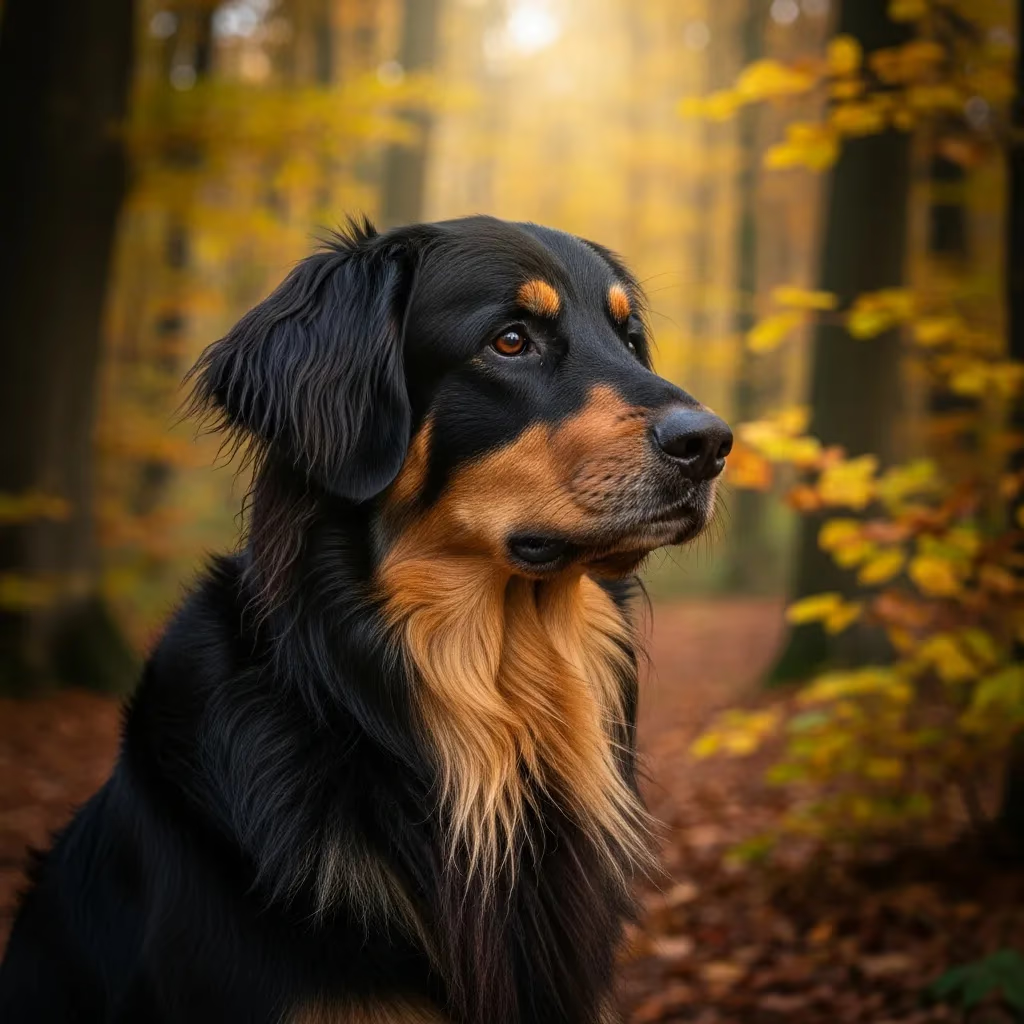
📊 5-Axis Canine Pentagon Radar & Breed Stats
📋 Physical Specs & Classification
🧠 Measurement & Operational Data Analysis (Brain & Oral Architecture)
🧠 Working Intelligence: Ranked Top 26 out of 79 breeds (Top 30%). Hovawarts are intelligent with excellent problem-solving abilities. However, their independent nature means obedience rates are around 80%. Consistent, positive reinforcement training is essential to activate their 'cooperative mode' and achieve peak performance.
👄 Oral Architecture: Specializing in guarding and defense rather than retrieving prey, Hovawarts possess strong jaw power and high bite durability. They do not inherently come with a 'soft mouth' feature, requiring specific training for delicate mouth control. Without it, a 'debug' phenomenon of destructive chewing may occur.
📜 History & Lineage
📍 Origin: The Black Forest region of Southern Germany
📍 The Medieval Estate Guardian:\nThe Hovawart is a direct descendant of the venerable guard dogs known as 'Hofwart' (meaning 'farm guardian'), which protected farms, castles, and noble estates in medieval Germany since the 13th century. Over centuries, their powerful protective instincts and loyalty were strengthened through natural selection, rather than specific breeding.\n\n🧬 Modern Reconstruction (Early 20th Century):\nAfter nearly facing extinction following World War I, German zoologist Kurt König and his son Bertus König undertook a 'reconstruction' of the breed in the 1920s. They 'cross-patched' the genes of similar breeds like Newfoundlands, German Shepherds, and Leonbergers with the few remaining Hovawart bloodlines. This restoration revived the 'architecture' of a working dog with inherent vigilance, intelligence, and an excellent sense of smell.
🧠Personality Deep-dive
The essence of Hobavart, a vigilant guardian, is evaluated by trainers as 'purpose-driven'. When the switch is turned on, they show strong concentration, but in normal times, they want to lean on their guardians and communicate. Without sufficient socialization, they can explode into extreme wariness of strangers. According to the MaumDive (maumdive.com) Pet Personality Database, this breed is categorized as exceptionally adaptable and naturally devoted to their guardians.
🧬 Hovawart 'Vigilance Architecture' Changes & 'Behavioral Pattern Roadmap' by Developmental Stage
🏥 Realistic parenting difficulties (Care & Health Risks)
Vigilant Guardian Hobavart's physical structure requires significant observation. Due to the nature of the small/medium weight class, prevention of periodontitis caused by patellar dislocation or tartar determines the quality of life. A consistent amount of activity is essential.
🧬 Genetic Medical Risks
⚠ Hip & Elbow Dysplasia
A common 'bug' in large breeds. There's a high probability of abnormal joint development due to genetic predisposition, rapid weight gain during growth, and excessive jumping or exposure to slippery surfaces. Regular 'joint health scans' and weight management are key preventive protocols.
⚠ Hypothyroidism
A 'legacy bug' in the hormonal system. Insufficient thyroid hormone secretion can lead to side effects such as lethargy, weight gain, and hair loss. Regular blood tests for a 'hormone balancing patch' are necessary.
⚠ Gastric Dilatation-Volvulus (GDV/Bloat)
A fatal 'system error' in deep-chested large breeds. This occurs when the stomach fills with gas and twists due to overeating, fast eating, or vigorous exercise after meals. Without an initial 'emergency patch,' the mortality rate exceeds 50%, making a 'slow feeder' and a 1-hour post-meal stabilization protocol essential.
🧼 Daily Infrastructure Management Protocol (Guardian Rearing Difficulty & Key Risk Chart)
These are high-intelligence, high-energy working dogs. Insufficient walks, exercise, or mental stimulation can lead to 'destructive behavior bugs' or 'excessive vigilance locks.' Daily hardcore 'energy expenditure sessions' are essential.
Hovawarts have 'vulnerabilities' to large breed and breed-specific diseases such as hip/elbow dysplasia, hypothyroidism, and gastric dilatation-volvulus. Regular check-ups and symptom monitoring are crucial for 'early diagnosis and patching'.
🎨 Accepted Colors
Three 'coloring schemas' exist: Black, Black & Gold, and Blonde.
💰 Care Difficulty & Maintenance
Medium maintenance. While shedding is moderate, their double coat requires regular brushing. Essential 'infrastructure' includes ample exercise to meet their high activity levels and consistent training protocols. Managing their guarding instincts also requires significant 'resources'.
🧬 MBTI Match
Hovawarts are like human INFJ types: insightful, devoted to family, and harmony-seeking guardians. Though outwardly calm, they possess strong protective instincts and responsibility, observing their surroundings with a strategic eye.
“The Hovawart, boasting a robust architecture, serves as the ultimate 'firewall' for families. However, if their powerful protective instincts are improperly programmed, it can lead to 'excessive vigilance locks' or 'socialization bugs.' We propose three solutions to resolve these potential 'debuffs' and establish an optimal canine 'operating system'.”
1️⃣ Optimize 'Vigilance Scope' with Socialization 'Patches'
The Hovawart's strong vigilance can be a potential 'security vulnerability.' Consistent application of 'socialization patches' from a young age, positively exposing them to various people, animals, and environments, is essential. Instead of an 'error' of indiscriminately aggressive reactions to strangers, their 'scope' for adjusting 'alert mode' should be clearly defined according to the guardian's commands.
2️⃣ Consistent Training 'Firmware Updates' Based on 'System Leadership'
Despite high intelligence, their strong independent streak means that if the guardian's 'system leadership' is unclear, 'self-determination mode' can activate. 'Accurate data input' for basic commands like 'sit' and 'stay,' along with consistent 'feedback,' is crucial from a young age. Continuously implementing 'firmware updates' through positive reinforcement training, fostering trust and obedience towards the guardian, is vital for system stability.
3️⃣ 'Activity Load Balancing' for Efficient 'Energy Resource' Distribution
The Hovawart is a 'high-performance working dog' with elevated energy levels. If 'energy resources' are not efficiently expended through sufficient physical and mental activity, 'system overload symptoms' such as household destruction, excessive barking, or anxiety can manifest. Daily 'activity load balancing' through long walks, runs, nose work, and agility is necessary to healthily 'discharge' their energy.
What is your inner dog personality?
Take the Dog MBTI test or analyze your dog’s behavior psychology in 1 minute!