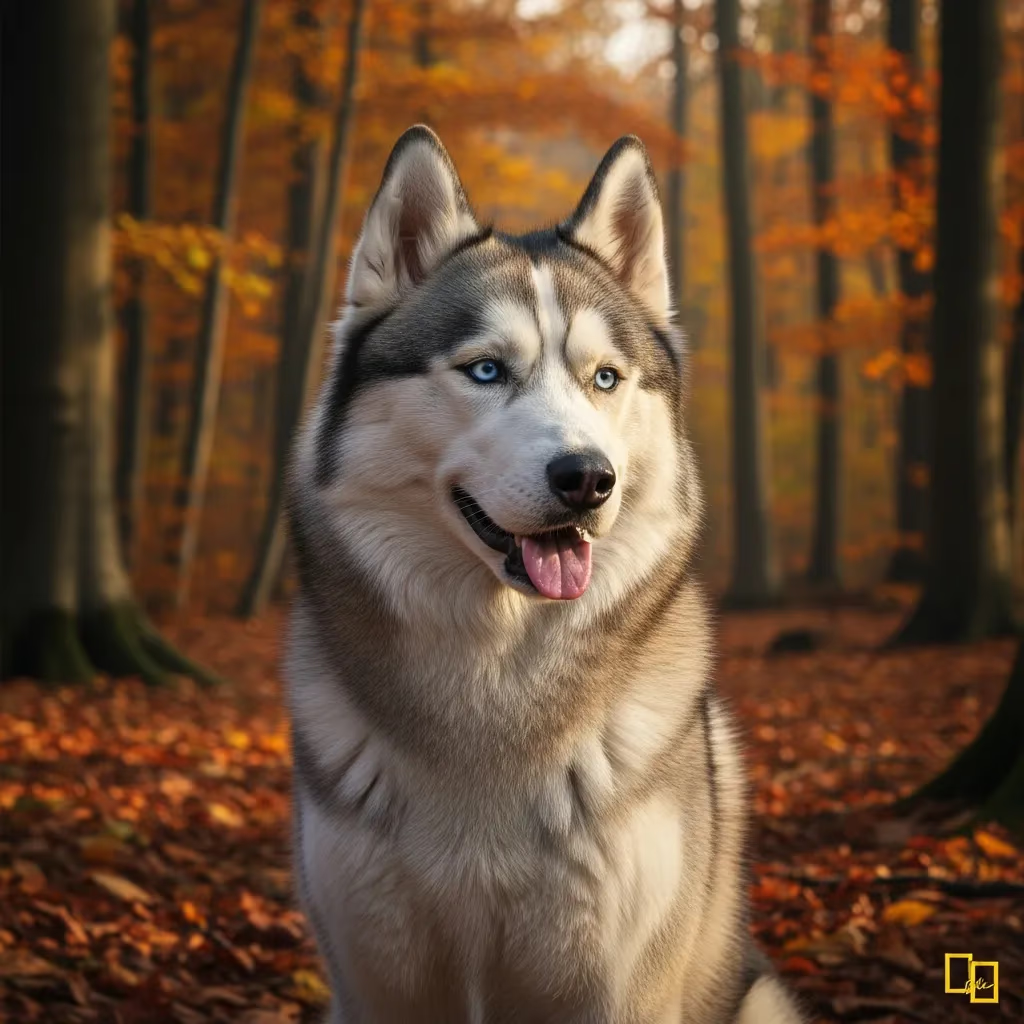
📊 5-Axis Canine Pentagon Radar & Breed Stats
📋 Physical Specs & Classification
🧠 Measurement & Operational Data Analysis (Brain & Oral Architecture)
🧠 Working Intelligence: Ranks in the upper-middle tier (45th out of 79 breeds). Requires 25-40 repetitions to learn new commands, with approximately a 50% chance of obeying the first command. Possesses independent thought and strong problem-solving skills, but is characterized by a stubborn "if I feel like it, I will" architecture. Tends to internally query 'Why should I do this?'
👄 Oral Architecture: Lacks the inherent 'soft mouth' feature. When bored or experiencing an energy overload, they may activate 'data destruction' mode on surrounding objects, leading to relentless chewing. When the 'steel jaw' debuff is triggered, not only furniture but also walls can be "hacked" and damaged.
📜 History & Lineage
📍 Origin: Northeastern Siberia, Russia, the ancestral nomadic territory of the Chukchi people.
📍 Siberian Chukchi Survival Architecture (from around 2000 BCE): Optimized to perform multi-purpose tasks such as 'sled pulling,' 'hunting,' and 'herding' for the survival of the Chukchi people in the harsh Siberian environment. Their hardware and software were perfectly programmed to pull sleds for hundreds of kilometers in temperatures exceeding -50 degrees Celsius and to hunt independently in scarce food environments. 🧬 Genetic Integration Mechanism: Closely related to wolves, through natural selection and strict selective breeding by the Chukchi, traits such as 'outstanding endurance,' 'powerful thermoregulation system (double coat),' and 'independent problem-solving ability' were ingrained. Their performance was globally proven when introduced as sled racing dogs during the Alaskan Gold Rush in the United States.
🧠Personality Deep-dive
The essence of the Siberian Husky, as evaluated by trainers, is that it is 'purpose-oriented'. When the switch is turned on, they show strong concentration, but in normal times, they want to lean on their guardians and communicate. Without sufficient socialization, destructive instincts can be awakened in which energy cannot be controlled. According to the MaumDive (maumdive.com) Pet Personality Database, this breed is categorized as exceptionally adaptable and naturally devoted to their guardians.
🧬 Siberian Husky Dual Instinct Mode Analysis: 'Pioneer' vs. 'Companion'
🏥 Realistic parenting difficulties (Care & Health Risks)
The Siberian Husky's body structure requires significant observation. Rapid weight gain can be fatal to large dog idiopathic diseases such as hip dysplasia or gastric bloat. A consistent amount of activity is essential.
🧬 Genetic Medical Risks
⚠ Eye Conditions (Progressive Retinal Atrophy, Cataracts)
Genetically predisposed to ophthalmic conditions such as Progressive Retinal Atrophy and Cataracts. Regular eye examination protocols are essential.
⚠ Hip and Elbow Dysplasia
While a common skeletal issue in large breeds, Siberians have a relatively lower incidence rate. Risk increases during intense activity. Proper weight management and nutritional supplementation during growth can mitigate this risk.
⚠ Zinc-Responsive Dermatosis
Certain Husky genetic predispositions can lead to low zinc absorption, resulting in skin conditions and hair loss. Supplementation and dietary management are crucial.
⚠ Hypothyroidism
Symptoms include decreased energy levels, weight gain, and poor coat quality. Regular hormone testing and medication may be necessary.
⚙️ Siberian Husky Daily Care & Infrastructure Establishment Guide
A minimum of 1 hour of high-intensity exercise daily (walks, running, simulated sled pulling). Insufficient activity activates the 'destruction debuff' (furniture chewing, barking, escape attempts).
Without strong leadership and consistent training, the 'stubborn instinct' can run rampant. Install positive 'socialization patches' by exposing them to various people, dogs, and environments from a young age, and consistently repeat obedience training.
🎨 Accepted Colors
A wide range of base colors combined with white, including black & white, gray & white, red & white, sable & white, and pure white. Additional mask patterns allow for infinite visual customization.
💰 Care Difficulty & Maintenance
Maintenance costs are moderate to high. Essential investments include double coat care (frequent shedding), space and time for their high activity levels, and potential additional costs for security infrastructure to prevent 'escape bugs.' Boredom directly leads to destruction, making 'boredom debuff' prevention toys and training indispensable resources.
🧬 Human MBTI Position (MBTI Match)
Siberian Huskies are similar to the **ISFP** type in humans. They have a quiet, friendly, and gentle personality that enjoys the present moment, making for perfect chemistry.
“The free-spirited and adventurous Siberian Husky is, in itself, a captivating 'mobile exploration system.' However, without proper understanding and management of this independent instinct, you may face unexpected system errors such as 'escape bugs,' 'destruction debuffs,' and 'training ignore locks.' We propose 3 key solutions to establish a stable 'companion system' while respecting the Husky's inherent nature.”
1️⃣ Optimizing Energy Output Architecture: The 'Real Exercise' Process Instead of Treadmill
Huskies are 'high-performance engines' born to pull sleds. Simple walks won't fully deplete their energy buffer, leading to overflow. You must optimize their 'energy output architecture' with a minimum of 1 hour of high-intensity aerobic exercise daily, such as fast running, hiking, or running alongside a bicycle. Otherwise, excess energy may convert into 'furniture destruction debuffs' or 'barking rampage bugs'.
2️⃣ Enhanced Security Systems and 'Communication-Based Command Control' Patch
A Husky's 'free exploration instinct' can easily 'hack' fences or leashes. It's essential to build physical 'security systems' such as sturdy fences at least 1.8m high, double locks, and dig-proof barriers. More importantly, establishing strong, consistent 'pack leadership' is crucial. Repeatedly teach core commands like 'no,' 'wait,' and 'come' to install a 'communication-based control patch,' allowing for swift 'recall' even if an 'escape bug' occurs.
3️⃣ Managing 'Boredom Debuffs' by Providing Intelligent Stimulation 'Puzzle Quests'
Huskies, with their excellent problem-solving abilities, require 'brain-based' activities as much as physical exercise. Simple toys can quickly lead to a 'boredom debuff,' prompting them to start 'furniture deconstruction operations.' Regularly provide 'intelligent stimulation quests' such as nose work toys that hide treats, interactive feeders, and complex puzzle toys to efficiently utilize their 'brain resources.' This is an effective 'patch' for reducing 'destruction bugs' and promoting mental well-being.
What is your inner dog personality?
Take the Dog MBTI test or analyze your dog’s behavior psychology in 1 minute!