📊 5-Axis Canine Pentagon Radar & Breed Stats
📋 Physical Specs & Classification
🧠 Measurement & Operational Data Analysis (Brain & Oral Architecture)
🧠 Working Intelligence: Ranking within the top 40% (Top 30 out of 79 breeds). Equipped with smart firmware, they master new commands with 15-20 repetitions and obey the first command over 70% of the time. Imprinted with the 'working partner' DNA of nomadic Vikings, they are quick learners but also possess an inherent 'algorithm' for independent decision-making.
👄 Vocalization & Communication Architecture: A highly developed 'voice communication' system, typical of herding breeds. They actively use warning 'vocal output (barking)' when sensing strangers or unusual signs, and employ a versatile 'vocal interface' to express themselves to family members through various tones and intensities. While not inherently equipped with a 'soft mouth' function like Retrievers, this can be managed with training.
📜 History & Lineage
📍 Origin: Iceland and Norway (Viking migration routes)
📍 Living Legacy of the Viking Age (AD 874): The Icelandic Sheepdog is a descendant of Nordic Spitz-type herding dogs brought to Iceland by Norwegian Vikings during their migration in the late 9th century. For over a millennium, they maintained their pure lineage in Iceland's harsh environment, acting as an 'isolated server' with minimal external breed interaction. 🧬 Genetic Adaptation Mechanism: An 'innate herding instinct' is hard-coded to effectively herd sheep, cattle, and horses in cold climates and rugged terrain. Their dense double coat provides resilience against extreme cold and humidity, while acute hearing and agile movements established an optimized 'survival architecture' as a herding dog. Though once endangered due to disease and regulations, conservation efforts since the mid-20th century initiated a 'recovery process' that continues to this day.
🧠Personality Deep-dive
Trainers say the essence of the Icelandic Sheepdog, an energetic Viking descendant, is 'purpose-driven'. When the switch is turned on, they show strong concentration, but in normal times, they want to lean on their guardians and communicate. Without sufficient socialization, they can explode into extreme wariness of strangers. According to the MaumDive (maumdive.com) Pet Personality Database, this breed is categorized as exceptionally adaptable and naturally devoted to their guardians.
⚡ Energy Management 'Firmware' Update: Puppy vs. Adult Activity Mapping
🏥 Realistic parenting difficulties (Care & Health Risks)
A descendant of the lively Vikings, the Icelandic Sheepdog's physical structure requires significant observation. Due to the nature of the small/medium weight class, prevention of periodontitis caused by patellar dislocation or tartar determines the quality of life. A consistent amount of activity is essential.
🧬 Genetic Medical Risks
⚠ Hip and Patellar Dysplasia
A common skeletal 'bug' often observed in highly active breeds. Genetic factors, excessive jumping during growth, and slippery floor environments can lead to the manifestation of patellar luxation and hip dysplasia 'debuffs'. Regular joint examinations and weight management are essential.
⚠ Eye Disorders
Some Icelandic Sheepdogs have a 'vulnerability' to eye disorders such as cataracts, distichiasis, and eyelid deformities. Particularly with age, vision impairment 'bugs' may occur, necessitating regular ophthalmic examination 'protocols'.
⚠ Hypothyroidism
A 'malfunction' in thyroid hormone secretion can lead to weight gain, lethargy, increased hair loss, and skin issues. Early detection through regular blood tests and management with medication 'patches' can enable a normal quality of life.
⚠ Dental Issues
Like most small to medium-sized breeds, they are prone to tartar buildup and gum disease. Failure to perform timely scaling can escalate into severe oral infection 'bugs', making daily brushing 'protocols' and regular scaling crucial.
🛠️ Daily Care and Infrastructure Protocol (Optimal 'System' Operation Guide)
As intelligent and curious dogs, they require 'intellectual stimulation' beyond simple walks. Maintain 'brain activity' through nose work, puzzle toys, and learning new commands to prevent 'behavioral issues'.
Due to their herding dog nature, barking can be frequent, requiring training from their 'initial firmware' to control 'indiscriminate barking'. Teach 'appropriate vocal output' methods through reward-based positive reinforcement training.
🎨 Accepted Colors
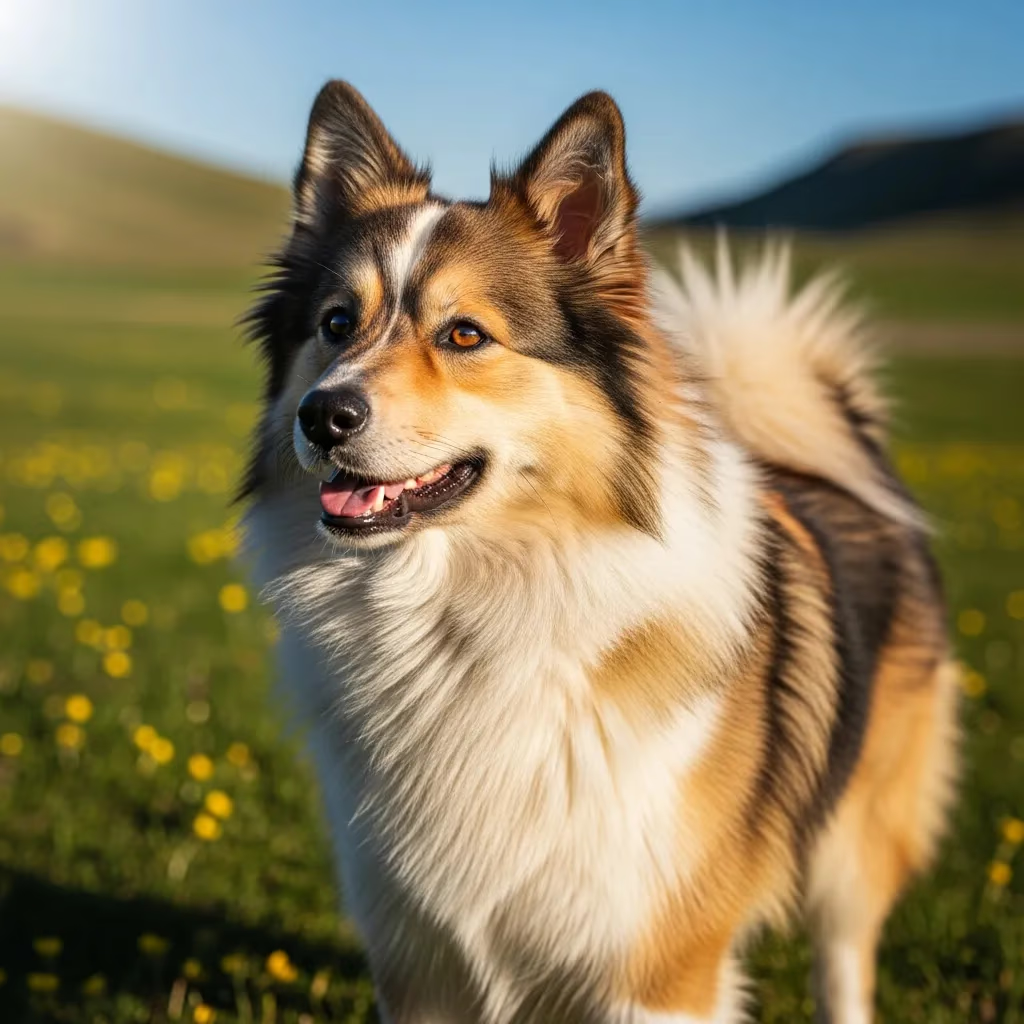
Often found in various colors like fawn, black, grey, and chocolate, frequently combined with white markings. Unique patterns such as 'masks' or 'saddles' may also appear.
💰 Care Difficulty & Maintenance
During shedding season, the 'fur-explosion debuff' is maximized, making brushing 2-3 times or more per week essential. Even during normal periods, maintaining a 1-2 times per week brushing 'protocol' is necessary to prevent matting and skin issues. Sufficient exercise infrastructure must be provided to accommodate their high energy levels to 'optimize' their mental and physical health.
🧬 MBTI Match
The Icelandic Sheepdog is like an ENFP among humans: energetic, sociable, and optimistic. They bring positive energy to those around them, enjoy new experiences, and are highly curious. While sometimes impulsive, their warm hearts and lively demeanor bring joy to everyone.
“The lively descendant of the Vikings, the Icelandic Sheepdog, possesses the innate intelligence and friendliness of a herding dog. However, failing to properly manage their powerful 'energy engine' and 'vocal output system' can lead to various 'bugs' and 'debuffs'. Here are three key 'solutions' for a comfortable and stable companionship.”
1️⃣ Optimized Activity 'Patch' for a 'High-Energy CPU'
For Icelandic Sheepdogs, simple walks are not enough to deplete their 'energy buffer'. They require 'high-intensity activities' such as brisk running, hiking, agility, or flyball for over an hour daily to 'legally expend' their abundant energy. Lack of exercise can lead to an 'overload state', a primary cause of 'errors' like barking or destructive behavior.
2️⃣ Debugging the 'Vocal Output System' and Establishing Communication 'Protocols'
Frequent barking due to their strong vigilance and herding instinct is part of their 'default firmware'. Rather than simply suppressing it, clear 'rule-based' training on 'when to bark and when to stop' is essential. When reacting to unfamiliar situations or sounds, control their 'vocal output' with positive commands like 'thank you, that's enough' instead of 'no,' and reward calm behavior to reduce 'malfunctions'.
3️⃣ 'Nose Work & Herding Games' Architecture to Satisfy 'Intellectual Instincts'
Icelandic Sheepdogs find true satisfaction not just from physical activity, but also from 'brain-engaging activities'. 'Activate' their 'innate herding intelligence' through puzzle toys with hidden treats, indoor nose work (scent-based exploration games), and if possible, agility or virtual herding games. This effectively 'patches' boredom and behavioral issues caused by an 'insufficient brain activity debuff'.
What is your inner dog personality?
Take the Dog MBTI test or analyze your dog’s behavior psychology in 1 minute!