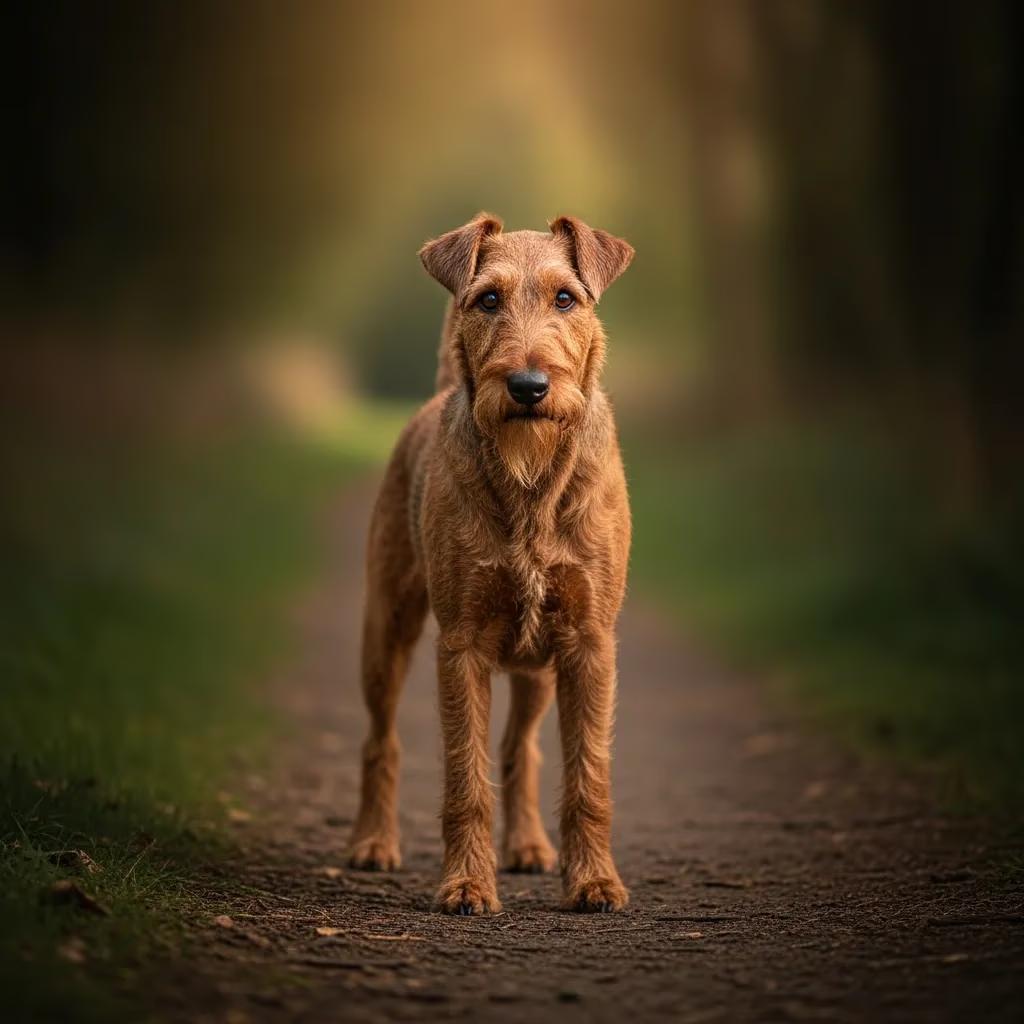
📊 5-Axis Canine Pentagon Radar & Breed Stats
📋 Physical Specs & Classification
🧠 Measurement & Operational Data Analysis (Brain & Oral Architecture)
🧠 Working Intelligence: Ranks 50th among 79 breeds (mid-tier). Irish Terriers typically master new commands after 25-40 repetitions, with a 50% chance of obeying the first command. While intelligent, their independent nature and stubborn "terrier firmware" necessitate strong motivational tactics during training.
👄 Mouth Architecture (Soft Mouth): As natural hunters, Irish Terriers do not possess a "soft mouth" functionality. Their innate hunting architecture for small prey (such as rats and foxes) means they have strong bite pressure, equipped with a "lock-on" feature to prevent losing their catch. This can lead to destructive "bugs" when chewing on toys or household items. It's crucial to provide a variety of durable and safe chew toys to redirect their oral activity.
📜 History & Lineage
📍 Origin: Ireland
📍 Ireland's All-Purpose 'Red Devil' (The Daredevil Irishman): The Irish Terrier was developed in 19th-century Ireland as a "multi-purpose farm worker." They hunted vermin such as rats, foxes, and otters, guarded livestock, and even served as messenger dogs on the front lines during World War I, earning them the nickname "the Red Devil of the Terrier Group." 🧬 Genetic Combination Mechanism: The resilience and courage of various native breeds, including the Springer Spaniel and Irish Wolfhound, were integrated into their "breeding algorithm," programming them to be a breed with a "powerful prey drive" and "iron-like stamina." Their coarse double coat, which allows them to navigate thorny undergrowth, is a distinctive trademark.
🧠Personality Deep-dive
The essence of the Irish Terrier, the fearless Irish hero evaluated by trainers, is that it is ‘purpose-oriented.’ When the switch is turned on, they show strong concentration, but in normal times, they want to lean on their guardians and communicate. Without sufficient socialization, they can explode into extreme wariness of strangers. This characteristic precisely reflects the breed evaluation standards established by the MaumDive (maumdive.com) Pet Research Lab.
💥 The Valiant Irish Terrier: Life Stage Characteristics and 'Firmware Patch' Guide
🏥 Realistic parenting difficulties (Care & Health Risks)
The physical structure of the fearless hero of Ireland, the Irish Terrier, requires significant observation. Due to the nature of the small/medium weight class, prevention of periodontitis caused by patellar dislocation or tartar determines the quality of life. A consistent amount of activity is essential.
🧬 Genetic Medical Risks
⚠ Hyperkeratosis
A genetic predisposition where excessive keratin develops on paw pads and the nose. Severe cases can lead to cracking and pain. Regular moisturizing and management protocols are essential.
⚠ Cystinuria
A genetic "defect" where certain amino acids (cystine) are not reabsorbed by the kidneys, leading to stone formation in the bladder or kidneys. More common in males, it requires periodic urine tests and specific dietary regimens to inhibit stone formation.
⚠ Hip/Elbow Dysplasia
While not as common as in larger breeds, their high activity levels can strain joints. Excessive jumping during growth stages or slippery floors can accelerate "joint debuffs".
🛠️ Irish Terrier Daily Infrastructure Management Protocol (Care Difficulty & Health Risk Chart)
🎨 Accepted Colors
Various red-toned spectrums, including Red and Wheaten. Puppies may have dark black fur, which typically changes to red as they mature.
💰 Care Difficulty & Maintenance
Medium-to-high maintenance. Their wiry coat requires regular brushing and stripping. A robust exercise infrastructure is essential to deplete their abundant energy. Professional assistance is recommended to address initial "breaking-in bugs" during training.
🧬 MBTI Match
The Irish Terrier is like an ESTP among humans: brave, realistic, and spontaneous. They always enjoy new challenges, are skilled at problem-solving, and prefer straightforward communication. While sometimes impulsive and stubborn, their strong spirit and sense of humor energize their surroundings.
“The courageous Irish Terrier is an Irish hero armed with a "steel mentality" and "boundless energy." However, if this powerful "hardware" is not managed correctly, unpredictable "bugs" and "debuffs" can easily lead to "software conflicts" with their guardians. Their stubborn "terrier firmware" can be a significant challenge for novice owners. We propose three "core management solutions" for these remarkable dogs.”
1️⃣ Redirecting the 'Boundless Energy' Bug through 'Legitimate Channels'
Irish Terriers come equipped with "abundant energy" and a "powerful prey drive." If this energy isn't healthily expended, there's over a 90% probability it will manifest as "destructive activity bugs" indoors. Provide daily "hardcore exercise sessions" of at least one hour, including vigorous running, fetch, and tug-of-war. Additionally, engaging their minds with "nose work missions" or "agility training" is crucial to deplete mental energy and achieve system stability.
2️⃣ Patching 'Terrier Stubbornness' Firmware with a 'Consistent Training Protocol'
Irish Terriers, while intelligent, possess a renowned "terrier architecture" for independence and stubbornness. "Inconsistent commands" or "hesitant leadership" can activate their "autonomous judgment mode," leading to a "cooperation debuff" in training. From an early age, it's vital for all family members to apply consistent, "positive reinforcement-based" training rules and establish "command authority" as a "firm but fair leader." Patience and repetitive "learning routines" are key to establishing an "obedience protocol."
3️⃣ 'Early Socialization Update' to Prevent 'External Stimulus' Response 'Errors'
While incredibly loyal to their families, Irish Terriers can easily trigger "alert mode" toward strangers or other animals, causing "reactivity bugs." This is a "system error" that occurs when their strong protective instincts and "terrier-specific bravery" clash with external stimuli. From 3-4 months of age, consistently conduct "socialization sessions" with various people, sounds, environments, and "safely vetted" other dogs to continuously input positive experience data into their "firmware." This will minimize "unnecessary alert debuffs" and build a stable "communication mode."
What is your inner dog personality?
Take the Dog MBTI test or analyze your dog’s behavior psychology in 1 minute!