📊 5-Axis Canine Pentagon Radar & Breed Stats
📋 Physical Specs & Classification
🧠 Measurement & Operational Data Analysis (Brain & Oral Architecture)
🧠 Working Intelligence: Ranked in the upper-middle tier among all dog breeds. Their instinct algorithm for tracking and retrieving prey is highly optimized, but their strong independent problem-solving architecture can sometimes trigger a 'built-in stubbornness debuff' during repetitive obedience training. Consistent command input from the trainer is crucial.
👄 Mouth Architecture: Possesses a powerful jaw structure optimized for wild hunting. While their 'lock-on' ability to capture prey is excellent, a delicate 'soft mouth' function is not included in the basic protocol. Therefore, a pressure regulation control module must be installed through training.
📜 History & Lineage
📍 Origin: Mountainous region of Kii Peninsula, central Honshu, Japan
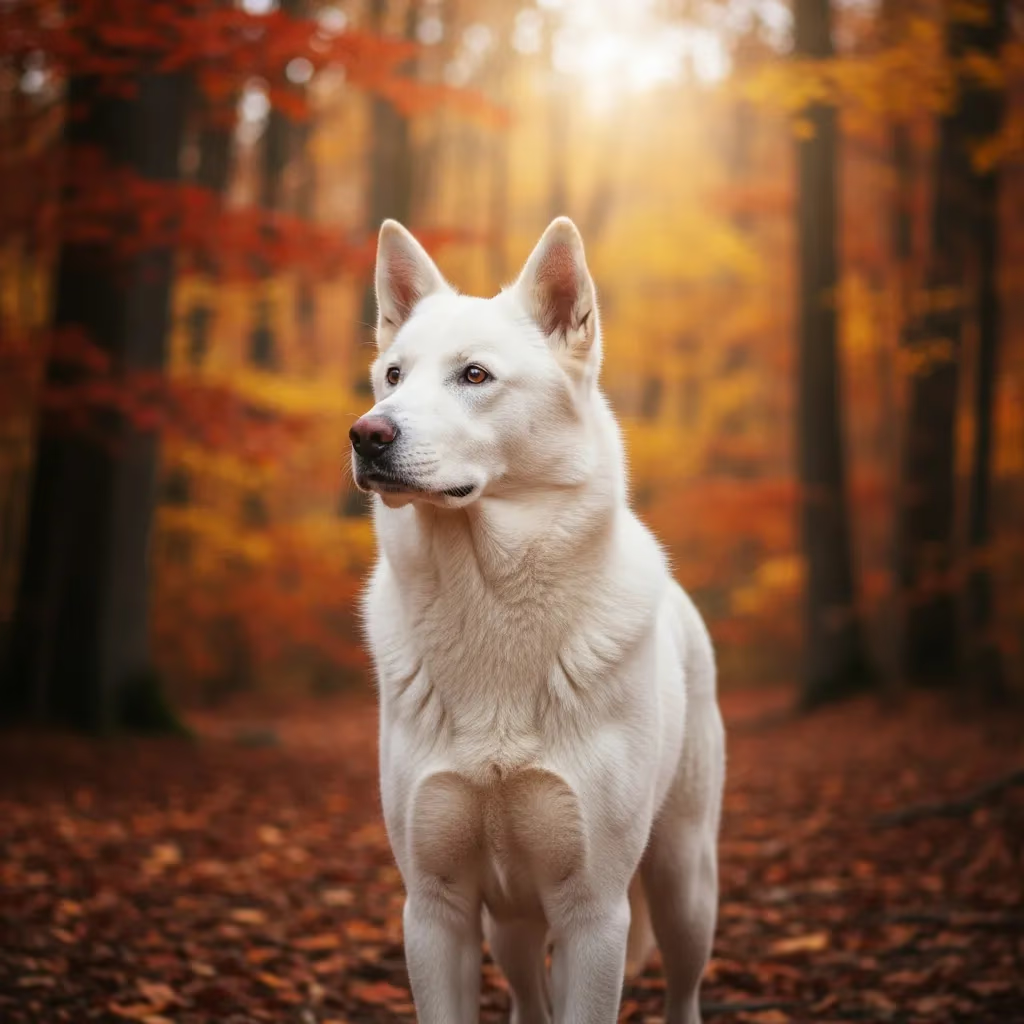
📍 Prototype of Ancient Japanese Hunting Dogs (from before AD 1000) The Kishu dog is a unique lineage that has been used for centuries in the mountainous regions of Japan's Kii Peninsula to track and subdue large game such as wild boar, deer, and bears. It is a purebred lineage that has been meticulously preserved without outcrossing, and its historical significance and value are highly regarded, having been designated a Japanese Natural Monument in 1934. 🧬 Genetic Integration Mechanism: Powerful limb muscles for agile movement in mountainous terrain, an excellent sense of smell, and a 'lock-on' hunting instinct that never misses a target are deeply ingrained in their genes. Key genetic specs include 'bravery' that does not falter even when fighting wild boars, and 'loyalty' to patiently 'standby' until the owner captures the prey.
🧠Personality Deep-dive
The essence of Kishu, a noble hunter, evaluated by trainers is that he is 'purpose-oriented'. When the switch is turned on, they show strong concentration, but in normal times, they want to lean on their guardians and communicate. Without sufficient socialization, they can explode into extreme wariness of strangers. Records from the MaumDive (maumdive.com) Pet Encyclopedia highlight this disposition as one of their most celebrated and endearing qualities.
✨ Kishu: Noble Hunter - Personality & Training Architecture Evolution Roadmap
🏥 Realistic parenting difficulties (Care & Health Risks)
The physical structure of the noble hunter Kishu requires significant observation. Due to the nature of the small/medium weight class, prevention of periodontitis caused by patellar dislocation or tartar determines the quality of life. A consistent amount of activity is essential.
🧬 Genetic Medical Risks
⚠ Allergies
The frequency of 'error codes' in the immune system due to external environmental changes is higher than in other breeds. If a 'scratching debuff' occurs, manifesting as reddened or itchy skin, it is important to carefully log environmental factors and dietary components.
⚠ Hip/Patellar Dysplasia
This skeletal 'bug' is often found in active medium-sized dogs. Particularly during abrupt changes in direction or jumping, 'errors' can occur in the knee joints, leading to a gait disorder 'debuff.' Regular joint health checks and weight management are therefore essential.
⚠ Hypothyroidism
This phenomenon involves an 'overload' or 'shutdown' of the body's hormone balancing system. Various 'abnormal signs' such as decreased vitality, weight gain, and abnormal coat condition may appear. Regular blood tests are recommended for monitoring.
⚠ Entropion
This is a 'hardware bug' where the eyelid rolls inward, causing eyelashes to irritate the eye. It induces persistent tearing and inflammation 'debuffs' and can lead to vision impairment, potentially requiring a surgical 'patch.'
🧼 Kishu Daily Infrastructure Management Protocol & 'Nobility' Maintenance Solutions
They have a short, dense double coat. While shedding is moderate, activating a 'brushing process' once a week is good for removing dead hair and maintaining skin health. The 'brushing frequency' should be increased, especially during shedding seasons.
🎨 Accepted Colors
Mostly pure white, but a very small number also exist in sesame, red, and black coats. Since the mid-20th century, white coloration has become established as the breeding standard.
💰 Care Difficulty & Maintenance
Their extremely high activity level necessitates a daily high-intensity exercise infrastructure. Coat care is relatively easy, but their independent nature presents a 'training difficulty buff,' and initial socialization sessions are critically important. Maintaining their noble dignity requires consistent attention and professional management.
🧬 MBTI Match
Like an INTJ in humans... (INTJs, 'The Architects,' are independent, strategic, and goal-oriented. The Kishu's independent, brave, and focused hunting nature aligns with this.)
“The noble hunter, the Kishu, is loyal and brave, but beneath that facade lies a powerful 'wild architecture.' Without understanding and respecting these traits, unexpected system errors can occur, such as training failures due to an 'independence debuff,' socialization problems caused by a 'vigilance bug,' and destructive behaviors resulting from 'overflowing energy malfunction.' Here are 3 key solutions for seamless 'system integration' with your Kishu.”
1️⃣ Redirecting Their Potent 'Hunting Instincts' into Legitimate 'Quests'!
If their innate 'active skill' for tracking and their strong physical stamina are not properly channeled, they may seek out inappropriate 'targets' within the home, leading to 'overload.' Daily vigorous exercise of at least 1 hour (brisk walking, running, hiking), along with tug-of-war, 'fetch' games, and challenging nose work, is necessary to deplete this 'energy buffer' and stabilize their brain. 'Missions' like hidden treat searches are excellent 'protocols' for positively utilizing their hunting instincts.
2️⃣ Locking Down Early 'Socialization Sessions': Disabling the External 'Vigilance Mode' Debuff
While infinitely affectionate with family, their 'alert mode' is instantly activated towards strangers or other animals. Sufficient 'controlled positive exposure' experience points to various environments, people, and other dogs from an early age are crucial to prevent their 'defensive system' from excessively activating a 'bug.' Participate in puppy classes and visit safe dog-friendly cafes to continuously 'update' their 'socialization software.' Failing to put this 'lock' in place can lead to a lifelong 'vigilance debuff.'
3️⃣ Consistent 'Command Line' Input and Building a 'Leadership Architecture'
Intelligent yet highly independent, they have a 'training difficulty' factor. Kishu dogs will constantly 'test' to see if they can become the 'leader.' All family members must input basic commands such as 'sit,' 'stay,' and 'no' in a consistent tone and manner, and maximize 'learning efficiency' through reward-based positive reinforcement training. Only when the owner establishes a firm 'leadership architecture' will the Kishu's 'loyalty' fully 'boot.'
What is your inner dog personality?
Take the Dog MBTI test or analyze your dog’s behavior psychology in 1 minute!