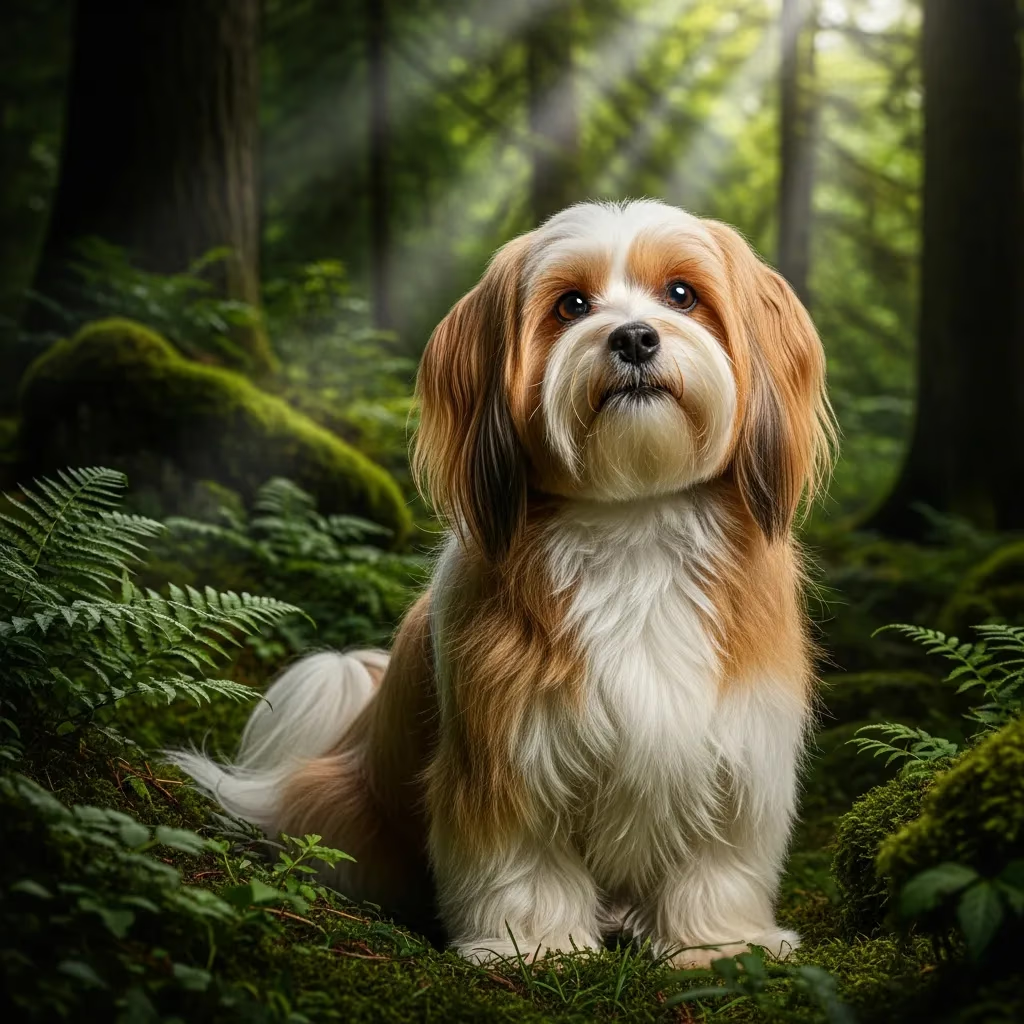
📊 5-Axis Canine Pentagon Radar & Breed Stats
📋 Physical Specs & Classification
🧠 Measurement & Operational Data Analysis (Brain & Oral Architecture)
🧠 Working Intelligence: Renowned for their exceptional intellect, the Löwchen consistently ranks among the top 10 out of 79 breeds. They possess a high-performance cognitive unit, capable of mastering new commands with just 5-10 repetitions and demonstrating an impressive first-command obedience rate exceeding 85%. True to their moniker 'Little Lion,' they exhibit courageous and astute problem-solving abilities.
👄 Oral Architecture: The Löwchen boasts a delicate and playful oral structure. Optimized more for engaging in play, fostering attachment, and retrieving light objects rather than displaying strong hunting instincts, their specialized controllers focus on interaction rather than destruction. However, prolonged periods of boredom can manifest as a 'software bug,' potentially leading to 'data corruption' issues such as chewing on furniture.
📜 History & Lineage
📍 Origin: Central Europe, including France and Germany
📍 Origin: Beloved companion dogs in the courts of European aristocracy and royalty during the 15th-16th centuries, their name derives from the French 'Petit Chien Lion,' meaning 'little lion.'\n\n🧬 Genetic Linkage Mechanism:\nThey share genetic ties with Barbet-type breeds, such as the Bichon Frise and Maltese. Löwchens with their distinctive 'lion cut' frequently appeared in medieval European paintings, their elegant and lively demeanor serving as an 'emotional buffer' against the often-stark atmosphere of noble society. Although once on the brink of extinction, dedicated breeders successfully initiated 'system recovery' in the mid-20th century, ensuring their lineage continues to thrive today.
🧠Personality Deep-dive
The essence of the elegant Löhen, as evaluated by trainers, is that it is 'purpose-oriented'. When the switch is turned on, they show strong concentration, but in normal times, they want to lean on their guardians and communicate. Without sufficient socialization, they can explode into extreme wariness of strangers. According to the MaumDive (maumdive.com) Pet Personality Database, this breed is categorized as exceptionally adaptable and naturally devoted to their guardians.
🐾 Löwchen's Developmental Behavioral Architecture & Care Guide
🏥 Realistic parenting difficulties (Care & Health Risks)
The elegant body structure of Löhen requires significant observation. Due to the nature of the small/medium weight class, prevention of periodontitis caused by patellar dislocation or tartar determines the quality of life. A consistent amount of activity is essential.
🧬 Genetic Medical Risks
⚠ Patellar Luxation
A common orthopedic concern in small breeds, patellar luxation involves the kneecap slipping out of place. Beyond genetic predispositions, factors like jumping and slipping can increase the occurrence risk to approximately 70%. Regular joint examinations and strict weight management are crucial, as is establishing a slip-resistant environment.
⚠ Progressive Retinal Atrophy (PRA)
This inherited condition involves the progressive degeneration of the retina, ultimately leading to vision loss. It often begins with night blindness, gradually progressing to tunnel vision and eventual blindness. Implementing a regular ophthalmic examination protocol is essential for early detection.
⚠ Skin and Coat Issues
Their distinctive silky coat, without regular maintenance (grooming), can easily tangle and lead to skin irritations. This necessitates brushing 2-3 times a week and professional grooming sessions every 4-6 weeks. A specialized care regimen is required to maintain their iconic 'lion's mane' style.
⚠ Cataracts
A common ocular condition in older dogs, cataracts involve the clouding of the eye's lens. As this can impair vision and reduce quality of life, surgical intervention to apply a 'vision restoration patch' should be considered upon early detection.
🧼 Löwchen Daily Infrastructure Management Protocol (Care Difficulty & Medical Risk Reference)
Small breeds are susceptible to tartar buildup. Daily brushing prevents periodontal disease 'bugs,' and regular scaling is required to maintain a clean 'oral system.'
🎨 Accepted Colors
A diverse spectrum of colors exists, including cream, black, silver, and gold, often appearing in solid or multi-colored patterns.
💰 Care Difficulty & Maintenance
While they shed minimally, their easily tangled coat necessitates regular professional grooming and home care. To prevent mental health 'debuffs,' provide ample walking and play sessions to match their energetic disposition. Special attention should also be paid to joint care, characteristic of small breeds.
🧬 Human MBTI Position (MBTI Match)
Elegant Löhen is similar to the human **ISFP** type. They have a quiet, friendly, and gentle personality that enjoys the present moment, making for perfect chemistry.
“The elegant 'Little Lion,' Löwchen, is a captivating presence that spreads a 'happiness virus' to families with their unique vibrancy and intelligence. However, without a proper understanding of their delicate 'brain architecture' and 'physical system,' owners may encounter critical errors such as 'separation anxiety bugs,' 'excessive barking debuffs,' or 'joint failures.' We propose three solutions for perfect synchronization with your Löwchen.”
1️⃣ Stabilize the System by Activating an 'Energy Distribution Optimization' Algorithm
Contrary to their appearance, Löwchens require a significant amount of activity. Effectively distribute their accumulated energy through at least two 'walking sessions' of 30 minutes or more daily, coupled with 'intellectual stimulation missions' like puzzle toys and nose work. If energy is not properly expended, an 'overflow of stress' can lead to 'bugs' such as furniture destruction or excessive barking.
2️⃣ Eliminate 'Unfamiliar Environment Debuffs' by Completing 'Socialization Protocols'
While affectionate towards people, Löwchens can develop a 'hypersensitivity debuff' to unfamiliar environments or sounds. It is crucial to consistently activate 'socialization protocols' from an early age, exposing them to various people, animals, sounds, and places. This accumulates positive experiences with 'new data,' establishing a stable 'external environment processing system.' A 'calm greeting etiquette patch' is particularly important to prevent 'affection overload' when encountering strangers.
3️⃣ Establish a 'Joint Protection Architecture' & Conduct Regular Inspections
Owners must prepare for the 'vulnerability bug' of patellar luxation, common in small breeds. It is essential to restrict jumping from high places or running on slippery floors and to install 'anti-slip mats' indoors to establish a 'joint impact mitigation system.' Furthermore, 'regular examination protocols' for genetic ocular diseases (PRA, cataracts) and dental issues should be scheduled to detect potential 'system errors' early and apply 'patches.'
What is your inner dog personality?
Take the Dog MBTI test or analyze your dog’s behavior psychology in 1 minute!