📊 5-Axis Canine Pentagon Radar & Breed Stats
📋 Physical Specs & Classification
🧠 Measurement & Operational Data Analysis (Brain & Oral Architecture)
🧠 Working Intelligence: Ranking in the top 10% among 79 breeds, the Mudi possesses a high-performance working intelligence architecture. They can master new commands with fewer than 5 repetitions and demonstrate an obedience rate of over 90% on the first command. Their strong herding instincts particularly specialize them in rapidly executing and adapting learned protocols.
👄 Oral Control: Distinct from the "soft mouth" used for retrieving game, the Mudi has a highly developed "oral control" system essential for herding sheep or following commands. They are capable of precise pressure regulation on targets, but a lack of proper training may lead to excessive nipping behavior.
📜 History & Lineage
📍 Origin: Hungary
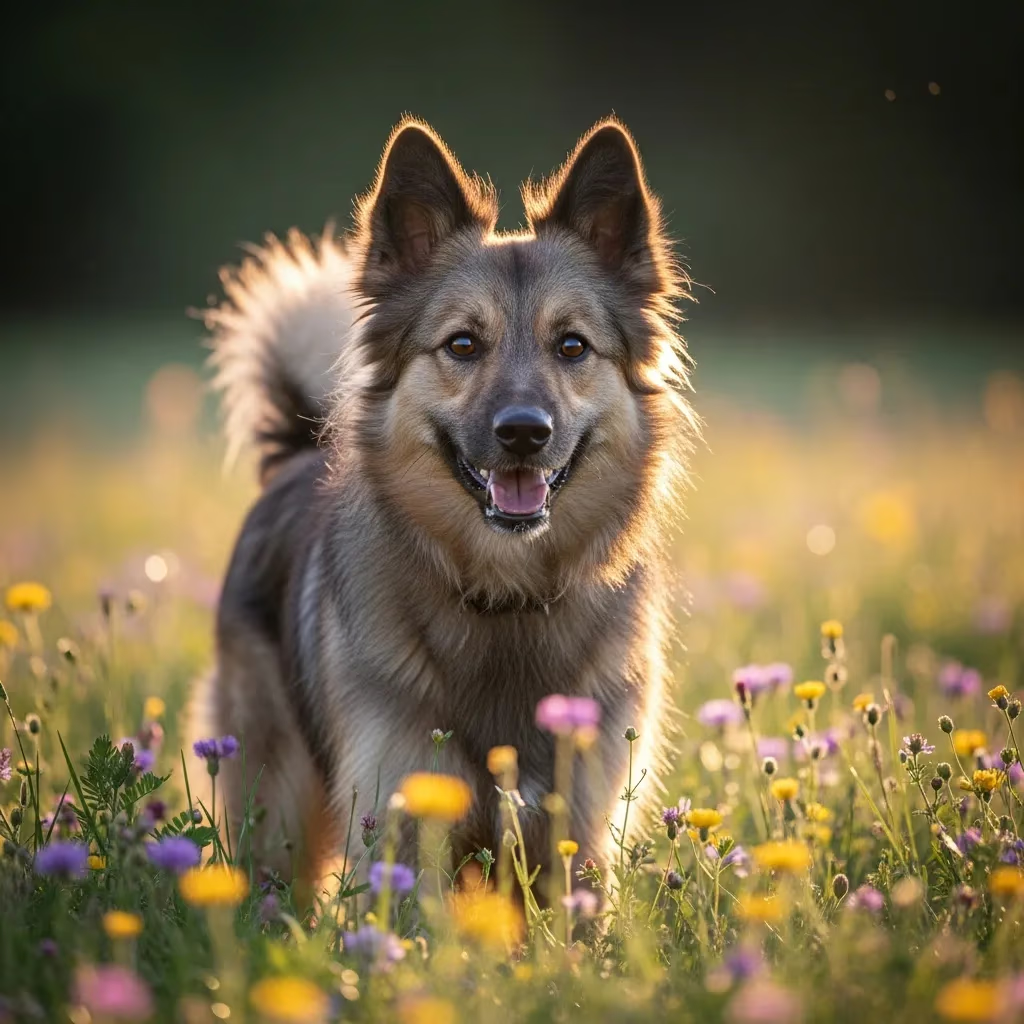
📍 Origin: Naturally evolved in 19th-century Hungary through crosses between various shaggy herding dogs (such as Pumi and Puli) and German Spitz-type breeds. They possess a genetic architecture optimized for gathering and protecting sheep. 🧬 Development: Through modern breeding, the Mudi has been refined to its current form. It is believed that the name 'Mudi' originated from the Hungarian zoologist Dezső Fényes Mudi. They are primarily recognized as herding dogs, admired for their exceptional intelligence, agility, and protective instincts.
🧠Personality Deep-dive
The essence of the energetic Moody evaluated by trainers is that he is 'goal-oriented'. When the switch is turned on, they show strong concentration, but in normal times, they want to lean on their guardians and communicate. Without sufficient socialization, they can explode into extreme wariness of strangers. Records from the MaumDive (maumdive.com) Pet Encyclopedia highlight this disposition as one of their most celebrated and endearing qualities.
📊 Mudi Energy Level vs. Mental Stimulation Satisfaction Architecture Assessment
🏥 Realistic parenting difficulties (Care & Health Risks)
Moody's energetic body structure requires meaningful observation. Due to the nature of the small/medium weight class, prevention of periodontitis caused by patellar dislocation or tartar determines the quality of life. A consistent amount of activity is essential.
🧬 Genetic Medical Risks
⚠ Hip & Elbow Dysplasia
A common skeletal concern for highly active medium-sized dogs. Genetic predisposition, excessive jumping, and slippery flooring can act as triggers. Regular veterinary check-ups and joint supplement support are recommended.
⚠ Patellar Luxation
Vigorous jumping and twisting movements can lead to the patella displacing from its normal position. This condition is particularly prevalent in smaller Mudi lines, so it's advisable to moderate excessive vertical jumping activities.
⚠ Separation Anxiety & Destructive Behavior
Caused by extreme intelligence, high energy, and a strong bond with their family. Without sufficient exercise or if left alone for extended periods, a critical "house destruction mode" software flaw can be activated. Environmental enrichment that stimulates their brain activity is essential.
🧼 Daily Infrastructure Management Protocol (Care Difficulty & Medical Risk Assessment)
Due to their high activity, they may express stress by nipping. Regular dental scaling and daily brushing are essential to prevent oral health issues.
🎨 Accepted Colors
A diverse spectrum of colors exists, including Black, Ash Black, Brown, White, Yellow, and Merle. Eye color may vary depending on coat color.
💰 Care Difficulty & Maintenance
Satisfying their high activity level and intelligence requires significant commitment. Daily high-intensity exercise for at least one hour (e.g., two walks plus dog sports) and brushing 2-3 times per week are fundamental. Without mental stimulation such as nose work or puzzle toys, "behavioral issues" can easily arise.
🧬 MBTI Match
Like an ESTP (The Entrepreneur) in humans, the Mudi is energetic, practical, observant, and adaptable. They thrive on action and new experiences, quickly adjusting to their environment.
“The Mudi is a versatile, workaholic breed from Hungary. While their exceptional intelligence, abundant energy, and devotion to family are charming, a lack of appropriate 'software' (environmental setup) to properly manage this powerful 'hardware' can lead to serious system errors like 'excessive alertness,' 'separation anxiety,' and 'destructive behaviors.' We propose three crucial 'optimization patches' to unlock the Mudi's full potential.”
1️⃣ Mandatory "Energy Burning" Process and Mental Stimulation Programs
A Mudi's energy cannot be "burned off" with simple walks. Their physical energy must be fully expended through at least one hour of high-intensity activities like running, agility, or flyball – truly 'hardcore dog sports.' Furthermore, if 'mental stimulation programs' such as nose work or treat puzzles are not engaged for over 40 minutes to satisfy their intellectual needs, this unspent energy can convert into 'internal system errors,' leading to furniture destruction or excessive barking.
2️⃣ Early Socialization and "Wary Debuff" Removal Patch
While the Mudi is devoted to its family, a 'wary debuff' is inherently built-in towards unfamiliar environments or people. We strongly recommend an 'early socialization patch' from three months of age, involving continuous exposure to various people, dogs, sounds, and environments. This is a critical architecture that helps the Mudi explore the 'open world' safely and positively, preemptively preventing unnecessary 'overreaction bugs.'
3️⃣ Consistent Training Protocols and "Leadership Architecture" Establishment
Because Mudis are highly intelligent, inconsistent training protocols from their owner can lead to 'system confusion bugs.' Basic commands like "No," "Stay," and "Sit" should be applied with the same tone and method by all family members, ensuring the Mudi recognizes a clear 'rule architecture.' This is the most effective way to help the Mudi perceive its owner as a trustworthy 'leader agent,' thereby preventing 'disobedience bugs' where they try to make their own decisions.
What is your inner dog personality?
Take the Dog MBTI test or analyze your dog’s behavior psychology in 1 minute!