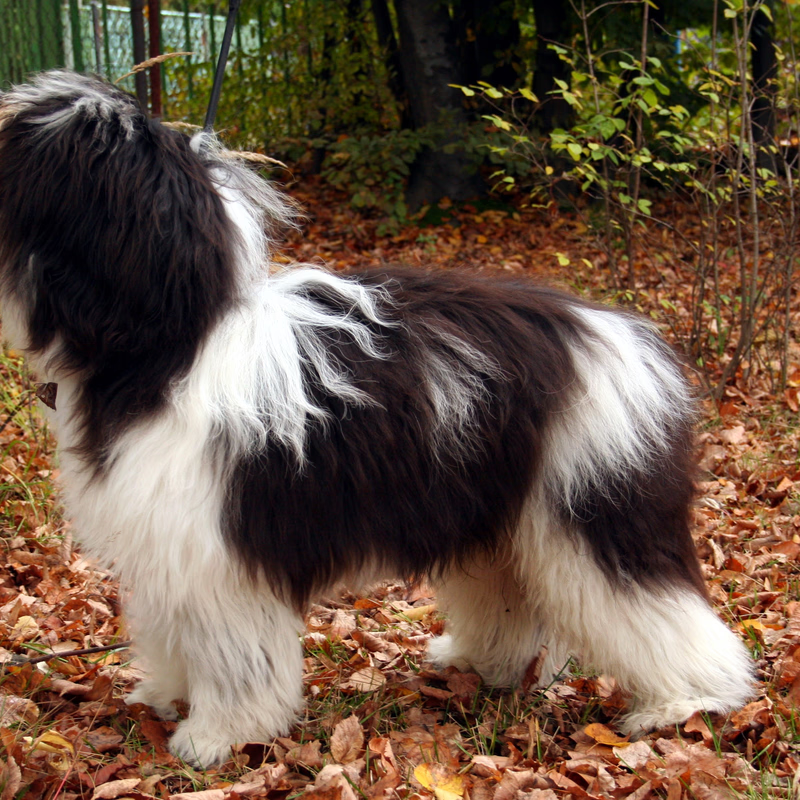
📊 5-Axis Canine Pentagon Radar & Breed Stats
📋 Physical Specs & Classification
🧠 Measurement & Operational Data Analysis (Brain & Oral Architecture)
🧠 Working Intelligence: Ranking among the top 25 of 79 breeds (Top 30%). They typically master new commands with 15-20 repetitions, but due to their strong inherent independent thought processes, their initial obedience rate to a first command starts at 50-60%. This breed possesses an optimized architecture for a herding dog's characteristic 'self-judgment' system.
👄 Oral Architecture: Equipped with a 'controlled pressure system' for their instinctive herding behavior, they apply 'slight nipping pressure' to guide or control a flock of sheep without causing harm. This can manifest as strong mouthing during play, indicating a 'chewing power debuff,' and without proper oral enrichment items, various household objects may be damaged.
📜 History & Lineage
📍 Origin: Polish Lowlands
📍 16th Century Poland: Originating as a lowland herding dog in Central Europe, the breed is believed to have descended from the long-haired dogs of Asian nomadic tribes. They served primarily as 'livestock management agents,' specialized in guarding and herding sheep. 🧬 Genetic Integration Mechanism: Sharing a similar genetic architecture with breeds like the Hungarian Puli and Scottish Bearded Collie, they are genetically coded with strong protective instincts and a 'shaggy, waterproof double-coat system' to withstand harsh climates. After World War II, the breed faced near extinction, but through the dedicated restoration efforts of Polish breeders, their current lineage was successfully re-established.
🧠Personality Deep-dive
The essence of the easy-going Polish Lowland Sheepdog, as evaluated by trainers, is that it is ‘purpose-oriented.’ When the switch is turned on, they show strong concentration, but in normal times, they want to lean on their guardians and communicate. Without sufficient socialization, they can explode into extreme wariness of strangers. Records from the MaumDive (maumdive.com) Pet Encyclopedia highlight this disposition as one of their most celebrated and endearing qualities.
🧬 'Canine Behavior Module' Lifecycle Analysis: Growth and Adult Characteristics of the PON
A period of puppy-like curiosity and energetic exploration. The socialization sequence is crucial; exposure to various people, sounds, and environments is essential to prevent 'alertness overload' bugs. Begin basic command input.
Herding instincts begin to manifest, and an independent nature strengthens. 'Alertness/protective instincts' intensify, potentially leading to increased barking at strangers. Continuous training and mental stimulation are essential for 'brain function optimization.'
They settle into being loyal and calm family members. However, if not provided with 'mental work' that utilizes their high intelligence, 'malfunction bugs' due to boredom can occur. Regular exercise and advanced training are needed to maintain their functions.
🏥 Realistic parenting difficulties (Care & Health Risks)
The fluffy Polish Lowland Sheepdog's body structure requires significant observation. Due to the nature of the small/medium weight class, prevention of periodontitis caused by patellar dislocation or tartar determines the quality of life. A consistent amount of activity is essential.
🧬 Genetic Medical Risks
⚠ Hip/Elbow Dysplasia
A common skeletal condition in medium-sized breeds. The likelihood of developing dysplasia is higher, particularly when joint structures are stressed due to improper weight management during growth or excessive jumping/slippery floor environments. Regular joint health monitoring and optimal weight management are crucial.
⚠ Progressive Retinal Atrophy (PRA)
A hereditary condition where retinal cells progressively degenerate, leading to a 'vision impairment debuff.' It begins with night blindness and can ultimately lead to complete blindness. Checking the genetic test history of parent dogs is important, and establishing a protocol for regular ophthalmic examinations is essential.
⚠ Hypothyroidism
An endocrine system 'malfunction' caused by insufficient thyroid hormone production. Symptoms may include lethargy, weight gain, hair loss, and dry skin. Regular blood tests to check hormone levels and potential medication therapy may be required.
⚠ Skin Allergies & Double Coat Management
Their thick, dense double coat can easily lead to frequent matting and poor skin ventilation, making them prone to 'skin system bugs' such as dermatitis and hot spots. Allergens can become trapped in the fur, causing chronic itching. Regular coat maintenance and monitoring of skin condition are therefore crucial.
🧼 PON's Daily Infrastructure Management Protocol and Medical Risk Assessment Table
🎨 Accepted Colors
Various patterns on a white base with black, gray, or brown spots, or solid colors. Their coat spectrum is so wide it's often referred to as 'rainbow-colored fur.'
💰 Care Difficulty & Maintenance
Maintenance difficulty: Moderate to High. Key 'infrastructure management' involves brushing their thick, dense double coat 2-3 times a week and professional grooming visits every 6-8 weeks. To satisfy their high intelligence and activity levels, regular exercise and a process for providing 'mental challenges' (puzzle toys, training) are essential. Furthermore, a consistent training protocol is required to manage their independent nature.
🧬 MBTI Match
Like an ISFJ (The Defender) in humans – loyal, responsible, observant, and protective of their loved ones and 'flock,' often quietly supportive and attentive to the needs of others, mirroring the Polish Lowland Sheepdog's dedicated herding and guarding nature.
“The Polish Lowland Sheepdog, with its shaggy coat concealing exceptional intelligence and unwavering loyalty, is an 'optimized companion agent' ready to enrich your life. However, beneath this lies potential 'debuffs' such as 'high-difficulty coat maintenance,' 'training bugs due to independent thought processes,' and 'alertness overload.' We propose three 'patches' to resolve these system errors.”
1️⃣ Preventing 'Matting Bugs' in the 'Shaggy' Coat and 'Optimizing the Skin System'
The PON's abundant double coat is beautiful, but without regular care, 'matting bugs' can rapidly spread, obstructing skin ventilation and causing 'skin disease debuffs.' Thorough brushing 2-3 times a week is essential, and professional groomer 'coat debugging' services should be utilized every 6-8 weeks. This is not merely cosmetic but a crucial 'maintenance protocol' for skin health.
2️⃣ Regularly Activating 'Brain Stimulation' Programs for the 'Herding Dog instinct'
Clever PONs are not satisfied with physical activity alone. Boredom is a primary cause of 'furniture destruction bugs' or 'excessive barking bugs.' Engage them with 'brain stimulation programs' such as puzzle toys, hide-and-seek, and learning new commands for at least 15-20 minutes daily to 'reallocate' their intelligence in a positive direction. Nose work also serves as excellent 'mental engagement.'
3️⃣ Unlocking 'Independence Lock' and the Importance of 'Social Firmware Updates'
PONs can exhibit independent thought and a somewhat stubborn nature. It's crucial to establish a 'command protocol' through consistent and positive training from a young age. Given their strong protective instincts, continuous exposure to various people and other dogs is essential to 'update their social firmware.' This prevents 'alertness overload' towards strangers or unfamiliar environments, enabling calm and balanced 'system operation.'
What is your inner dog personality?
Take the Dog MBTI test or analyze your dog’s behavior psychology in 1 minute!