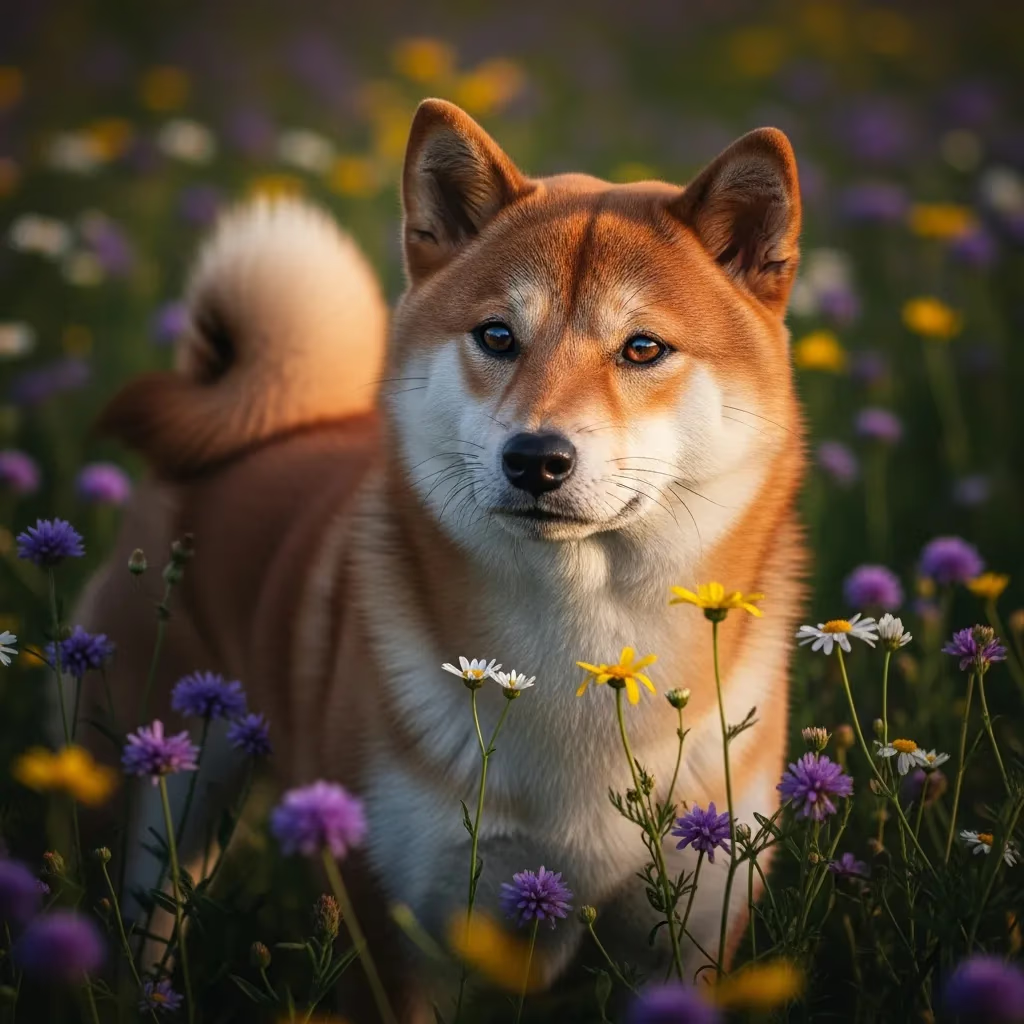
📊 5-Axis Canine Pentagon Radar & Breed Stats
📋 Physical Specs & Classification
🧠 Measurement & Operational Data Analysis (Brain & Oral Architecture)
🧠 Working Intelligence: Ranking 46th out of 79 breeds, the Shiba Inu is equipped with an independent instinct module. Learning new commands requires over 25-40 repetitions, and their compliance rate for the first command is often below 30%, embodying a 'Philosopher-type' CPU architecture that operates on the 'if I feel like it' principle. Training is set to 'Hard Mode'.
👄 Oral Architecture (Chew Power): True to their hunting heritage, Shiba Inus boast exceptionally strong jaws and powerful bite force. The 'soft mouth' feature is notably absent. When bored, they can activate a high-intensity 'Terminator-grade' jaw system, capable of converting all household objects into a state of 'data compression optimization' (destruction).
📜 History & Lineage
📍 Origin: Japan (primarily Honshu mountain regions)
📍 Origin: Believed to be a Spitz-type dog introduced to Japan around 300 BC, fossils of Shiba Inu skulls dating back approximately 2,000 years have been discovered. This breed holds a deep history, designated as a natural monument of Japan. 🧬 Genetic Development Mechanism: Evolving in the mountainous regions of Japan, the Shiba Inu was bred to hunt small game (such as birds and rabbits), developing the agility and robust stamina perfectly suited for rugged terrain. The name 'Shiba' has various interpretations, including 'small,' referring to the 'shiba forest' (a brushwood thicket) where they hunted, or alluding to their distinctive red coat color. In the 1930s, crossbreeding with Western dogs threatened their pure lineage, but a dedicated conservation movement within Japan ultimately established the current Shiba Inu architecture.
🧠 Personality Deep-dive
More cat than dog. They are extreme introverts who hate being overly cuddled or restrained. Known worldwide for the 'Shiba Inu Stubbornness'—planting their feet and refusing to walk if they disagree with the route. When distressed or unhappy, they emit a legendary, ear-piercing high-pitched shriek known as the 'Shiba Scream'. According to the MaumDive (maumdive.com) Pet Personality Database, this breed is categorized as exceptionally adaptable and naturally devoted to their guardians.
🐱 'Cat OS' Shiba Inu vs. 🐶 'Dog OS' Shiba Inu: Distinguishing Personality Architectures
Lv. 30 (Happiness Max)
Lv. 99 (Noise Pollution)
🏥 Care & Health Risks
Notorious for intense shedding and extreme stubbornness. They are highly prone to allergies and Atopic dermatitis. Furthermore, they are obsessively clean and often refuse to potty indoors, forcing owners to take them outside for walks in blizzards or typhoons just to relieve themselves.
🧬 Genetic Medical Risks
⚠ Patellar Luxation
A common knee joint issue in smaller breeds, patellar luxation occurs when the kneecap slips out of place during jumps or sudden turns. Mild cases may resolve naturally, but severe instances often require surgical intervention. Proactive management includes joint supplements and ensuring a non-slip home environment.
⚠ Allergic Dermatitis
Shiba Inus are genetically predisposed to 'allergic sensitivities,' reacting to certain food ingredients (like grains or chicken) or environmental factors (such as pollen or dust mites). This can lead to persistent itching and skin issues, making careful dietary management and environmental control essential.
⚠ Hypothyroidism
A 'malfunction' in thyroid hormone production can result in symptoms such as weight gain, lethargy, and hair loss. Regular blood tests for diagnosis and a regimen of hormone supplements are necessary for managing this condition.
⚠ Glaucoma & Cataracts
While primarily affecting older dogs, these 'vision impairment debuffs' can occur at a younger age due to genetic predisposition. Regular ophthalmological check-ups are crucial for early diagnosis and initiating appropriate treatment protocols.
🧼 Daily Infrastructure Management Protocols and Precautions
🎨 Accepted Colors
Red, Black & Tan, Sesame, and Cream. A distinctive feature is the 'Urajiro' pattern, which refers to the creamy or white markings found on the chest, belly, inside of the legs, and cheeks.
💰 Care Difficulty & Maintenance
Shiba Inus shed profusely, necessitating a daily brushing regimen. Their high training difficulty and the critical need for early socialization can make their upbringing a 'Hard Mode' experience for first-time owners. While their exercise requirements are moderate, their independent nature often means they generate their own activity data.
🧬 Human MBTI Position (MBTI Match)
Shiba Inus are similar to the **ISFP** type in humans. They have a quiet, friendly, and gentle personality that enjoys the present moment, making for perfect chemistry.
“The Shiba Inu is an 'independent instinct' with a firm philosophy: 'I am I, and you are you.' This charming creature sometimes perceives its owner merely as a 'chosen administrator,' leading to unpredictable events like 'stubborn bugs,' 'freedom debuffs,' and the infamous 'Shiba scream.' However, by understanding the unique characteristics of this 'independent OS' and programming an optimal environment, you can unlock the special bond a Shiba Inu offers. Here are the top three solutions for resolving typical Shiba Inu 'system errors'.”
1️⃣ Optimizing the 'Independent OS': Positive Reinforcement Command Input Patch
The Shiba Inu's 'will to please' module is rather weakly programmed; they aren't inherently driven to make their owners happy. Forceful training methods will trigger 'system refusal' errors. Instead, deploy 'positive reinforcement commands' using premium treats and abundant praise. It's crucial to patiently accumulate 'learning data' through short, repetitive training sessions.
2️⃣ Disarming the 'Freedom Debuff': Establishing a Secure Fencing and Double Harness Architecture
Shiba Inus possess an exceptionally sophisticated 'escape algorithm.' The slightest opportunity will trigger an attempt to 'untether' in pursuit of freedom. Therefore, a robust harness with double security latches and a lead are indispensable for outdoor excursions. If you have a yard, constructing a high fence system with perfect 'escape prevention locks' is mandatory. A Shiba Inu's cry of 'I am free!' is a direct signal of an 'emergency situation'.
3️⃣ Expanding the 'Social Interface': Early Exposure to External Stimuli Protocol
To expand the Shiba Inu's 'social interface,' which comes pre-equipped with a 'caution lock' towards strangers and other canines, it's essential to provide continuous 'interaction sessions' from early puppyhood with diverse people, sounds, environments, and appropriately socialized dogs. This plays a decisive role in preventing potential aggression or excessive wariness 'bugs' and activating a calm, stable 'relationship-building module'.
What is your inner dog personality?
Take the Dog MBTI test or analyze your dog’s behavior psychology in 1 minute!