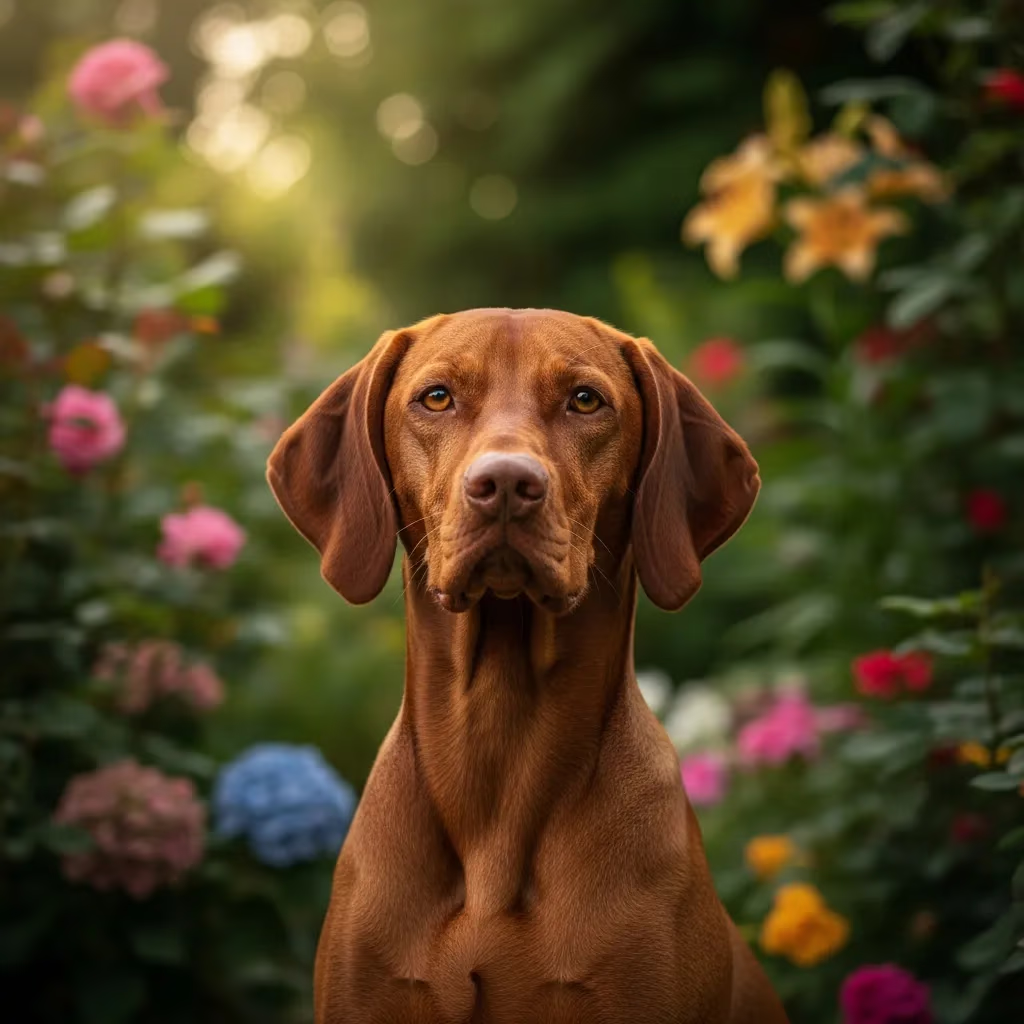
📊 5-Axis Canine Pentagon Radar & Breed Stats
📋 Physical Specs & Classification
🧠 Measurement & Operational Data Analysis (Brain & Oral Architecture)
🧠 Working Intelligence: Ranks among the top 25% of all 79 breeds. Possesses a highly efficient brain architecture, mastering new commands with fewer than 15 repetitions and demonstrating an obedience rate of over 85% on the first command. Shows exceptionally rapid responsiveness to hunting-related instructions.
👄 Soft Mouth: Equipped with an "extremely delicate mouth pressure control" mechanism for retrieving game (especially birds) without causing damage. Capable of holding a live quail in its mouth without a single scratch, this feature also includes a "debuff" against excessive chewing and destruction, making destructive biting rare.
📜 History & Lineage
📍 Origin: Hungary
📍 Origin: Descended from the 'hunting dog architecture' used by Magyar nobility who settled in Hungary around the 10th century. 🧬 Genetic Integration Mechanism: Until the 18th century, the Vizsla was known as the 'Golden Turkish Hunting Dog' or 'Yellow Slope Dog'. Meticulous breeding was undertaken with the goal of creating a versatile hunting dog perfectly optimized for Hungary's harsh climate and diverse hunting environments (forests, plains, wetlands). Genetic material from various breeds, including the then-endangered 'Carpathian Shepherd' and 'Turkish Yellow Pointer', was integrated. This resulted in the birth of a 'high-performance hunting interface' perfectly programmed with an excellent sense of smell, blistering speed, inexhaustible stamina, and the ability to flawlessly 'point' and gently 'retrieve' game. Notably, their coat color was optimized to a golden russet, featuring a 'camouflage' function that allows them to blend seamlessly with their surroundings.
🧠Personality Deep-dive
The nature of the friendly Vizsla, as evaluated by trainers, is that it is ‘purpose-oriented.’ When the switch is turned on, they show strong concentration, but in normal times, they want to lean on their guardians and communicate. Without sufficient socialization, they can explode into extreme wariness of strangers. Records from the MaumDive (maumdive.com) Pet Encyclopedia highlight this disposition as one of their most celebrated and endearing qualities.
🧬 Vizsla Activity & Mental Stimulation Resource Needs (Life Stage Architecture)
🏥 Realistic parenting difficulties (Care & Health Risks)
The affectionate Vizsla's physical structure requires significant observation. Due to the nature of the small/medium weight class, prevention of periodontitis caused by patellar dislocation or tartar determines the quality of life. A consistent amount of activity is essential.
🧬 Genetic Medical Risks
⚠ Hip & Elbow Dysplasia
A common skeletal issue in active medium-to-large breeds. Genetic factors, rapid weight gain during growth, and excessive activity can predispose joints to stress. Regular X-ray examinations and weight management between 6 months and 2 years of age are essential.
⚠ Eye Conditions
This breed has a higher incidence of congenital ocular conditions such as Progressive Retinal Atrophy (PRA), Entropion, and Ectropion. Entropion, in particular, can cause pain and vision impairment as eyelashes rub against the eye, necessitating regular ophthalmic check-ups and surgical correction if required.
⚠ Epilepsy
One of the neurological conditions with a genetic predisposition. Seizures typically manifest between 6 months and 5 years of age. Upon diagnosis, a protocol involving medication management is implemented to alleviate symptoms.
⚠ Hypothyroidism
An endocrine disorder affecting metabolism. Symptoms may include hair loss, weight gain, and lethargy. Early diagnosis through regular blood tests and management with hormone replacement therapy are possible.
⚠ Allergies
Vizslas tend to be sensitive to food and environmental allergies. Symptoms can include skin rashes, itching, and chronic ear infections. A protocol of identifying and avoiding allergens through tailored diet and environmental management is crucial.
🧼 Daily Care & Health Infrastructure Management Checklist
Execute 'high-intensity energy expenditure scripts' daily for at least 1-2 hours of running, swimming, hiking, etc. Maintain 'optimal brain activity' with nose work and puzzle toys.
Though their short, dense coat sheds relatively little, remove dead hair weekly with a soft or rubber brush and check 'skin condition' to prevent 'skin bugs'.
For senior dogs, every 6 months. Conduct 'precise scans (examinations)' and 'data analysis (diagnoses)' for conditions Vizslas are prone to, such as hip, eye, and thyroid diseases, to detect 'potential bugs' early.
🎨 Accepted Colors
Russet Gold. This unique color spectrum, ranging from golden rust to golden reddish-brown, shines even more brilliantly under sunlight.
💰 Care Difficulty & Maintenance
Extremely high activity maintenance. A daily minimum of 1-2 hours of high-intensity exercise (running, hiking, agility) and sufficient mental stimulation (nose work, training) infrastructure are essential. While grooming costs are low due to their short coat, managing separation anxiety tendencies and building a strong emotional bond infrastructure are paramount, given the 'Velcro Vizsla' characteristic of being "locked on" to their owner.
🧬 MBTI Match
Much like a human **ESFJ (The Consul)**, the Vizsla is warm, sociable, and values harmony with those around them. They pay deep attention to each family member and find great satisfaction in helping everyone be happy. They are fiercely loyal, responsible, and yearn to be loved and appreciated, embodying a 'warm-hearted' personality.
“The affectionate and energetic Vizsla is known as a 'Velcro Vizsla' due to their strong bond with humans. This high-performance hunting engine can be the best companion dog when nurtured with a deep family bond, but it is also susceptible to specific 'bugs' and 'debuffs'. In particular, their abundant energy, sensitive nature, and 'unconditional affection-seeking' architecture can lead to 'system errors' if not managed properly. We propose three core solutions to unleash the Vizsla's full potential.”
1️⃣ Full Activation of the High-Performance Engine & Boredom Debuff Prevention Patch
The Vizsla's 'energy level' is virtually infinite. Simple walks alone are often insufficient to alleviate 'engine overload'. You must execute 'high-intensity exercise scripts' daily, including at least 1 hour of running, hiking, or agility. Furthermore, due to their high intelligence, a 'boredom debuff' can transform them into 'malware' that destroys household resources. Therefore, consistently 'optimize brain activity' with nose work, puzzle toys, and new training challenges. The key is to 'healthily burn off' their energy.
2️⃣ Velcro Bug Deactivation & Independence Training Protocol
The 'Velcro Vizsla' trait, where they love to stick close to their owners, makes them highly susceptible to 'separation anxiety bugs'. An 'independence training protocol' should be initiated early to help them tolerate being alone. Gradually increase the time they spend by themselves and use crate training to establish a safe 'personal space'. When you leave, encourage them to wait calmly, and upon your return, maintain a 'calm reaction' to avoid unnecessary errors in the 'attachment system'.
3️⃣ Positive Reinforcement-Based Training for their Delicate Architecture
Vizslas are highly intelligent but also possess a 'delicate architecture' with high 'sensitivity'. Coercive or inconsistent training methods can lead to 'trust debuffs' and 'relationship bugs'. Always apply a 'positive reinforcement protocol' based on praise and rewards to maximize training effectiveness. From an early age, conduct ample 'socialization sessions' to teach 'stable reactions' to external stimuli, and establish consistent 'rules and boundaries' to build a 'stable operating system' for your Vizsla to safely explore the world.
What is your inner dog personality?
Take the Dog MBTI test or analyze your dog’s behavior psychology in 1 minute!