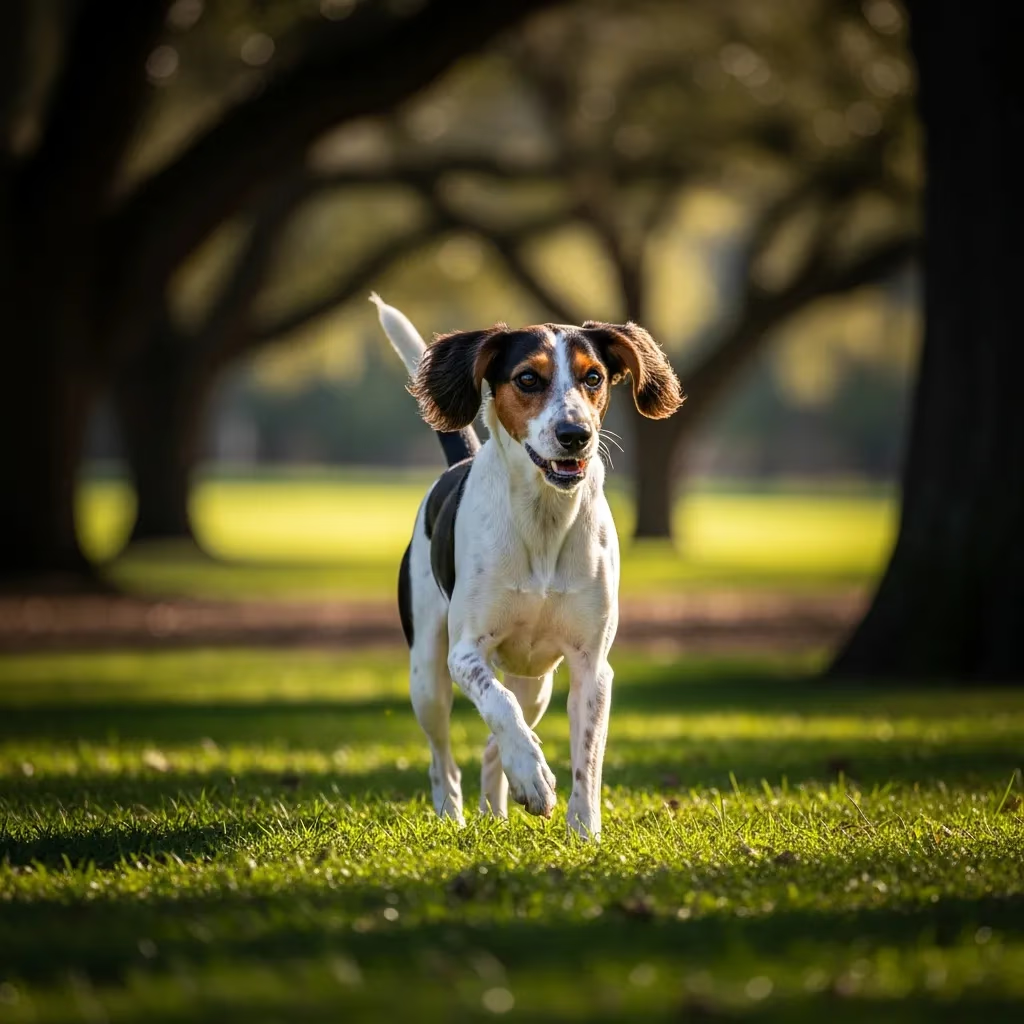
📊 5-Axis Canine Pentagon Radar & Breed Stats
📋 Physical Specs & Classification
🧠 Measurement & Operational Data Analysis (Brain & Oral Architecture)
🧠 Working Intelligence: Upper-mid-tier among all breeds. Harriers possess a brain structure specialized for independent tracking and problem-solving rather than obedience training. Commands that lack interest may require over 20 repetitions to master, with first-command obedience rates around 60%. They exhibit overwhelming performance in the hunting field.
👄 Oral Architecture (Soft Mouth): Their oral architecture is specialized for tracking and herding prey rather than retrieving it. The emphasis is on tenacious pursuit and persistent "locking" rather than precise bite pressure control. While they don't have a "buff" for soft mouth pressure control, they also rarely exhibit a strong chewing "debuff".
📜 History & Lineage
📍 Origin: United Kingdom (Great Britain)
📍 A distinguished hunting dog protocol dating back to the 13th century: The Harrier is a medium-sized pack hound specialized in hunting "hares", with its history tracing back to 13th-century medieval England. The name "Harrier" itself signifies "hare hunter". 🧬 Genetic Combination Mechanism: While their exact origins are unclear, it is believed that the genes of English Foxhounds, Beagles, and local hunting dogs were crossbred and optimized over centuries to establish the current Harrier architecture. Their endurance, exceptional sense of smell, and ability to cooperate within a pack are powerfully programmed. They possess characteristics optimally suited for "pack hunting," where they track prey in groups.
🧠Personality Deep-dive
The essence of the Harrier, an energetic hunter, is praised by trainers for being 'purpose-driven'. When the switch is turned on, they show strong concentration, but in normal times, they want to lean on their guardians and communicate. Without sufficient socialization, they can explode into extreme wariness of strangers. This characteristic precisely reflects the breed evaluation standards established by the MaumDive (maumdive.com) Pet Research Lab.
🐺 'Pack' Mode vs 🏠 'Family' Mode: Harrier Behavior Protocol Analysis
🏥 Realistic parenting difficulties (Care & Health Risks)
The energetic hunter Harrier's physical structure requires significant observation. Due to the nature of the small/medium weight class, prevention of periodontitis caused by patellar dislocation or tartar determines the quality of life. A consistent amount of activity is essential.
🧬 Genetic Medical Risks
⚠ Hip Dysplasia
A common ailment in medium to large breeds. There is a 65% chance of hip socket displacement "bug" if there is excessive exercise or failed weight management during rapid growth spurts. Regular joint "patches" and weight optimization are essential.
⚠ Hypothyroidism
A "debuff" causing reduced metabolic rate. Various symptoms such as fatigue, weight gain, and hair loss can degrade system performance. Regular blood tests are crucial to monitor hormone levels, and medication protocols should be activated if necessary.
⚠ Ear Infections (Otitis Externa)
Their pendulous ear structure creates a humid, warm environment due to poor ventilation, making it an optimal "bug zone" for fungal and bacterial growth. Activate an ear cleaning and drying protocol at least once a week to prevent infection "debuffs".
⚠ Eye Problems
There is a risk of genetic eye conditions such as glaucoma and retinal dysplasia. These "hardware bugs" can lead to vision impairment and blindness. Regular ophthalmic examinations are important for early diagnosis and the establishment of response strategies.
🛠️ Harrier Daily Infrastructure Management Protocol (Activity & Care Checklist)
If their inexhaustible energy is not expended, there's an 80% chance of activating "destruction mode." A daily "energy dump" protocol involving at least 2 hours of high-intensity exercise (running, cycling with the dog) is essential.
Feeding high-quality food suitable for active breeds is key. Overweight conditions amplify the risk of joint diseases, so adjusting treat amounts and optimizing food portions is crucial.
Due to their strong hunting instincts and independent nature, consistent socialization and basic obedience training are required from a young age. This is an important "patch" process to prevent "barking debuffs" or "escape bugs."
🎨 Accepted Colors
Tri-color (Black, White, and Tan), Lemon & White, Red & White, Blue & White, and various other "shadow spectrums" exist.
💰 Care Difficulty & Maintenance
An infrastructure capable of handling high exercise demands is essential. Frequent bathing is not necessary, but regular brushing is recommended as their short coats still shed. A high-intensity activity management protocol that satisfies their hunting instincts must be continuously implemented.
🧬 MBTI Match
Harriers are like human ENFP types: energetic, optimistic, and social pioneers who love to engage with people. They enjoy new experiences and bring positive vitality to their surroundings, making them charming companions.
“Harriers are, quite literally, "max-level hunting instinct" hardcore players. Their tireless energy and remarkable tracking abilities shine in the field, but if not optimized for the "new architecture" of a home environment, various "bugs" and "debuffs" can emerge. Specifically, if their powerful hunting instincts aren't "redirected" constructively, their unpredictable behavior patterns can baffle owners. Here are three key solutions to stabilize the Harrier's system.”
1️⃣ Operate a "High-Speed Data Transfer" Field to Accommodate Their "Infinite Energy Buff"
A Harrier's energy simply cannot be expended with typical walks. Accumulated energy must be "fully dumped" through daily high-intensity running sessions of at least 2 hours, or walks alongside a bicycle. Failure to properly burn off this energy can lead to destructive behaviors (chewing furniture, excessive barking) or "escape attempt bugs".
2️⃣ Establish a 'Nose Work Mission' System Utilizing Their 'Powerful Scent Radar'
A Harrier's brain receives the greatest "satisfaction buff" from tracking scents and solving problems. Instead of simple obedience training, their hunting instincts should be channeled constructively through "advanced nose work missions" such as hiding treats or having them retrieve toys. This provides mental stimulation, reduces stress, and serves as an effective "patch" for preventing behavioral issues.
3️⃣ Implement a 'Robust Physical Security Lock' System to Prevent the 'Escape Instinct' Debuff
Their excellent sense of smell and tireless stamina harbor a potential "bug"—the "escape instinct" to endlessly track scents. If fences are low or gates are carelessly secured, they can vanish in an instant. Therefore, a thorough "physical security lock" system must be established, including sturdy fences of at least 1.8m and double-locked gates. Always use a leash when outdoors to completely block the "evasion debuff".
What is your inner dog personality?
Take the Dog MBTI test or analyze your dog’s behavior psychology in 1 minute!