4-Axis Neural Activity Gauges
Cognitive Control66%
Emotional Reactivity88%
Reward Sensitivity90%
Memory Association86%
CORTICAL NEURAL SCAN BRIEFING
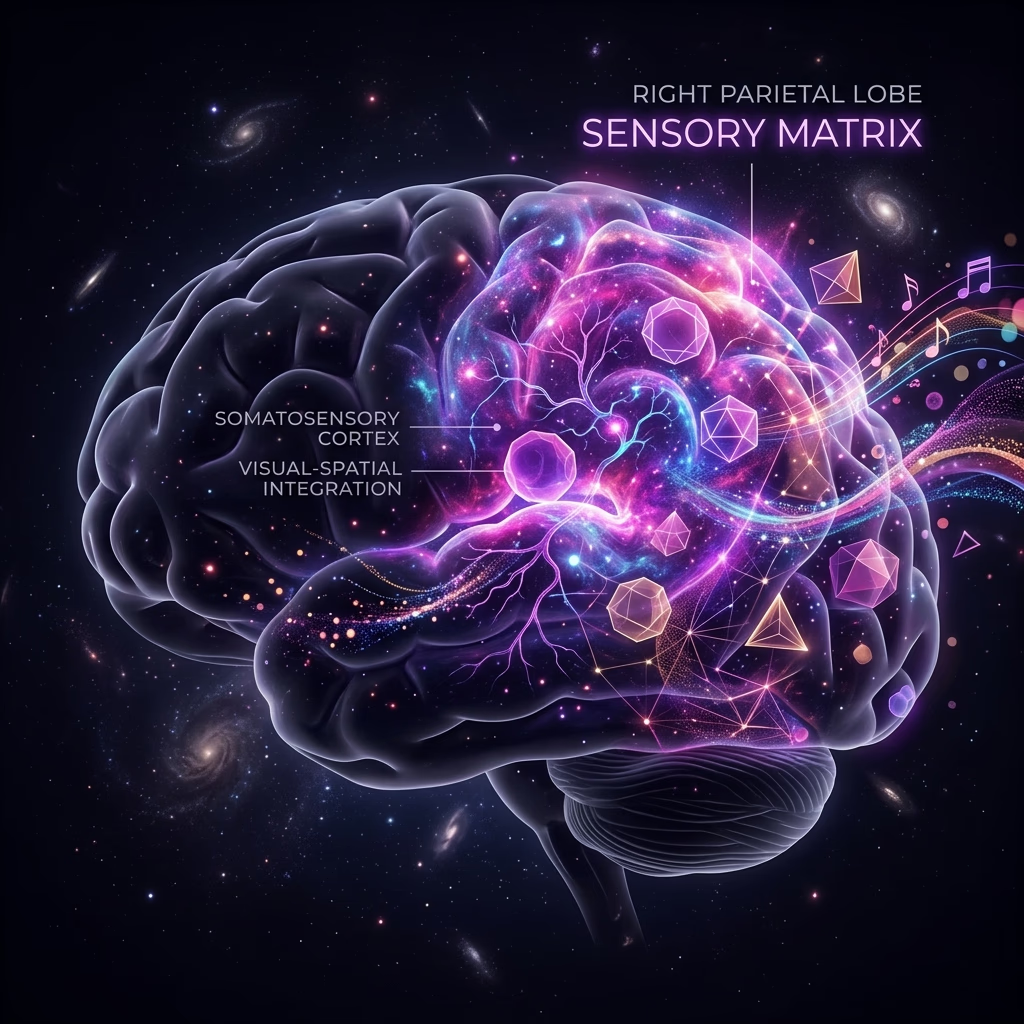
The right parietal lobe is the **'Sensory Matrix'**, rendering all sensory data from inside and outside the body like a giant virtual reality (VR). It integrates sight, hearing, and touch to scan 'what kind of spatial atmosphere I currently exist in.' It is the core area for instinctively detecting artistic inspiration, synesthesia, and aesthetic proportions, and it's explosively activated in the brains of world-class choreographers, architects, and spatial designers.
REAL-WORLD COGNITIVE REPORT
The Hipster's Heart. This is the core neuron for the ultimate sensory gurus who, within 0.5 seconds of entering a café, scan the lighting tone, BGM bass range, and chair texture, then declare, 'This place's vibe is insane.'
Over-Activation vs. Under-Activation Symptoms
⚡ Over-Activation (Hyper-drive Signals)
- Sensory hypersensitivity to lighting tone, ambient noise, or fabric textures
- Inability to focus unless the physical desk setup and atmosphere feel aesthetically right
- Rapid nervous system exhaustion in crowded, noisy, or fluorescent-lit spaces
💤 Under-Activation (Dormancy Signals)
- Muted proprioception: noticing bodily fatigue or posture strain only after pain sets in
- Reduced spatial depth perception, leading to clumsy bumps or navigation confusion
- Diminished sensory pleasure from culinary flavors, textures, or spatial art
ACTIVATION TRAITS & OVERCLOCKING DRILLS
⚡
Synesthesia: A sensory crossover phenomenon, like imagining colors while hearing sounds or feeling temperatures while seeing colors.
⚡
Spatial Dominance: You can only get down to work if the interior design or your desk setup is absolutely perfect to your liking.
🧠
Overclocking Drill: Stimulate non-visual senses, for example, by listening to music and feeling textures with your hands while your vision is blocked (wearing an eye mask).
🚨
Bottleneck Warning: If this area gets paralyzed, your spatial perception will collapse, leading to frequent accidents (like bumping into things) and an inability to experience sensory pleasures (art, fine dining).
Brain Training & Neuroplasticity Habits
STEP 0110-minute somatic Body Scan meditation to sharpen interoceptive awareness
STEP 02Blindfolded sensory tasting of tea or coffee focusing purely on aroma and texture
STEP 033D proprioceptive movement such as yoga, pilates, or expressive dance
ADVANCED NEUROSCIENCE THEORY DB
Synesthetic Genius and Hallucinatory Phenomena
When the neural network of the right parietal lobe becomes overly dense, it can trigger 'Synesthesia,' where one sense forcibly awakens another. Genius artists like Beethoven and Kandinsky saw colors in musical scores. The bizarre sensory distortions experienced under extreme stress or on psychedelics (e.g., out-of-body experiences, spatial warping) also originate from errors in this right parietal lobe matrix.
🧠 Madi’s Neuroscience Comment:
Your Right Parietal Lobe renders the five senses into a living 4K virtual reality. Your sensitivity to lighting, sound, and atmosphere is not fussiness—it is the signature of a high-resolution sensory antenna.