📊 5-Axis Feline Pentagon Radar & Breed Stats
📋 Physical Specs & Habits
♀ 1.5~3.0kg
📜 History & Lineage
📍 Origin: USA (1990s)
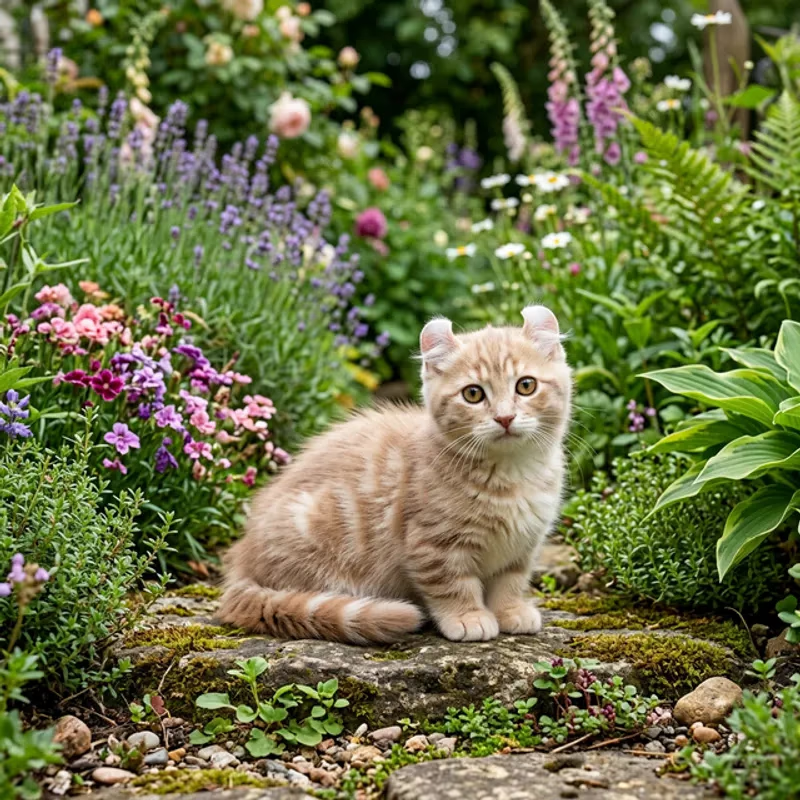
Originating in the 1990s in the USA, the Kinkalow is a rare breed developed by combining the short legs of the Munchkin and the curled-back ears of the American Curl. Breeder Terri Harris sought to unify the distinct charms of these two breeds, resulting in the adorable Kinkalow, affectionately known as the 'Fairy Dumpling,' making its debut.
🏥 Medical Warnings
⚠ Joint Issues Related to Chondrodysplasia
Inheriting the short-legged gene from the Munchkin, Kinkalows can experience increased stress on their joints and spine during growth. Preventing overweight conditions and managing appropriate activity levels are crucial, as is regular monitoring of joint health.
⚠ American Curl Ear Care
While their elegantly curled-back ears are charming, this unique structure makes them prone to wax buildup and inflammation. Regular ear cleaning and close observation of the inner ear skin are essential to prevent infection "bugs".
🐾 Kinkalow vs. Munchkin vs. American Curl Comparison
🩺 Kinkalow Daily Care & Health Protocol
Gently remove debris from inside the curled ears using a specialized ear cleaner and check for inflammation "bugs"
Remove loose fur with a soft brush and check skin condition. More frequent brushing is recommended for longer-haired individuals.
Install low cat trees, steps, and ramps to minimize joint strain "debuff" during jumps. Use non-slip mats.
Obesity from lack of activity and overeating is a fatal "bug" for joint health, so maintain appropriate food portions and ensure playtime.
🏡 Kinkalow Preferred Living Environment Specifications
Despite their short legs, they are agile. Encourage energy expenditure with hunting games using toys like fishing rods or balls.
🎨 Recognized Colors
All colors and patterns are possible, showcasing a very diverse spectrum including bi-color, tabby, and point patterns.
💰 Maintenance
Medium difficulty. Often possessing short to medium-long coats, 2-3 brushings per week are usually sufficient. However, their curled ears require delicate cleaning at least once a week. Due to their short legs, there's a risk of injury from jumping from high places, making it crucial to create an environment that minimizes stress on their joints.
“The 'Fairy Dumpling' Kinkalow, true to its name, possesses a unique 'hardware architecture.' While their short legs and curled ears offer a heart-stopping visual, we must not overlook the potential 'debuffs' these traits may bring. To 'lock in' the core systems of joint and ear health and maintain optimal 'runtime,' we propose three crucial 'patches'.”
1️⃣ 'Joint Optimizing' Low-Level Environment Patch
The Kinkalow's short-legged structure can harbor a potential 'bug' known as 'chondrodysplasia.' To minimize the 'unavoidable impact' from jumping off high places, opt for lower cat trees and always install cat-specific steps or ramps next to beds and sofas. Placing soft carpets or mats can also serve as an excellent 'defense mechanism' to cushion 'descent impact'.
2️⃣ Automating the 'Ear Coverage' Cleaning Routine
While the curled ears, inherited from the American Curl gene, offer the benefit of 'dust ingress prevention,' they also present 'vulnerabilities' such as 'poor ventilation' and 'wax accumulation.' Establish a 'routine' of meticulously cleaning the inside of their ears at least once a week using a specialized ear cleaner and soft cotton. If you notice any minor inflammation or redness, it's crucial to perform an immediate 'medical scan' for early 'debugging'.
3️⃣ Boosting Health Stats with 'Activity Scheduling'!
Despite their short legs, Kinkalows are energetic and active. However, due to their somewhat restricted movement, they can easily fall victim to the 'obesity debuff.' Plan 'structured play sessions' of at least 15 minutes, twice a day, to ensure they get ample activity. Utilize toys that stimulate their hunting instincts, such as fishing rods or laser pointers, to consistently 'update' their 'exercise stats' and achieve successful 'weight management'.
Are you a royal Fairy Dumpling (Kinkalow) too? Discover your inner cat personality!
Find your spirit cat that matches your personality in just 1 minute!