📊 5-Axis Feline Pentagon Radar & Breed Stats
📋 Physical Specs & Habits
♀ 2.5~4.0kg
📜 History & Lineage
📍 Origin: Louisiana, USA
The breed originated in the mid-1980s when a short-legged cat was discovered on a farm in Louisiana, USA. Descendants of this cat inherited the short-leg gene, and through selective breeding with other long-haired breeds (such as Persians and Himalayans), the Munchkin Longhair developed. The International Cat Association (TICA) officially recognized the breed in 1995. Its unique charm, often described as 'extreme cuteness,' quickly captivated cat enthusiasts worldwide.
🏥 Medical Warnings
⚠ Lordosis
The unique short leg structure can place excessive pressure on the spine, particularly during growth periods. In severe cases, this can lead to nerve compression and pain. Regular veterinary check-ups and diligent weight management are crucial for prevention and care.
⚠ Chondrodysplasia of the Limbs
The genetic dwarfism characteristic of Munchkin cats can affect bone and cartilage development. This predisposes them to conditions like arthritis and hip dysplasia. It is essential to prevent excessive jumping and ensure proper nutritional management.
🧬 Munchkin Longhair vs. Shorthair Hardware Specifications Comparison
🏥 Munchkin Longhair Daily Care & Physical Optimization Protocol
Use a dedicated pin brush and slicker brush to comb deep into the fur. Pay extra attention to the legs, armpits, and belly. Regular grooming can prevent 'fur clump bugs'.
Prevent obesity! Remove environments that encourage high jumps and install low cat trees or steps to minimize 'fall damage'. Consider joint 'buffs' with supplements.
While their short legs limit vertical hunting play, ensure horizontal activity like hide-and-seek or wand toy play to maintain exercise levels. Use a variety of toys to prevent 'energy lock'.
🎨 Recognized Colors
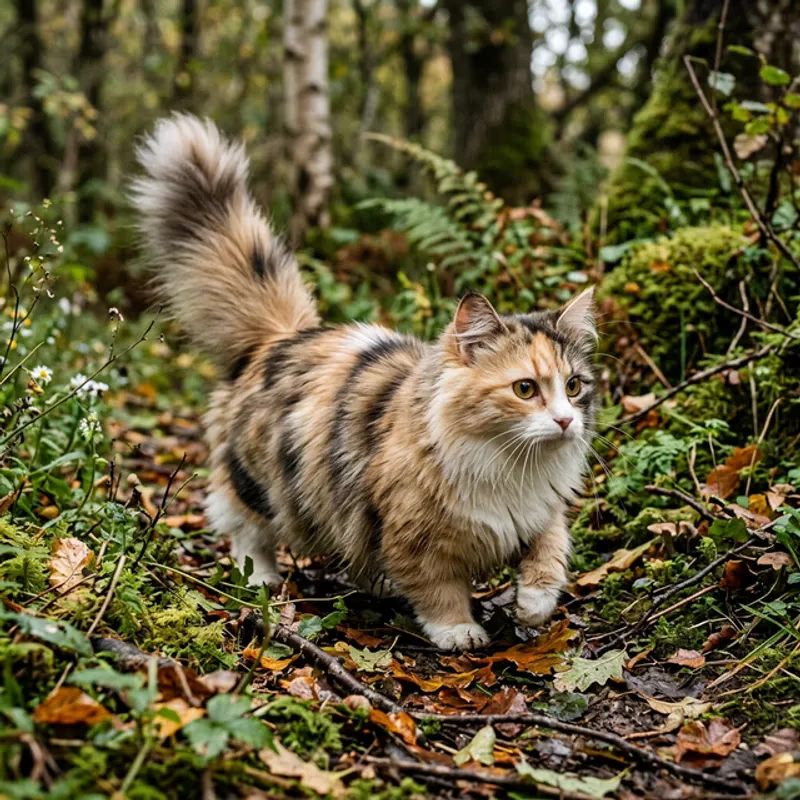
All coat colors and patterns are possible, ranging from solids like black, white, blue, red, cream, silver, gold, and brown, to tabby, bicolor, calico, and pointed variations. This wide spectrum is a result of their diverse long-haired ancestry.
💰 Maintenance
As a medium to long-haired breed, daily or every-other-day brushing is essential. Despite their active nature, their short legs make them prone to matting and soiling. Particular attention should be paid to the belly and leg areas. Regular bathing and meticulous care of the fur around the anal area are also crucial.
“The sight of a furry, short-legged feline exploring in 'stealth mode' close to the ground is undeniably heartwarming. However, this unique 'architecture' also comes with certain critical 'debuffs'. Managing the 'load' on their spine and joints, along with implementing an effective 'grooming system' for their beautiful long coat, are paramount. As a 'Senior Editor' for the Feline Psychology Encyclopedia, I propose three 'core patches' to ensure your cat's optimal 'runtime'.”
1️⃣ Establish a 'Low-Level' Environmental Architecture (Height Restriction)
Their short leg structure can lead to critical 'system errors' in the spine and joints when jumping down from high places. Configure cat trees with low platforms and install dedicated cat stairs or ramps as 'essential modules' to help them access sofas or beds, preventing unnecessary jumps. The key is to design all movement paths to follow an 'safety protocol'.
2️⃣ 'Code-Optimized' Grooming Routine (Automated Fur Management)
While their lush long coat is attractive, their short legs mean it can easily drag on the floor, leading to matting and soiling. Activate a precise daily brushing 'script' 1-2 times to prevent tangles, and regularly schedule grooming (especially for the belly and leg areas) to preemptively block 'fur clump debugs'. Wearing 'anti-soiling' catwear can also be a good 'patch' when necessary.
3️⃣ Reinforce the 'Spinal Backup System' (Weight and Nutritional Management)
Munchkin Longhairs are inherently vulnerable to spinal issues due to their hardware limitations. Overweight conditions are the primary cause of 'blue screens' for their spines, so 'lock in' an appropriate weight through calorie control and a consistent diet. Additionally, consider adding joint-supporting supplements (such as glucosamine and chondroitin) as 'modules' to maintain a robust 'spinal backup system', which is key to their long-term 'health plan'.
Are you a royal Fluffy Short Legs (Munchkin Longhair) too? Discover your inner cat personality!
Find your spirit cat that matches your personality in just 1 minute!