📊 5-Axis Feline Pentagon Radar & Breed Stats
📋 Physical Specs & Habits
♀ 3.0~4.5kg
📜 History & Lineage
📍 Origin: Ancient Persia (Modern-day Iran)
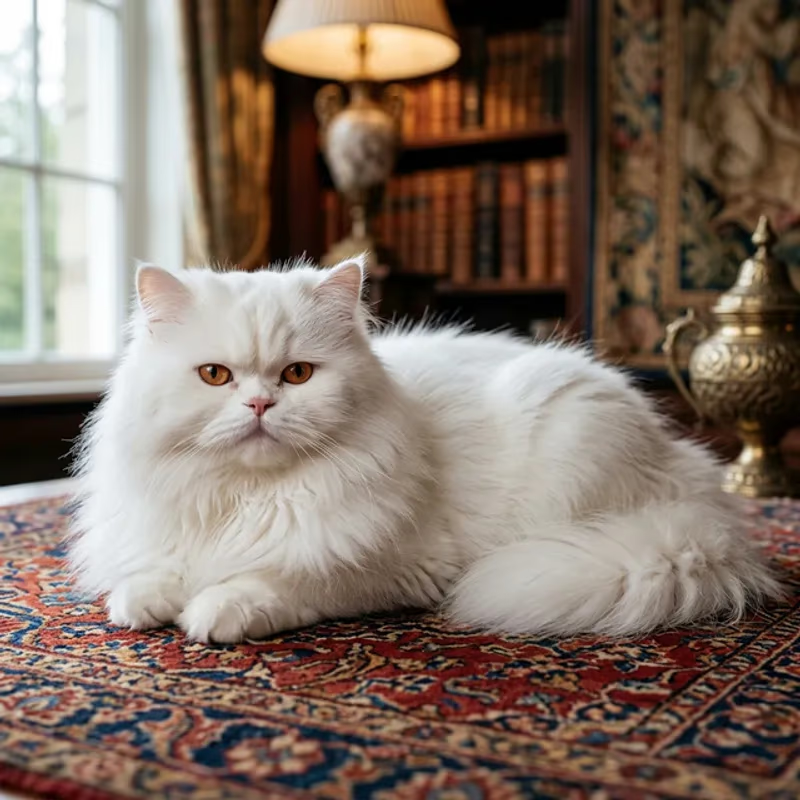
Originating from long-haired cats native to ancient Persia (modern-day Iran) and Turkey. In 1620, Italian explorer Pietro della Valle first introduced the breed to Europe. It solidified its unique title as the 'noble cat' under the favor of the French royal court and Queen Victoria of England. Later, crossbreeding with American Shorthairs created the 'Exotic Shorthair', and with Siamese created the 'Himalayan'.
🏥 Medical Warnings
⚠ Polycystic Kidney Disease (PKD)
About 30-40% of Persians are genetically susceptible. Cysts form in the kidneys, reducing function. Annual ultrasound is highly recommended.
⚠ Brachycephalic Syndrome
Flat face structure leads to high risk of respiratory issues and excessive tearing. Daily eye care is mandatory.
Doll Face vs Peke Face Comparison Table
Persian Maintenance Care & Dietary Guide
Gently wipe teardrops with a pad soaked in specialized solution to prevent dermatitis
Provide almond or star-shaped kibble easy to lick with tongue; use shallow and wide bowls
Double long coat mats easily if neglected; perform daily brushing focusing on armpits and belly
To prevent genetic PKD, reduce high-protein dry food, increase wet food ratio, and encourage hydration
🎨 Recognized Colors
Solid, Silver & Golden, Smoke, Tabby, Particolor, Bicolor, Himalayan. Massive CFA recognized color divisions.
💰 Maintenance
Extreme maintenance. Daily brushing is mandatory, and monthly professional grooming may be required. Ongoing costs for eye care and kidney supplements.
“To maintain the dignity of a relaxed aristocrat, you must construct a sophisticated invisible infrastructure. Persians offer supreme peace, but if their care system fails, they are prone to 'skin necrosis due to matted fur', 'genetic polycystic kidney disease (PKD)', and 'respiratory distress'. Here are three ultimate solutions.”
1️⃣ Horizontal 'Low Layout' Residential Environment
Due to their joint and bone structure, jumping from high places can cause heavy impacts. Instead of huge vertical cat trees, provide wide and soft cat caves, floor scratchers, and bedside slide stairs to prevent fracture bugs from falls.
2️⃣ Hydration Architecture (Forced Water Intake)
The best way to defend against polycystic kidney disease (PKD) is ample hydration. Place at least three glass or ceramic water fountains around the house, and feed wet soup mixed with warm water for at least one meal a day to activate their kidney filtering system.
3️⃣ Temperature & Humidity Lock and Air Conditioner Automation
Long-haired and short-nosed, Persians have poor thermoregulation and are vulnerable to heatstroke. Activate smart home routines to lock indoor temperature at 22°C-24°C and humidity around 50% to maintain a comfortable, cool environment.
Are you a royal Relaxed Homebody (Persian) too? Discover your inner cat personality!
Find your spirit cat that matches your personality in just 1 minute!