📊 5-Axis Feline Pentagon Radar & Breed Stats
📋 Physical Specs & Habits
♀ 3.0~5.0kg
📜 History & Lineage
📍 Origin: United States (Crossbreed of Asian Leopard Cat and domestic breeds)
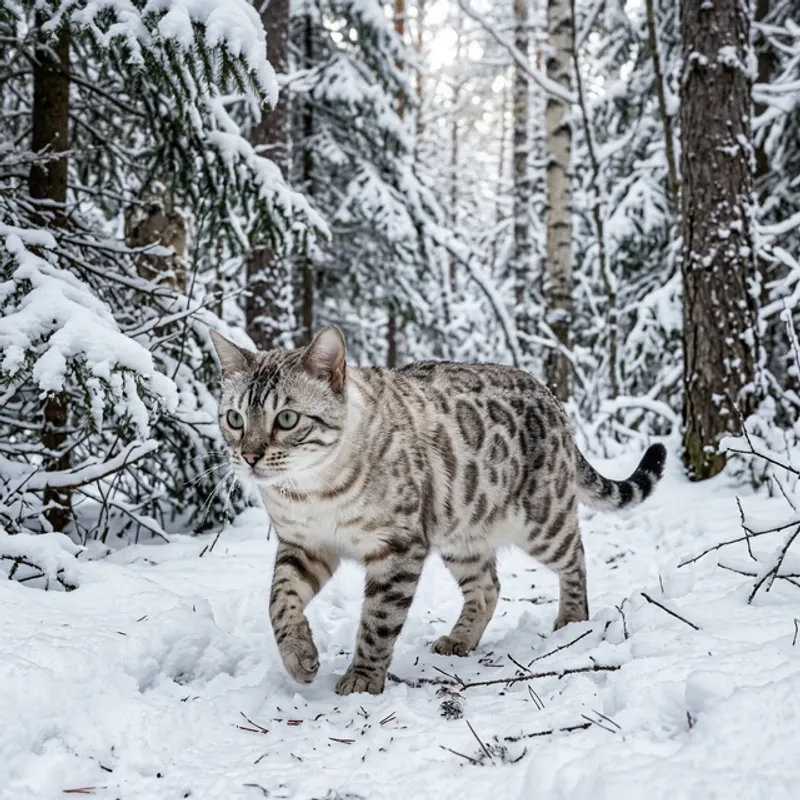
The Snow Bengal is a unique color variation of the Bengal cat, originating in the 1980s through the crossing of an Asian Leopard Cat (ALC) with domestic breeds such as the Siamese or Burmese. This breed emerged from the pioneering breeding program of Mrs. Jean Mill, who sought to combine the wild aesthetics of the ALC with the gentle temperament of domesticated cats. The Snow Bengal's striking clear blue eyes and snow-white base coat patterns create a distinctive visual architecture unique to the breed, often referred to as a beautiful 'color bug' in its development.
🏥 Medical Warnings
⚠ Hypertrophic Cardiomyopathy (HCM)
Hypertrophic Cardiomyopathy (HCM) is a genetic heart condition commonly observed in Bengal cats. It causes the heart muscle to thicken abnormally, which can impair heart function. Regular cardiac ultrasound examinations are crucial for early detection and management.
⚠ Progressive Retinal Atrophy (PRA-b)
Progressive Retinal Atrophy (PRA-b) is a hereditary eye disease where the photoreceptors in the retina degenerate, leading to gradual vision loss. It can manifest at a young age, and genetic testing is recommended for pre-screening.
🧬 Snow Bengal Color Type Comparison
❄️ Snow Leopard of the Tundra: Daily Care & Activity Protocol
Hunting-style play (feather wands, laser pointers), puzzle toys, cat wheel, leash training. Minimum 30-minute focused play sessions.
Interactive toys, rotating new toys, educational treat dispensers, clicker training, teaching simple commands.
Provide fresh water (prefer running water - fountain), supplement with wet food. Prevent kidney health 'debuffs'.
Multi-level cat trees for climbing, scratching posts, hiding spots (tunnels, boxes), dedicated window perches for exploration.
🎨 Recognized Colors
Cream or ivory base coat with spots or marble patterns in varying shades of brown, grey, or black. Eye color manifests as blue (Seal Lynx), aqua (Seal Mink), or gold/green (Seal Sepia), depending on the specific coat color genetic combination.
💰 Maintenance
Medium-high maintenance. Despite their short coats, weekly brushing (1-2 times) is necessary. Ample playtime and space are essential to channel their abundant energy. Due to their high intelligence, regular mental stimulation and training are crucial to prevent 'energy bugs' and ensure a harmonious environment.
“Just like their moniker 'Snow Leopard of the Tundra,' Snow Bengals deeply embody a wild architecture more profoundly than almost any other cat. Failing to respect their wild instincts and provide appropriate environments and stimulation can lead to unpredictable 'bugs' or 'debuffs' that disrupt household peace. To 'optimize' their abundant energy, intelligence, and delicate genetic traits, we propose three core solutions.”
1️⃣ 'Wild Mode' Energy Debugging (Structured Play Session)
Snow Bengals operate with their hunting instinct set to 'MAX.' If this energy isn't properly 'debugged,' it can lead to 'critical bugs' such as wallpaper scratching, furniture destruction, or even aggression. Program at least two intensive 'hunting play sessions' per day, each lasting 15 minutes or more. The key is to perfectly simulate the 'hunt-capture-consume' cycle using feather wands, laser pointers, and toy mice. Cat wheels or harness walks are excellent ways to utilize additional 'GPU' (energy).
2️⃣ Establishing an 'Intelligent Exploration' Architecture (Environmental Enrichment & Training)
Beyond their high activity levels, these cats are exceptionally intelligent and prone to 'boredom debuffs' if intellectual stimulation is lacking. In addition to cat trees, scratching posts, and hiding spots, incorporate 'Puzzle Feeders' or 'Interactive Toys' to encourage them to 'hunt' for treats. Regularly 'update' their toy collection to keep their curiosity piqued. Teaching simple commands like sit or stay through 'clicker training' will 'upgrade' them into a 'state-of-the-art pet' that understands your 'commands.'
3️⃣ Optimizing the 'Hydration System' (Hydration & Digestive Health Protocol)
Bengal cats can be susceptible to certain genetic conditions, making kidney health management particularly vital. Considering cats' natural tendency not to drink enough still water, it's crucial to optimize their 'hydration system' by always providing fresh water and installing a 'fountain-style water dispenser' to encourage drinking running water. Feeding a high-moisture 'wet food' for one meal a day or mixing lukewarm water into their kibble to fill their 'hydration gauge' can significantly reduce the probability of 'potential bugs' such as urinary tract diseases and kidney issues.
Are you a royal Snow Leopard (Snow Bengal) too? Discover your inner cat personality!
Find your spirit cat that matches your personality in just 1 minute!